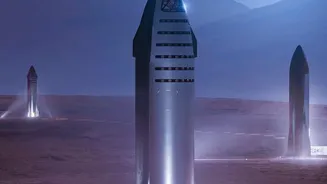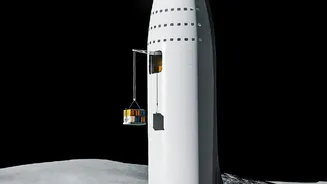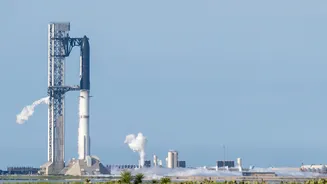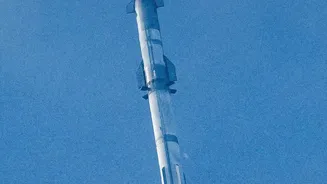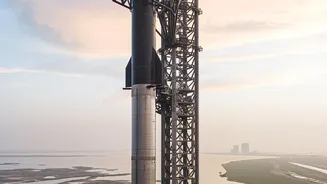







In a dramatic display of its high-risk, high-reward approach, SpaceX just pulled off one of its most ambitious feats yet. The company successfully caught its Starship vehicle with giant mechanical arms after a nearly day-long flight.
A Historic Catch from Orbit
The main event of
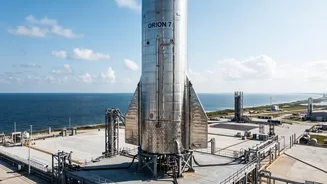
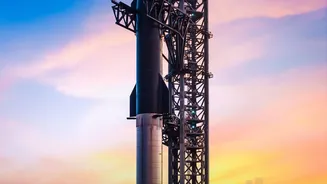
Starship's 15th test flight was a resounding success and a first in aerospace history. After launching from Starbase, Texas, the Starship upper stage, known as Ship 42, completed 14 orbits of Earth over approximately 22.5 hours. Upon its return, it performed a series of complex manoeuvres, descending belly-first before reorienting itself vertically for the final approach. The launch tower's massive mechanical arms, nicknamed 'Mechazilla' or 'chopsticks', then closed around the descending rocket, securing it high above the ground. This manoeuvre is the key to SpaceX's vision of a fully and rapidly reusable rocket system. Instead of landing on legs and being transported for refurbishment, the ship is caught in place, ready for inspection and, eventually, its next flight.
The 22-Hour Journey Explained
The 22-hour mission duration wasn't a random choice; it was a matter of orbital mechanics. Once Starship reached orbit, it was travelling at immense speed. The Earth continued to rotate beneath its fixed orbital path. For the ship to land back at its launch site in Texas, mission planners had to wait for the planet to spin Starbase back into the correct position under the ship's trajectory. This long wait, lasting for 14 orbits, was a crucial part of the flight plan. During its time in space, the vehicle also completed a key secondary objective: deploying 26 of SpaceX's next-generation Starlink internet satellites. This orbital period also gave teams time to assess the vehicle's health before committing to the unprecedented landing attempt.
What Went Wrong with the Booster
While the Starship catch was a triumph, the mission began with a significant setback. The plan was to also catch the massive Super Heavy first stage, which separated from the ship just minutes after liftoff. However, the booster's return did not go as planned. According to SpaceX, the booster's flight guidance system detected an anomaly and automatically triggered an abort. The rocket diverted from its planned return to the launch tower and instead aimed for a splashdown in the Gulf of Mexico, where it was destroyed. Early indications suggest the issue stemmed from a low fuel mass alarm that caused the boostback burn to end early. Though SpaceX has successfully caught boosters before, the failure to recover it this time means the goal of a fully intact, two-stage recovery remains elusive.
Why A Mixed Result Is Still a Win
For any other company, losing a multi-million dollar booster would be a disaster. For SpaceX, it's part of the process. The company's philosophy of iterative design—testing, failing, learning, and flying again quickly—is what has accelerated its progress. The loss of the booster, while a setback, provided valuable data that will be fed into the next attempt. More importantly, the successful orbital flight, satellite deployment, and historic catch of the Starship upper stage proved the most revolutionary and challenging part of the mission's architecture. This single achievement is a monumental step toward the company's goal of making humanity a multi-planetary species, as Starship is the vehicle NASA plans to use to land astronauts on the Moon and that Elon Musk envisions for the settlement of Mars.