





Why Light Pollution Matters
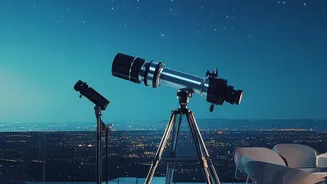
Light pollution is the excessive or misdirected artificial light from streetlights, buildings, and vehicles that brightens the night sky. This creates a phenomenon called 'skyglow', an orange or whitish haze that hangs over urban areas, drastically reducing
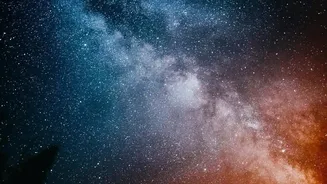
the visibility of stars and other celestial objects. For stargazers, this artificial brightness is a major obstacle. It washes out the contrast between faint stars and the darkness of space, making it impossible to see dimmer constellations, distant galaxies like Andromeda, or the magnificent, dusty arc of our own Milky Way galaxy. Effectively, the more artificial light that shines up into the atmosphere, the fewer stars you can see. This is why finding a truly dark location, far from the glare of cities, is the first and most crucial step for any aspiring astronomer.
Hanle, Ladakh: India's Dark Sky Sanctuary
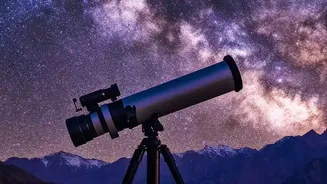
Officially designated as India’s first Dark Sky Reserve in 2022, Hanle in Ladakh is the undisputed champion of stargazing in the country. Located in the remote Changthang Plateau at a staggering altitude of 4,500 metres, this high-altitude cold desert offers exceptionally clear and dry atmospheric conditions. The area benefits from over 250 clear nights a year and is home to the Indian Astronomical Observatory. The reserve was established to protect these pristine skies, with local communities actively participating by using shielded lights and blackout curtains. For visitors, this means a breathtaking, near-perfect view of the cosmos, where the Milky Way is so bright it is said to cast a faint shadow.
Spiti Valley, Himachal Pradesh: High-Altitude Wonder
Another jewel of the Himalayas, Spiti Valley is a cold desert renowned for its stark landscapes and brilliantly clear skies. Sitting at an average elevation of over 12,500 feet, its remote villages like Kaza, Kibber, and Langza have minimal light pollution, offering some of the darkest accessible skies in Asia. The region lies in a rain shadow, which means it receives very little rainfall and cloud cover, particularly between May and October, making this the ideal season for stargazing. On a clear, moonless night in Spiti, the sky transforms into a celestial map, revealing thousands of stars, meteor showers, and the full, detailed structure of the Milky Way.
Rann of Kutch, Gujarat: A Surreal Celestial Theatre
For a completely different but equally mesmerizing experience, the Great Rann of Kutch in Gujarat offers a unique setting. The vast, flat expanse of the white salt desert provides an unobstructed, horizon-to-horizon view of the night sky. Its remote location, far from any major city, ensures exceptionally dark skies with almost zero light pollution. The best time to visit is during the cooler winter months, from November to February, which often coincides with the Rann Utsav festival. On a new moon night, lying on the cool salt flats while gazing at the river of stars above is a profound experience that connects you directly with the vastness of the universe.
Coorg, Karnataka: A Southern Starry Escape
You don't always need to head to the high Himalayas for a great cosmic show. Coorg, or Kodagu, in Karnataka offers some of the best stargazing opportunities in Southern India. Nestled in the Western Ghats, its hilly terrain and dense coffee plantations help shield the area from the light pollution of nearby cities. While the main town of Madikeri has some light, venturing into the southern valleys or staying at a remote estate provides access to genuinely dark skies. The period from October to May, after the monsoon, brings clear conditions perfect for viewing winter constellations like Orion in spectacular detail.