
The Source of the Slouch
Much of our day is spent sitting, which can weaken the gluteal muscles and tighten the hip flexors, causing the pelvis to tilt forward and strain the lower back. Simultaneously, constantly looking down at screens encourages the head to jut forward and the shoulders
to slump, a posture commonly known as 'tech neck'. This habitual rounding overdevelops chest muscles while weakening the upper back muscles that are crucial for holding the shoulders in proper alignment. Over time, this imbalance notlessly causes aches and stiffness but can also impact spinal health and flexibility. The key to counteracting this is to gently reintroduce movements that stretch the front of the body and strengthen the back.
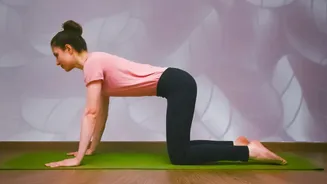
Cat-Cow Pose (Marjaryasana-Bitilasana)
This gentle, flowing sequence is a foundational yoga movement renowned for improving spinal flexibility and relieving tension. It serves as a gentle wake-up call for the entire spine, from your neck down to your tailbone. To begin, position yourself on your hands and knees in a tabletop position, with wrists directly under your shoulders and knees under your hips. As you inhale (Cow Pose), let your belly drop towards the floor, lift your chest and tailbone, and gaze forward, creating a gentle arch in your back. As you exhale (Cat Pose), round your spine toward the ceiling, tuck your chin to your chest, and press the mat away with your hands to spread your shoulder blades. Flowing between these two poses for 5-10 breaths synchronizes movement with breath, massages the spine, and improves posture.
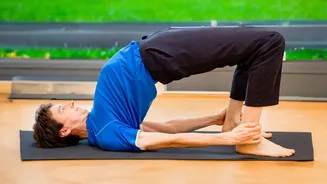
Bridge Pose (Setu Bandhasana)
Bridge Pose is excellent for strengthening the lower back and glutes while opening up the chest and shoulders—all key for reversing the effects of prolonged sitting. Lie on your back with your knees bent, feet flat on the floor hip-width apart, and close enough that you can touch your heels with your fingertips. Press firmly into your feet and arms to lift your hips off the floor, creating a straight line from your shoulders to your knees. You can keep your arms flat or interlace your fingers underneath your back, rolling your shoulders further under to expand the chest. This pose activates underused posterior muscles and stretches tight hip flexors, providing relief for a tired back. Hold for several deep breaths before slowly lowering your spine back to the floor.
Cobra Pose (Bhujangasana)
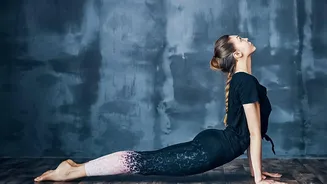
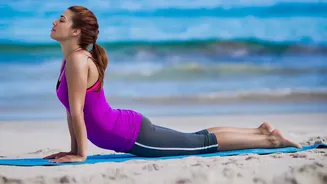
A perfect antidote to slouching, Cobra Pose strengthens the back muscles and improves spinal flexibility while providing a deep stretch for the chest and shoulders. Lie on your stomach with your legs extended and place your palms on the floor under your shoulders, keeping your elbows tucked close to your body. Press the tops of your feet and your pelvis firmly into the mat. On an inhale, use your back muscles—not just your arms—to slowly lift your chest off the floor. Roll your shoulders back and down, keeping your neck long. This movement directly counteracts the forward hunch by opening the chest and encouraging the spine into a gentle backbend, which helps to correct poor posture over time.
Child's Pose (Balasana)
Child's Pose is a restorative posture that offers immediate relief by gently stretching the lower back, hips, and thighs. It's the perfect way to decompress the spine after a long day. Start by kneeling on the floor, touch your big toes together, and sit back on your heels. You can keep your knees together or separate them wide. On an exhale, fold your torso forward, resting it either on or between your thighs. Allow your forehead to rest on the mat and extend your arms forward or rest them alongside your body. This pose creates a gentle traction for the entire spine, eases tension, and calms the nervous system, making it an essential resting pose in any practice.