





The Squeeze of Urban Living
As more young Indians move to cities like Bengaluru, Mumbai, and Pune for jobs and education, the demand for housing has skyrocketed. Co-living spaces have emerged as a popular solution, offering convenience, community, and affordability. However, the trade-off
is often personal space. A small, private room in a shared apartment can feel restrictive, with a bed, a desk, and a wardrobe consuming nearly all the available area, leaving little room for personal expression or varied activities. This challenge has pushed co-living operators and furniture designers to think differently about the indoor environment.
More Than Just a Bed on Rent
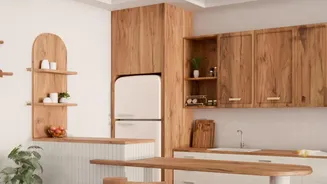
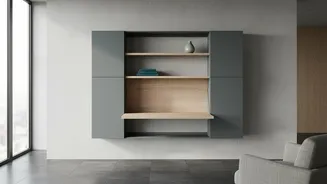
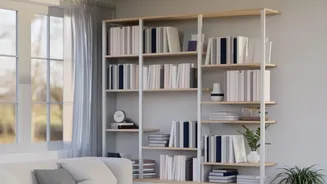
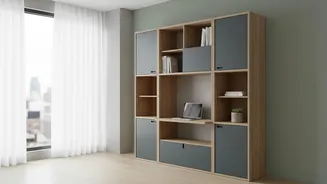
Enter multi-functional furniture: the smart solution to the space crunch. These are not your average tables and chairs. We're talking about beds that fold up into the wall to reveal a sofa or a work desk, dining tables that collapse into slim consoles, and modular shelving that can be reconfigured to act as a room divider. Other examples include ottomans and benches with hidden storage, and coffee tables that lift to become workstations. The principle is simple: every piece of furniture should serve more than one purpose, allowing a single room to adapt to different needs throughout the day.
From Tenant to Interior Designer
This is where 'creative freedom' comes into play. With flexible furniture, a tenant is no longer just a passive occupant; they become an active designer of their own space. In the morning, their room can be a bedroom. With a few simple adjustments, it transforms into a functional home office for the workday. In the evening, the same space can become a cozy lounge for relaxing or a yoga spot. This ability to reconfigure a room empowers residents to tailor their environment to their specific lifestyle, making the space truly their own. It's a significant shift from the one-size-fits-all approach of traditional rental furnishing.
The Psychology of Personal Space
The benefits of this trend go beyond just practicality. Having control over one's personal environment has a profound impact on mental well-being. The ability to declutter the floor by folding away a bed, or to create distinct zones for work and rest, can make a small room feel larger and more organized. This sense of order and personal control reduces stress and enhances the feeling of being at home. In a shared living situation, where privacy is a premium, being able to carve out and personalize a functional nook can significantly improve a resident's overall happiness and satisfaction with their living arrangement.
A Win-Win for Residents and Operators
For co-living tenants, the advantages are clear: a more spacious, adaptable, and personalized living area. But operators benefit, too. In a competitive market, offering smartly designed, flexible living spaces is a powerful differentiator. It allows them to provide a premium experience that goes beyond just providing a fully-furnished room. By investing in durable, high-quality multi-functional furniture, operators can attract and retain tenants who are willing to pay for a better quality of life. This focus on enhancing the resident experience is becoming a key feature of the modern co-living model, evolving it from a basic necessity into a desirable lifestyle choice.