


What Exactly Is the SKA?
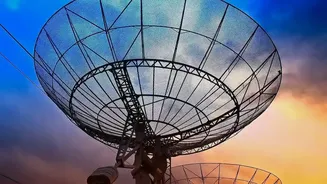
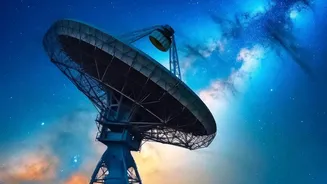
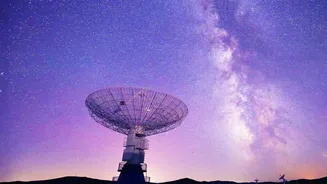
The Square Kilometre Array is the world's largest radio telescope, but it isn't a single dish. Instead, it's a massive network of thousands of antennas spread across two continents, all working together as one gigantic observatory. The project's name
refers to its ambitious goal: to create a total collecting area of one square kilometre. This enormous scale will make it 50 times more sensitive than any previous radio instrument, capable of surveying the sky thousands of times faster. The project is an international collaboration involving more than a dozen countries, with its global headquarters at the Jodrell Bank Observatory in the United Kingdom. Construction began in 2021, marking a new era in our quest to understand the cosmos.
A Telescope on Two Continents
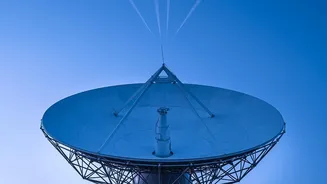
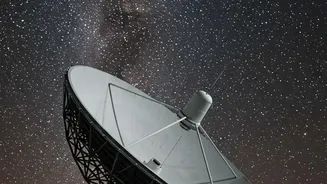
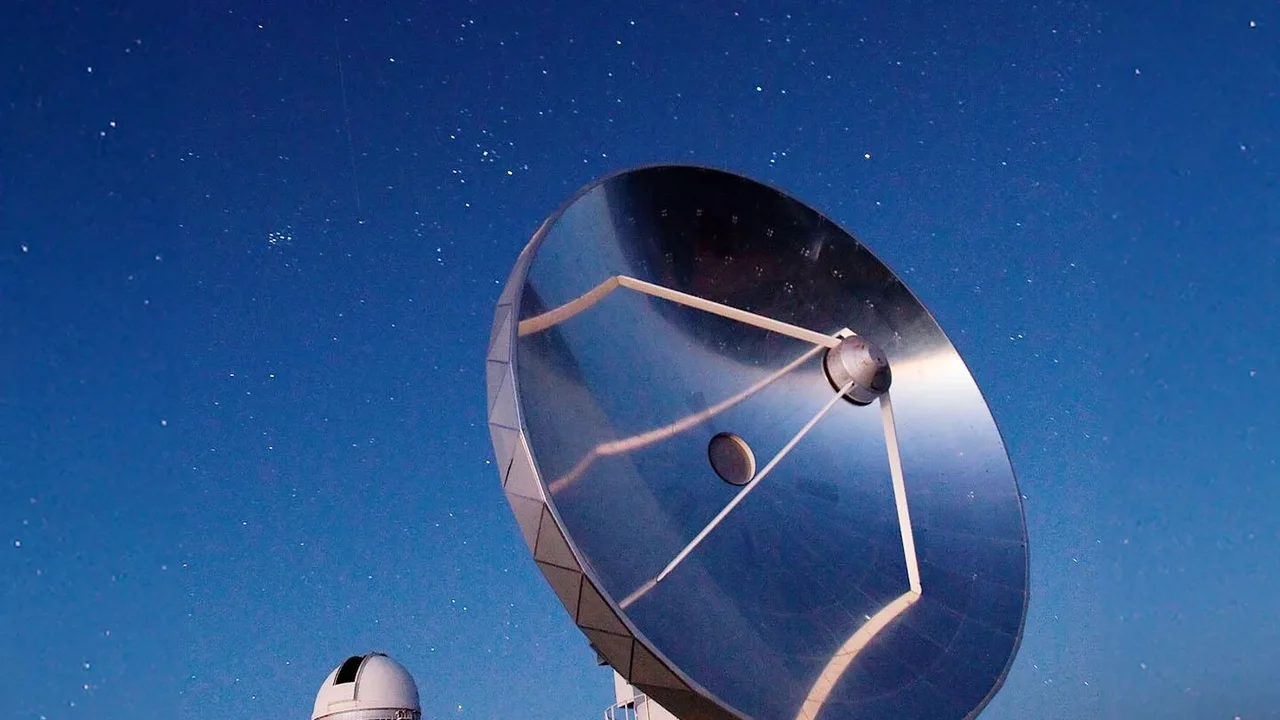
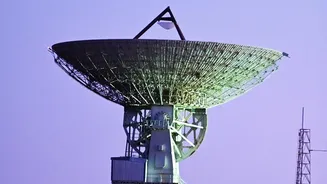
The SKA is split into two distinct components, each tailored for different scientific goals. SKA-Low, located in Western Australia's Murchison region, consists of over 131,000 small, tree-like antennas designed to capture low-frequency radio waves. This part of the telescope is crucial for studying the very early universe. Meanwhile, SKA-Mid is being built in South Africa's Karoo desert and will comprise nearly 200 large dish antennas, including the existing 64-dish MeerKAT array. These locations were chosen for a critical reason: radio quietness. They are remote and legally protected from the radio frequency interference generated by human technology, which would otherwise drown out the faint cosmic signals the SKA is trying to detect.
The Quest for Cosmic Dawn
One of the SKA's primary missions is to solve one of the biggest mysteries in cosmology: how the first stars and galaxies formed. After the Big Bang, the universe was a dark place filled with neutral hydrogen gas. Eventually, gravity caused this gas to clump together, igniting the first stars and bathing the universe in light for the first time—an era known as the Cosmic Dawn. This light then began to ionise the surrounding hydrogen gas, a period called the Epoch of Reionisation. The SKA-Low telescope is specifically designed to detect the faint radio signals emitted by neutral hydrogen from this period, over 13 billion years ago. By mapping these signals, astronomers can essentially create a 3D picture of the early universe as it was lighting up.
Beyond the First Stars
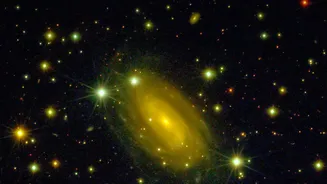
While peering back to the beginning of time is a headline goal, the SKA's capabilities extend far beyond it. The observatory will be a versatile tool for answering a wide range of astrophysical questions. Scientists will use it to test Albert Einstein's theories of gravity with extreme precision by timing the signals from pulsars, which are rapidly rotating neutron stars that act as natural cosmic clocks. The SKA will also create detailed maps of cosmic magnetism, helping us understand the role magnetic fields play in the evolution of galaxies. Furthermore, it will survey billions of galaxies to trace the influence of dark energy and dark matter, the mysterious substances that dominate our universe. Its incredible sensitivity even opens the door to searching for technosignatures—potential radio signals from extraterrestrial intelligence.
A Global Feat of Engineering and Data
Building and operating the SKA is a monumental challenge not just in astronomy but in engineering and computing. The sheer volume of data the telescopes will generate is staggering, expected to exceed the entire internet's current daily traffic. This data will be streamed from the remote antennas to powerful supercomputers in Cape Town and Perth for processing. The first construction milestones have already been achieved, with early test arrays producing their first images and interferometric data in 2025 and 2026. With construction on track for completion by the end of the decade, the SKA represents a massive investment in technology and global scientific cooperation. This international effort is building more than just a telescope; it is creating a data-driven engine for discovery that will serve scientists for at least 50 years.