








The Sweeping Proposal
Goa's Forest Department has sent a significant proposal to the state's Department of Environment and Climate Change. It recommends that 24 of Goa's beaches be officially notified as turtle nesting sites under the Coastal Regulation Zone (CRZ) Notification,
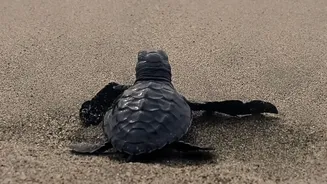
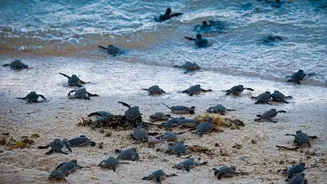
2019. This list includes ten beaches in North Goa and fourteen in South Goa. If accepted, this designation would classify these areas as ecologically sensitive, potentially bringing strict regulations on activities like artificial lighting, beach shacks, late-night events, and vehicle movement, especially during the nesting season from October to May. The goal is to provide a safer environment for the vulnerable Olive Ridley turtles that come ashore to lay their eggs.
Why Baga and Calangute Raise Eyebrows
For decades, Goa's primary turtle conservation efforts have focused on quieter beaches like Morjim and Mandrem in the north, and Agonda and Galgibag in the south. The inclusion of Baga and Calangute in the new proposal is a radical shift. These two beaches form the epicentre of Goa's bustling tourism industry, packed with shacks, resorts, water sports, and round-the-clock activity. Such an environment, with its bright lights and noise pollution, is traditionally seen as hostile to nesting turtles, which require dark and quiet shores. While there is historical evidence of sporadic nesting on these beaches, their high commercialisation makes enforcing conservation rules a monumental challenge.
Conservation vs. Livelihoods
The proposal has sparked immediate concern among those whose livelihoods depend on beach tourism. The Shack Owners Welfare Society has voiced fears that such widespread declarations could cripple the tourism industry. They argue that they are not against protecting turtles but that a blanket approach is impractical, especially after being previously assured that regulations would focus on specific, known nesting stretches. Fishermen also worry about how the rules might affect their traditional practices, such as accessing the beach for their boats and nets at night. Cruz Cordozo, president of the shack owners' body, alleged the move could be a way to push out traditional Goan businesses in favour of outside interests.
The Ecological Driving Force
The push for expanded protections comes amid worries about a decline in Olive Ridley nesting numbers in Goa. Forest Department data from the 2026 season showed a drop in both nests and eggs compared to previous years. For example, while Morjim still recorded 83 nests with over 8,500 eggs, this was a significant fall from the nearly 18,000 eggs recorded by May 2025. Conservationists know that threats to turtles are numerous. Artificial lighting disorients hatchlings, who rely on the natural light of the horizon to find their way to the sea. Beach furniture and litter can become fatal obstacles for the tiny turtles, and noise can deter females from coming ashore to nest at all. With only an estimated one in a thousand hatchlings surviving to adulthood, protecting every possible nesting habitat is seen as critical for the species' survival.
Finding a Middle Ground
The key challenge lies in balancing ecological needs with economic realities. In places like Morjim and Agonda, a model of coexistence, though sometimes fraught with conflict, has emerged over the years. Community participation, where locals are involved in conservation and benefit from responsible eco-tourism, has been crucial. Stakeholders are not asking for conservation to be abandoned but are seeking clarity and a collaborative approach. They want to know the specific restrictions, their seasonal nature, and how existing businesses can adapt rather than face a complete shutdown. A detailed management plan for each ecologically sensitive area, as required under CRZ rules, will be essential in defining this balance. The Environment Department's decision on the Forest Department's proposal is currently awaited.