







The Anatomy of Modern Crowd Disasters
Recent history is filled with tragic reminders of what happens when crowd management fails. The Astroworld Festival in 2021, where a fatal crowd crush occurred, highlighted a catastrophic breakdown in communication and monitoring. Reports following the
incident pointed to an operations plan that lacked specific protocols for crowd surges or collapse. It's a stark example of how quickly a dynamic environment can turn deadly without real-time situational awareness. These are not isolated incidents; from weather emergencies causing structural failures to dangerous bottlenecks at entry points, the common thread is often a failure to communicate effectively with a large, mobile, and distracted population. Traditional methods—static signage, pre-printed maps, and social media posts that can't reach phones in congested networks—are no longer adequate for crowds numbering in the tens or hundreds of thousands.
Why Old Tech and Human Eyes Aren't Enough
The core problem is that conventional methods are reactive, not proactive. Security personnel and event staff can only be in so many places at once, and human observation is prone to error, especially when trying to spot early warning signs in a massive crowd. A single hotspot of dangerous density can form in minutes, long before staff on the ground can report it. Furthermore, the very technology attendees rely on—their smartphones—becomes unreliable at scale. Cellular networks get overwhelmed, leaving festival apps and social media feeds useless precisely when they are needed most. This creates an information vacuum. If a stage needs to be evacuated due to high winds, or a gate must be closed to prevent a crush, there is no guaranteed way to instantly inform tens of thousands of people and guide them to safety. This reliance on failing infrastructure is a gamble event organizers can no longer afford to take.
What 'Smarter' Information Systems Look Like
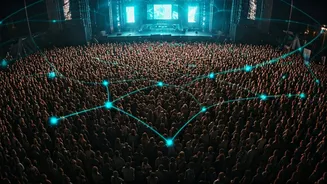
The solution lies in a new generation of smart event technology designed for proactive management. Artificial intelligence and the Internet of Things (IoT) are at the forefront of this shift. AI-powered systems can analyze real-time video feeds from cameras to monitor crowd density, flow patterns, and even sentiment, flagging potential bottlenecks before they become dangerous. This data can trigger automated responses, such as changing messages on dynamic digital signs to redirect foot traffic. Imagine signage that automatically updates to say, “Stage B is at capacity. Try the West Field for shorter lines and great sound.” Technologies like RFID wristbands and BLE (Bluetooth Low Energy) beacons can provide anonymous location data, helping organizers create heat maps of the entire venue to see where crowds are forming in real-time. These systems provide a complete operational overview, turning a chaotic environment into a managed one.
From Crisis Management to Experience Enhancement
Smarter information systems are not just about preventing disaster; they also dramatically improve the attendee experience. The same technology that provides safety alerts can also deliver personalized, useful information. An integrated festival app, powered by a robust backend, could notify an attendee that the queue for their favourite food truck is now only five minutes long, or that a surprise guest is about to appear on a smaller stage nearby. By analyzing attendee behaviour (anonymously and with consent), AI can make personalized recommendations for sessions or artists. This transforms the festival from a series of logistical challenges into a seamless, curated experience. Reducing wait times, helping people navigate efficiently, and providing timely updates makes for happier, safer customers who are more likely to return next year.
The Real Cost Is Inaction
Implementing these advanced systems requires investment, but the cost of failing to do so is far greater. A single major incident can result in loss of life, irreparable brand damage, and crippling legal consequences. Modern festivals are massive logistical operations, and managing them with outdated tools is a fundamental business risk. The technology to prevent many of these issues already exists and is being deployed in smart venues and stadiums worldwide. From AI that predicts crowd surges to weather monitoring systems that push instant alerts, these tools empower organizers to make informed, proactive decisions. Moving from a reactive posture to a predictive one is no longer an innovation—it is a necessity for survival in the modern live event industry.