








A Ritual of Rain and Refreshment
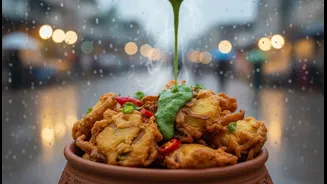
In India, the connection between monsoon and food is a time-honoured tradition. For generations, the pitter-patter of rain has been the unofficial signal to prepare plates of hot, crispy pakoras or gather around a street vendor for a smoky, spice-rubbed
bhutta (roasted corn). This isn't just about satisfying hunger; it's a shared cultural experience, a ritual that connects people to the season and to each other. The craving for warm, fried, and flavourful food during the cooler, damp weather is almost instinctual. Scientists suggest that the high humidity in the air helps aroma molecules travel further, making the smell of fried and roasted foods richer and more irresistible. This sensory experience is why the combination of chai and pakoras is often described not just as a snack, but as a shared emotion across the country.
From Street Stalls to Starter Menus
What feels new in recent years is how this tradition is being embraced and elevated. The humble street food of the monsoon is no longer confined to the roadside. Across urban centres like Mumbai, Delhi, and Bengaluru, cafes and high-end restaurants are creating dedicated monsoon menus. These menus celebrate classic rainy-day foods, often with a creative twist. For example, hotel chains are hosting street food festivals, allowing diners to enjoy favourites like vada pav, samosa chaat, and galouti kebabs in a comfortable setting. A prominent casual dining chain even launched a 'Mood-e-Monsoon' festival across its outlets, featuring dishes like Grilled Bhutta, Mix Pakoda Platters, and hot Jalebi. This trend shows a commercial acknowledgment of a deeply personal and nostalgic experience, packaging the comfort of the monsoon for a wider audience.
Gourmet Twists and Healthy Alternatives
The innovation doesn't stop at just bringing street food indoors. Chefs are experimenting with gourmet versions of traditional snacks, introducing novelties like jamun pakoras or truffle mushroom pakoras. At the same time, there's a growing parallel trend toward health-conscious comfort food. Recognising that not everyone wants to indulge in deep-fried snacks, many establishments and home cooks are offering healthier alternatives. Baked samosas, air-fried pakoras, and steamed snacks like dhokla and momos are gaining popularity. Nutrient-rich options like moong dal chilla (savoury pancakes) and roasted makhana (fox nuts) provide a balance of taste and wellness, catering to a more health-aware urban demographic. This evolution ensures that the joy of monsoon snacking is accessible to everyone, regardless of their dietary preferences.
A Celebration of Regional Diversity
While pakoras and chai are nearly universal, India's monsoon food map is incredibly diverse. In Mumbai, the monsoon is synonymous with vada pav and cutting chai, often enjoyed while watching the waves at Marine Drive. Kolkata finds its soul food in a warm plate of khichuri (a rice and lentil dish) paired with telebhaja (fried items). Rajasthan celebrates with its flaky, spicy pyaaz kachori (onion-stuffed pastry), while the south indulges in crispy parippu vada (lentil fritters). Restaurants are also tapping into this regional richness, with pop-ups and special menus that showcase specific regional cuisines, from Andhra's spicy delights to the royal kitchens of Lucknow. This allows city dwellers to go on a culinary journey across India without leaving their city, tasting the unique ways different cultures welcome the rain.