




A Library's Dubious Collection
The controversy began not with AI, but with a routine legal matter. A Public Interest Litigation (PIL) was filed concerning the infrastructure of a government law college library in Puducherry. As the Madras High Court delved into the issue, it uncovered
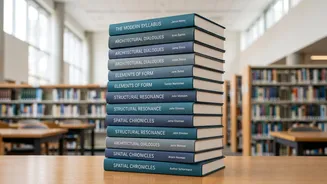
a far more serious problem. The digital library was filled with dubious content. Books were incorrectly attributed, some authors were entirely fictional, and pirated versions of authentic works were common. One glaring example cited was a book on the Indian Penal Code credited to a non-existent author. This discovery prompted a wider investigation into procurement practices, revealing a systemic issue that went far beyond one college.
The Court's Stern Rebuke
A bench of Justices R Mahadevan and Mohammed Shaffiq delivered a scathing critique, warning of a potential catastrophe. They noted that if libraries, especially those serving law students, are stocked with fraudulent materials, the very foundation of legal education is compromised. The judges expressed grave concern that the rise of Artificial Intelligence could amplify this problem exponentially. An AI system trained on a diet of fake books and false legal precedents would generate unreliable, and frankly dangerous, information. Imagine a lawyer citing a non-existent law or a judge relying on a fabricated judgment—the consequences would be disastrous. The court described the presence of works falsely attributed to figures like poet Subramania Bharati as a breach of public trust that infringes on the constitutional right to receive accurate information.
A Crackdown on 'Doubtful Taste'
In response, the court ordered a crackdown. It directed the Directorate of Vigilance and Anti-Corruption (DVAC) to register an FIR and investigate what it deemed a large-scale fraud involving public funds. The court expanded the definition of books with 'doubtful taste'—a category traditionally barred from public libraries—to include plagiarised works, books with false narratives, and unverified AI-generated content. This is a significant step, as it formally acknowledges the threat posed by modern forms of misinformation. The court mandated the immediate removal of suspect books from library shelves and the freezing of bank accounts linked to the publishers involved in the scam.
Why Verification is Non-Negotiable
This case underscores a problem that plagues Indian academia: the pressure to 'publish or perish' has created a thriving market for predatory journals and fake publications. For years, academics have been found to publish in fake journals to meet performance criteria, damaging the integrity of research in the country. The Madras HC case brings this issue from the academic world into the public sphere. When unverified books enter public and university libraries, they poison the well of knowledge for everyone. For students, it means learning from flawed or entirely false material. For researchers, it erodes the credibility of their work. For the legal profession, as the court warned, it could lead to a complete breakdown of justice based on verifiable facts and laws.
A Wake-Up Call for the AI Era
While the books in question were not all confirmed to be AI-generated, the court's focus on AI was a preemptive strike. The judges recognised that technology makes it easier than ever to produce superficially credible but entirely fabricated content. Their ruling serves as a vital directive for the future. The court called upon the Bar Council of India (BCI), which sets standards for legal education, to establish strict guidelines for the verification of all books and authors in law libraries. This means ensuring that every book, whether in print or digital, comes from a reputable publisher and has a verifiable author, preventing the system from being 'gamed' by fake credentials or automated content farms.