

Go Beyond Simple Division
The first step most people take is to grab a calculator and divide every ingredient by two. While this is a necessary starting point, it's far from the last step. Before you begin, it’s wise to write down the new measurements for each ingredient. This
prevents confusion mid-recipe, especially when you can’t remember if you already halved the salt. But the science of cooking and baking relies on ratios and reactions. Changing the volume of ingredients means you also need to reconsider the chemistry, especially with baked goods, which are less forgiving than a pot of chilli. Spices, for instance, can become more potent in smaller batches, so it’s best to start with slightly less than half and adjust to taste.
Handling Tricky Ingredients
Some ingredients resist being neatly halved. The most common culprit is the egg. What do you do when a recipe calls for one? You can't just use half a shell. The best solution is to crack the egg into a small bowl, whisk it until the yolk and white are uniform, and then measure out half. A large egg is typically a little over three tablespoons, so you would use about one-and-a-half tablespoons. You can also use a kitchen scale for more precision. For recipes calling for an odd number of egg yolks or whites, you separate them first and then whisk and measure the portion you need. For things like a 'pinch' of saffron or a 'splash' of vanilla, your judgment is key—start with a smaller amount than you think you need.
Rethink Your Cookware
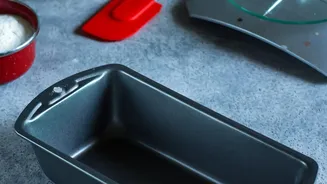
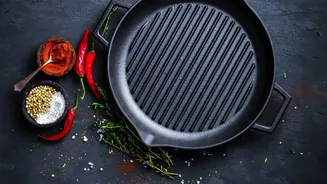
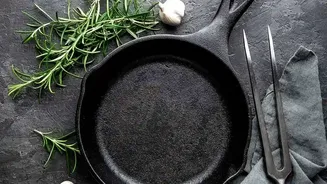
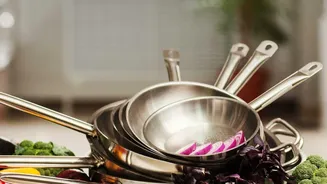
One of the most overlooked aspects of downsizing a recipe is the pan. Using the original 9x13-inch pan for a halved brownie recipe will result in a thin, dry, and overcooked final product. The batter will spread out too much, changing how it cooks entirely. As a rule, you should aim for a pan that is roughly half the volume or surface area of the original. To figure this out, you can calculate the area of the original pan and divide by two. For a square or rectangular pan, multiply length by width. For a round pan, it’s pi times the radius squared. Then, find a pan in your kitchen that comes closest to that new, smaller area. Remember that different pan materials, like glass versus metal or cast iron, conduct heat differently, which can also affect cook times.
The Time and Temperature Question
You should almost never change the oven temperature. A cake that bakes at 180°C needs that temperature to rise correctly, regardless of its size. What does change significantly is the cooking time. A smaller volume of food heats up and cooks through much faster. There's no perfect formula for this; the reduction in time isn't a neat 50%. A good strategy is to start checking for doneness much earlier than the original recipe suggests. Some experts recommend setting your initial timer for about two-thirds of the original time, or even half, and then checking frequently. For a cake that originally took 50 minutes, start checking at the 25 or 30-minute mark. You can always bake something longer, but you can never un-bake it.
When It's Better Not to Halve
Sometimes, the best strategy is to not scale down at all. Recipes that require complex techniques, precise chemistry like bread or delicate pastries, or very long simmering times like stews and broths often benefit from being made in their intended quantities. The flavour development in a large pot of soup over several hours is difficult to replicate in a small saucepan. In these cases, consider making the full recipe and embracing the leftovers. Many dishes, from casseroles and lasagnas to cookies and soups, freeze beautifully. This saves you the trouble of complex kitchen math and provides a ready-made meal for a future busy day. It's a different kind of cooking plan—one that rewards you twice.