


A Glimpse into Bengal's Former Glory
Before Kolkata rose to prominence, Murshidabad was the epicentre of power, culture, and wealth in eastern India. In the early 18th century, Nawab Murshid Quli Khan shifted the capital from Dhaka to this town on the banks of the Bhagirathi river, renaming
it after himself. For decades, it was one of the most prosperous cities in the world, a hub of trade that attracted merchants from across Asia and Europe. This history is not confined to textbooks; it lingers in the air, in the grand ruins, and the stately architecture that defines the town, offering a tangible connection to a past that shaped the entire subcontinent. The pivotal Battle of Plassey in 1757, which took place nearby, marked the beginning of British colonial rule and the gradual decline of Murshidabad's fortunes as power shifted to Calcutta.
The Crown Jewel: Hazarduari Palace
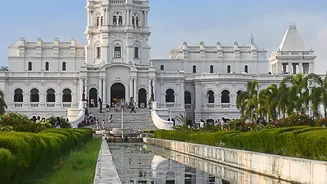
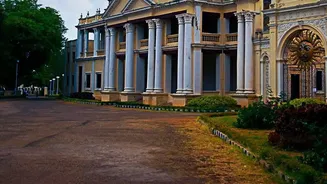
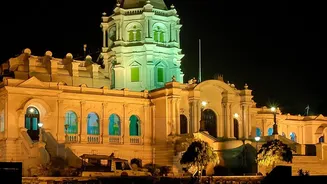
The most iconic landmark and the centerpiece of any visit is the Hazarduari Palace, or the 'Palace of a Thousand Doors'. This colossal Indo-European structure, built in 1837 for Nawab Nazim Humayun Jah, is an architectural marvel. While its name suggests 1,000 doors, 100 of them are false, ingeniously designed to confuse intruders. Today, the palace functions as a museum managed by the Archaeological Survey of India. Its 20 galleries house an astounding collection of artifacts from the Nawabi era, including Siraj-ud-Daulah's sword, an extensive armoury, vintage furniture, rare manuscripts, and exquisite paintings. The Durbar Hall, with its magnificent chandelier that once held 1,001 candles, provides a stunning insight into the opulence of the court.
Beyond the Palace Walls
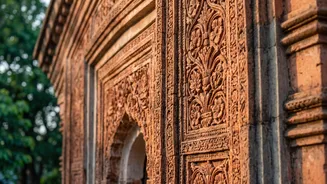
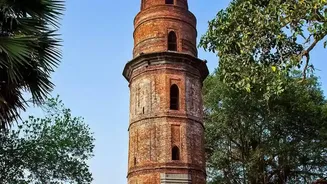
While Hazarduari is the main draw, Murshidabad's historical landscape is dotted with other significant monuments. Directly opposite the palace stands the Nizamat Imambara, rebuilt in 1847 after a fire, and considered one of the largest such congregational halls in India. A short ride away is the Katra Mosque, built by Murshid Quli Khan himself. His tomb lies humbly beneath the steps of the entrance, a testament to his wish to be trodden on by the faithful. Other notable sites include the Jafarganj Cemetery, the final resting place of Mir Jafar and his descendants, and Motijheel (Pearl Lake), a serene oxbow lake with tombs and a park. These sites, along with a host of smaller palaces and tombs, piece together the story of a powerful dynasty.
The Living Culture and an Easy Escape
The allure of Murshidabad extends beyond its monuments. The town is famous for its exquisite silk, particularly the Baluchari sarees, which often depict narrative scenes from history and mythology. Its legacy of craftsmanship also includes ivory carving and bell-metal work. The local cuisine offers a taste of Nawabi flavours, adding another sensory layer to the historical experience. Its accessibility makes it a preferred weekend destination. Located roughly 200 km from Kolkata, a trip to Murshidabad can be comfortably made by train in about 3 to 4 hours, with multiple daily services available. A road trip takes approximately 4.5 to 5.5 hours, making it a feasible option for a two-day itinerary.