





Meet the Lunar 'Regolith'
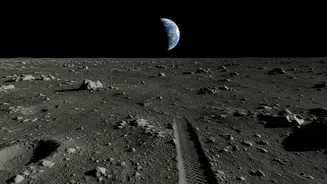
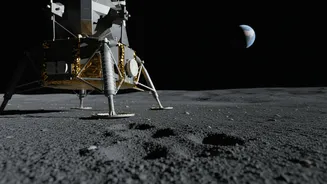
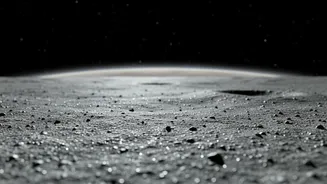
First, let's clear up a common misconception. The stuff on the Moon's surface isn't really 'soil' like we have on Earth. The correct term is regolith. Unlike Earth's soil, which is formed by weathering and is rich with organic matter, lunar regolith is a product
of relentless cosmic violence. For billions of years, the Moon has been bombarded by meteorites and micrometeorites, grinding its surface rocks into a mixture of fine dust, sharp, glassy shards, and rock fragments. This material is primarily composed of minerals like silicate, olivine, and pyroxene. It’s dry, abrasive, and, according to Apollo astronauts, smells like spent gunpowder. This unique composition gives it very different properties from terrestrial dirt, which is key to understanding the latest findings.
ISRO's Subsurface Detective: ChaSTE
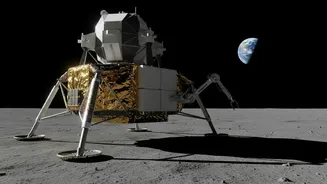
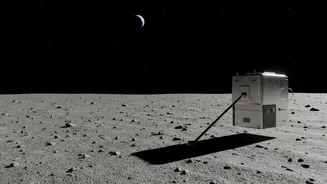
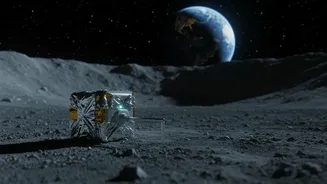
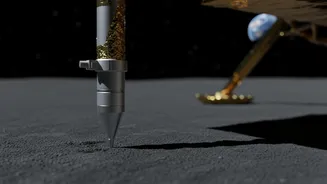
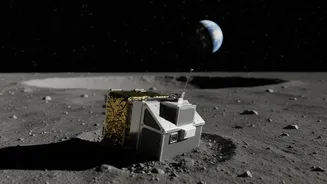
To investigate this strange material, ISRO's Chandrayaan-3 lander deployed a specialised tool called Chandra’s Surface Thermophysical Experiment, or ChaSTE. This instrument is essentially a high-tech thermal probe. Designed to penetrate up to 10 centimetres into the lunar regolith, it's equipped with ten precision temperature sensors along its length. This allows it to create the first-ever detailed temperature profile of the Moon's subsurface at its south polar region. By measuring how temperature changes with depth, ChaSTE provides direct, in-situ data that was previously unavailable, as earlier missions like Apollo focused on equatorial regions. This ability to 'take the temperature' of the regolith at different layers is crucial for decoding its properties.
The Surprising Temperature Gradient
The first major insight from ChaSTE was a dramatic temperature difference just below the surface. Data showed that while the surface could be a relatively balmy 50 degrees Celsius, the temperature plummeted to around -10 degrees Celsius just eight to ten centimetres down. This is a massive drop over a tiny distance. This finding demonstrates that the topmost layer of the lunar regolith is an incredibly effective thermal insulator. It acts like a blanket, preventing the Sun's heat from penetrating deep into the ground. The loose, porous nature of the top layer, which scientists found was highly cohesive and almost like flour, creates this insulating effect, shielding the subsurface from the extreme temperature swings on the surface.
The Crucial Link to Water Ice
So, what does an insulating blanket of dust have to do with moisture? Everything. The excellent insulating properties of the regolith mean that any water ice that gets buried just a few centimetres beneath the surface could remain stable and protected from the Sun's radiation, which would otherwise cause it to sublimate (turn directly from a solid to a gas) and escape into space. The thermal data helps scientists model which areas, based on their temperature profiles, are most suitable for 'cold-trapping' water ice. While ChaSTE did not detect water directly, its thermal conductivity measurements provide a critical baseline. Scientists know that the presence of ice would change these thermal properties, so understanding the behaviour of dry regolith is the first step in hunting for frozen water deposits, which are vital for future lunar missions.
Why These Insights Are a Game-Changer
These findings are far more than an academic curiosity; they are a roadmap for the future of lunar exploration. Finding accessible water ice is the holy grail for establishing a permanent human presence on the Moon. Water can be broken down into oxygen for breathing and hydrogen for rocket fuel. Understanding the thermal properties and layered structure of the regolith is also critical for engineering and construction. As data from ChaSTE showed, the regolith's density and cohesiveness change significantly with depth, behaving like 'dry flour' on top but becoming much more compact below. This impacts how rovers move, where habitats can be built, and how resources can be extracted. ISRO's data provides invaluable 'ground truth' that will help design safer and more effective future missions, not just for India but for all of humanity.