


A New Eye on the Cosmos
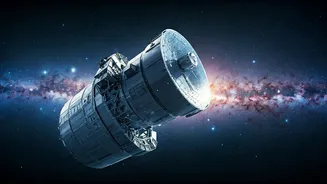
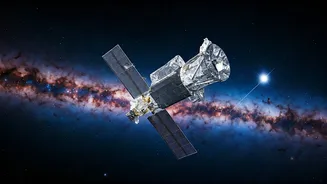
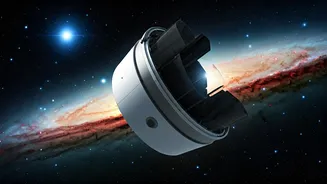
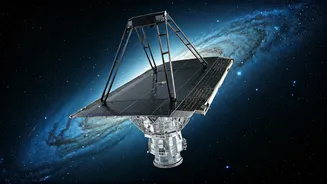
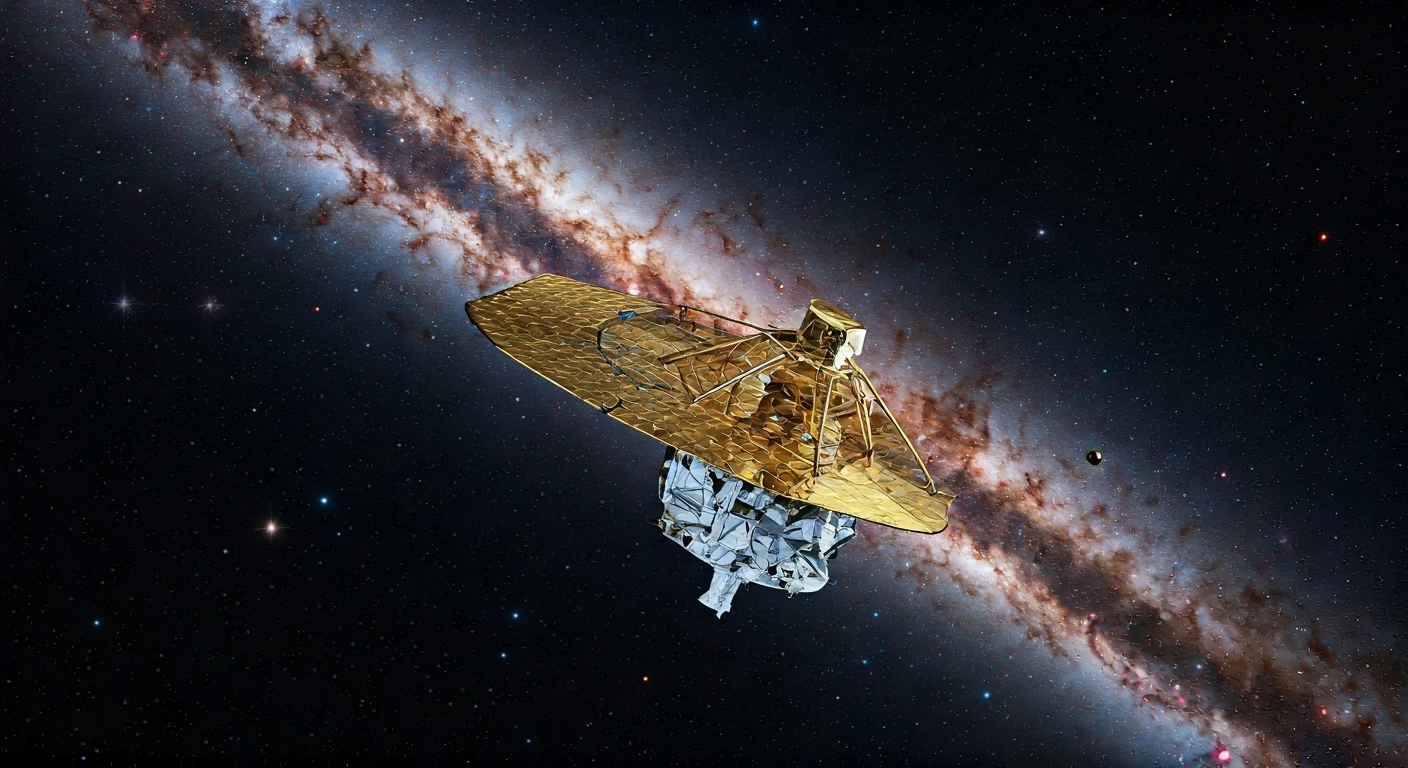
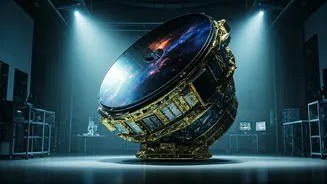
NASA's next flagship astrophysics observatory, the Nancy Grace Roman Space Telescope, is in the final stages of preparation for its launch, which is targeted for August 30, 2026. The completed telescope arrived at the Kennedy Space Center in Florida on June
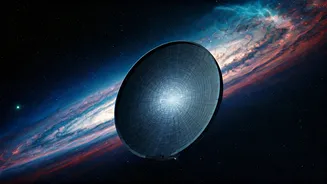
21, 2026, to begin final processing. Named after Dr. Nancy Grace Roman, NASA's first Chief of Astronomy and the “Mother of Hubble,” this powerful new instrument is designed to build on the legacies of its famous predecessors. After launching aboard a SpaceX Falcon Heavy rocket, Roman will travel to a stable orbit about a million miles from Earth, a point known as L2. From there, it will embark on a five-year primary mission to survey the cosmos in infrared light, tackling some of the biggest questions in astrophysics.
A Panoramic Window to the Universe
The defining feature of the Roman Space Telescope is its immense field of view. While its 2.4-meter primary mirror is the same size as Hubble's, Roman's Wide Field Instrument will capture a patch of the sky at least 100 times larger in a single snapshot. Think of it as the difference between looking at the sky through a keyhole versus a panoramic window. This capability will allow Roman to map the sky at a blistering pace, collecting data up to 1,000 times faster than Hubble. For context, an iconic image of the Andromeda galaxy that took Hubble over 400 individual observations to create could be captured by Roman in just two. This survey power will generate enormous maps of the universe, providing astronomers with unprecedented amounts of data to study cosmic ecosystems on a grand scale.
Hunting for Dark Energy and Dark Matter
Two of the most profound mysteries in cosmology are dark energy and dark matter, and Roman is specifically designed to investigate them. Dark energy is the enigmatic force thought to be causing the expansion of the universe to accelerate, while dark matter is the unseen material that provides most of the universe's gravitational scaffolding. Roman will address these questions by conducting massive surveys of hundreds of millions of galaxies. By studying how galaxies are distributed and how their light is distorted by gravity—a phenomenon called weak gravitational lensing—scientists can map the distribution of dark matter and measure how cosmic expansion has changed over time. These vast, high-precision surveys are expected to provide the statistical power needed to test our theories about these dark components of the cosmos.
A New Strategy for Finding Alien Worlds
Roman is poised to be one of NASA's most prolific planet-hunters, expected to discover thousands of new exoplanets. It will primarily use a technique called gravitational microlensing, which is sensitive to planets that other methods often miss. This occurs when a star with a planet passes in front of a more distant background star, and its gravity acts as a natural lens, briefly magnifying the background starlight. The planet adds its own small signature to this magnification, revealing its presence. This method is effective at finding planets orbiting far from their star, as well as 'rogue' planets that wander through the galaxy untethered to any star. In addition to microlensing, Roman will also detect around 100,000 planets using the transit method, where a planet periodically dims its star's light, creating a comprehensive census of planetary systems.
A Powerful Partner to Webb
Roman is not a replacement for telescopes like Hubble or Webb, but a powerful collaborator. While Webb is designed for deep, narrow-field observations—staring intensely at small patches of sky to see the faintest, most distant objects—Roman is a survey instrument built for breadth. Roman will act as a cosmic scout, efficiently identifying rare and interesting targets across huge areas of the sky. The James Webb Space Telescope can then perform detailed follow-up observations on these targets with its more powerful vision and broader wavelength coverage. This synergy will allow astronomers to get the best of both worlds: Roman's wide-angle context and Webb's deep, focused detail, working together to provide a more complete picture of the universe than either could achieve alone.