



Before You Go: The Foundation of a Safe Trip
A successful monsoon road trip begins long before you turn the ignition. The most critical first step is a thorough vehicle check. Pay special attention to your tyres, brakes, and wipers. Tyres should have at least 3mm of tread depth to provide adequate
grip on wet roads and prevent hydroplaning, a dangerous situation where your tyres lose contact with the road surface. Ensure your wiper blades are in top condition, replacing them if they leave streaks or make noise; they are your first line of defence against blinding rain. Test your brakes to confirm they are responsive and not worn down. Finally, check all your lights—headlights, taillights, and indicators—to ensure you can see and be seen. Using low-beam headlights even during daytime rain significantly improves your visibility to other drivers.
The Delay Decision: Heeding the Warnings
Sometimes, the smartest decision is not to go at all. Keep a close eye on weather forecasts from the India Meteorological Department (IMD) in the days leading up to your trip. The IMD uses a colour-coded alert system to warn of severe weather. A 'Yellow' alert means you should be aware and stay updated, while an 'Orange' alert signals you should be prepared for disruptions like waterlogging and traffic delays. If a 'Red' alert is issued for your route, it signifies a high risk of extremely heavy rainfall, flooding, and potential danger. This is a clear signal to delay your trip. Postponing your journey for a day or two until the weather system passes is far better than getting stranded or facing hazardous conditions.
On the Road: Adapting to Conditions
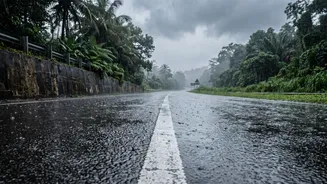
Once you are driving, your behaviour must adapt to the wet conditions. The most important rule is to slow down. Your braking distance can more than double on wet roads, so reducing your speed and increasing the following distance to at least four to five seconds behind the vehicle in front is crucial for safety. Avoid the temptation to use cruise control, as you need complete control over your speed to react to sudden hazards. Be especially cautious of puddles and waterlogged areas. You never know how deep a puddle is or what lies beneath, and driving through one too fast can cause your car to hydroplane or suck water into the engine, leading to catastrophic failure. If you must cross a waterlogged patch, do so slowly and steadily in a low gear without stopping.
To Reroute or to Wait: Making Smart Choices
Flexibility is your greatest asset on a monsoon road trip. If you encounter a closed road, a landslide, or a heavily flooded section, do not try to be a hero. Heed 'Road Closed' signs and never drive into a flooded area; it only takes about a foot of moving water to sweep a car away. Instead of taking a risky chance, it’s time to reroute. Use reliable mapping services to find an alternative, but be wary of unverified shortcuts through small rural roads, which may be in worse condition. If a safe reroute isn't available or if visibility becomes dangerously low, the best action is to pull over and wait. Find a safe spot away from traffic, large trees, or steep slopes. Park your car, turn off the engine, and wait for the downpour to subside. A delay of an hour is a small price to pay for your safety.
Your Monsoon Emergency Kit
Being prepared for the unexpected can turn a potential crisis into a manageable inconvenience. Your monsoon emergency kit should be kept in the car throughout the season. Key items include a powerful torch with extra batteries, a reflective warning triangle, and a high-visibility jacket to ensure other drivers can see you if you need to stop. A portable tyre inflator and puncture repair kit are invaluable. Also pack a first-aid kit, a tow rope, jumper cables, and plenty of drinking water and dry snacks like biscuits or nuts. A fully charged power bank is essential for keeping your phone running to access maps and call for help. Having these items on hand provides peace of mind and the ability to handle common roadside issues yourself.