





LPG Prices and Subsidy Rules
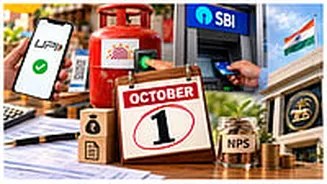
Starting October 1, there are two significant updates concerning Liquefied Petroleum Gas (LPG). First, the price of commercial LPG cylinders has been increased. In Delhi, the cost of a 19-kg cylinder rose by ₹62.50 to ₹2,810. This hike primarily affects
businesses like hotels and restaurants and comes just ahead of the festive season. However, there is some relief for households, as the price of the 14.2-kg domestic cylinder remains unchanged for now. The second major change involves subsidies. To continue receiving subsidised LPG refills, domestic consumers must complete their Biometric Aadhaar Authentication. While supply will not be stopped for those who haven't completed this KYC process, they will have to pay the full market price for cylinders instead of the subsidised rate. This move is aimed at ensuring subsidies reach only eligible households.
Understanding the New UPI Merchant Charges
A key change is coming to the Unified Payments Interface (UPI) ecosystem, but it's crucial to understand who it affects. From October 15, 2026, a Merchant Discount Rate (MDR) will be applicable on certain person-to-merchant (P2M) transactions above ₹2,000. This is a fee paid by the merchant, not the consumer. For the vast majority of users, UPI remains free. Person-to-person (P2P) transfers, like sending money to family or friends, have no new charges. Furthermore, all merchant payments up to ₹2,000 are also exempt from this MDR. Since over 95% of UPI merchant transactions are below this threshold, most daily payments will not be impacted. The standard MDR for eligible transactions above ₹2,000 is 0.4%, though some sectors like fuel and utilities have a different fee structure. This change is designed to create a sustainable revenue model for the payment infrastructure without burdening consumers.
Revised Rules for Fixed Deposits
The Reserve Bank of India (RBI) is implementing new rules for fixed deposits (FDs) from October 1, but these changes are focused on transparency, particularly for large deposits. The new framework primarily targets bulk deposits, which are generally defined as single deposits of ₹3 crore or more. Banks will now be required to publish their interest rates for these bulk deposits on their websites every business day by 10 a.m. Another key change is the mandate for uniformity; banks must offer the same interest rate for similar deposits accepted on the same day across all their branches. This prevents branch-level discrimination in rates. For retail customers investing smaller amounts in FDs, these rules won't directly change their interest rates. However, the push for greater transparency and consistency is a positive development for all depositors.
Changes to ATM Transaction Limits
State Bank of India (SBI) customers with salary package accounts should take note of a significant change effective October 1. The number of free transactions allowed at other banks' ATMs for these account holders has been reduced from 10 to just five per month. This revised limit includes both financial transactions like cash withdrawals and non-financial ones such as balance inquiries. Once the free limit is exhausted, a charge of ₹23 plus GST will apply for each cash withdrawal, and ₹11 plus GST for non-financial transactions. It's important to clarify that this change is specific to SBI's salary package accounts when used at other banks' ATMs. For SBI's Basic Savings Bank Deposit (BSBD) accounts, the rule remains four free cash withdrawals per month, after which a fee of ₹15 plus GST is charged.