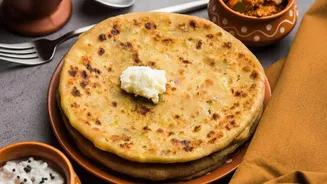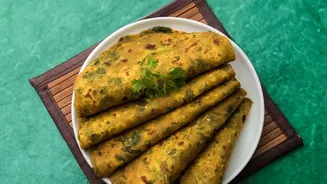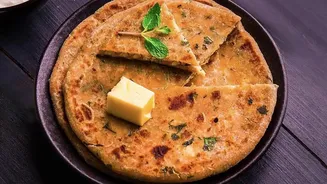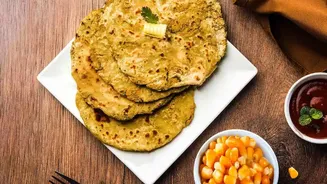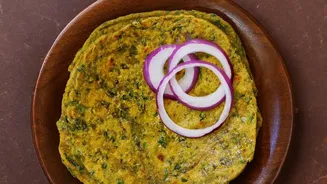







As winter mornings grow colder, the craving for a hot, savoury breakfast intensifies. This homemade sorghum-radish paratha, a rustic and wholesome Indian flatbread, is the perfect answer to warming you from the inside out.
A Winter-Perfect Combination
This paratha isn't just delicious;
it's packed with ingredients perfectly suited for the colder months. Sorghum, or jowar, is a gluten-free millet prized for its warming properties and high nutritional value. It's rich in protein, fibre, and essential minerals like magnesium, iron, and phosphorus. These nutrients help boost energy, support bone health, and improve circulation. Radish, or mooli, is a classic winter vegetable in India. According to Ayurvedic tradition, its pungent nature helps clear congestion and aids digestion, which can become sluggish in cold weather. Radishes are an excellent source of Vitamin C, which boosts immunity, and their high fibre content helps cleanse the system.
Gathering Your Ingredients
Making this paratha involves two main components: the dough and the filling. Here’s what you’ll need: For the Dough: - 2 cups sorghum (jowar) flour - 2 cups boiling water - 1 teaspoon salt - 1 teaspoon oil or ghee For the Radish Filling: - 1 large radish (mooli), grated - 1/2 cup finely chopped radish leaves (optional) - 1-2 green chillies, finely chopped - 1-inch piece of ginger, grated - 1 teaspoon carom seeds (ajwain) - 1/2 teaspoon red chilli powder - A pinch of turmeric powder - Salt to taste - Fresh coriander, finely chopped - Ghee or oil for cooking
The Secret to Soft Sorghum Dough
Working with jowar flour can be intimidating because it's gluten-free, which means it lacks the elasticity of wheat flour. The key to a soft, pliable dough that won’t crack is using boiling water. Bring the water to a rolling boil with salt and a teaspoon of oil. Turn off the heat, add the jowar flour all at once, and mix vigorously with a spoon until a rough, steaming mass forms. Cover the bowl and let it rest for about 5-10 minutes. This allows the flour to absorb the steam and moisture. Once it’s cool enough to handle but still warm, transfer it to a flat surface and knead for 5-7 minutes using the heel of your palm. If it feels dry, wet your hands with warm water and continue kneading until the dough is smooth and crack-free.
Preparing the Flavourful Filling
While the dough rests, prepare your radish filling. After grating the radish, place it in a bowl and sprinkle it with salt. Let it sit for about 10-15 minutes. This process draws out the excess water from the radish, which is crucial for preventing the parathas from becoming soggy and breaking apart. Once rested, take handfuls of the grated radish and squeeze out as much water as possible. In a bowl, combine the squeezed radish with the chopped green chillies, grated ginger, carom seeds, chilli powder, turmeric, chopped coriander, and salt. If you're using them, add the chopped radish leaves as well. Mix everything thoroughly. Your flavour-packed stuffing is ready.
Rolling and Cooking Your Parathas
There are two common ways to make these stuffed parathas. The first method involves mixing the filling directly into the flour before kneading. For a more distinct filling, you can stuff it. Divide the dough into equal-sized balls. Take one ball and flatten it slightly. Create a small well in the centre and place a spoonful of the radish mixture inside. Gently pull the edges of the dough up and around the filling, pinching them together at the top to seal it completely. Gently flatten the stuffed ball. To roll it, place it on a piece of parchment paper or a plastic sheet dusted with a little jowar flour. You can gently pat it out with your fingertips or use a rolling pin very lightly to form a small circle. Heat a tawa (griddle) over medium heat. Carefully place the paratha on the hot tawa and cook for about a minute. Flip it and apply ghee or oil. Press down gently with a spatula and cook until golden brown spots appear on both sides.
Tips for Success
To ensure your parathas turn out perfectly every time, keep these tips in mind. Always knead the jowar dough while it is still warm for the best texture. If your paratha edges crack while rolling, it means the dough is a bit too dry; simply wet your palms and knead the dough ball again before re-rolling. Don't roll the parathas too thin, as they are more likely to break. Serve them immediately off the tawa with a dollop of white butter, a side of plain curd or raita, and your favourite pickle for a truly satisfying winter meal.