



The New Lunar Gold Rush
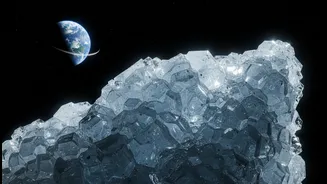
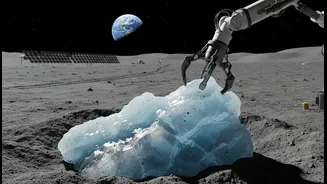
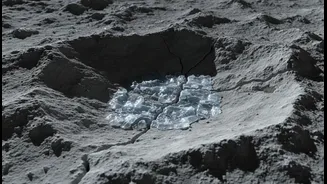
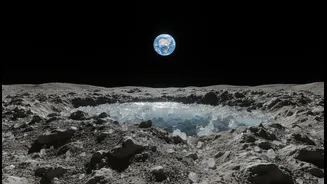
When we talk about lunar resources, the most valuable is surprisingly simple: water. Found as ice in permanently shadowed craters at the lunar poles, water is the key to a sustainable presence off-Earth. It can be harvested for drinking water and breathable
air for astronauts. More importantly, it can be split into its component elements, hydrogen and oxygen, which are primary ingredients for rocket propellant. Being able to refuel on the Moon would be a game-changer, dramatically reducing the cost and complexity of missions. Instead of hauling everything from Earth, future missions could 'live off the land'. Other valuable resources include Helium-3, a potential fuel for future fusion reactors, and metals like titanium and aluminum found in the lunar soil, or regolith.
How to Create a Treasure Map
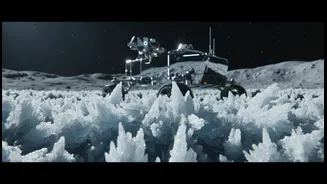
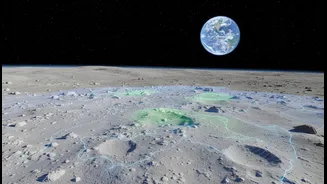
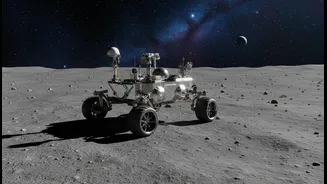
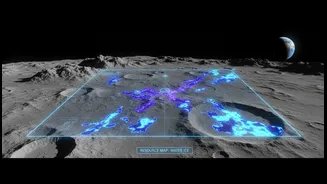
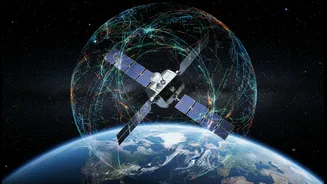
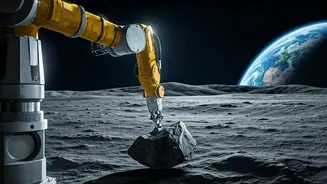
Before we can mine these resources, we need to know exactly where they are, how much is there, and in what form. This is where lunar resource mapping comes in. A fleet of orbiters, like NASA's Lunar Reconnaissance Orbiter (LRO), have been scanning the surface for years using various instruments to detect signs of water and other minerals. The next step involves rovers on the ground. NASA's Volatiles Investigating Polar Exploration Rover (VIPER) mission, for example, was designed to be a golf-cart-sized robot that would explore polar craters, drill into the surface, and directly measure the concentration and purity of water ice. Data from these robotic prospectors will generate the first-ever resource maps of another celestial body, highlighting the most promising locations for future human landing sites and extraction operations.
Living Off The Land
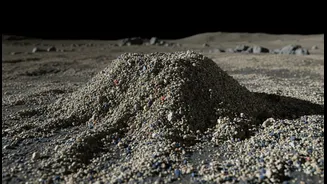
The entire concept is called In-Situ Resource Utilization, or ISRU. It’s the practice of collecting, processing, and using materials found in space to replace materials that would otherwise have to be launched from Earth. Every kilogram of material launched into space is incredibly expensive, so the ability to produce essentials like water, oxygen, and fuel on the Moon itself makes long-term exploration economically viable. ISRU isn't just about fuel; it also includes using lunar regolith as a building material. Early concepts imagine using 3D printing technologies to turn lunar soil into landing pads, habitats, and radiation shielding, protecting astronauts and equipment from the harsh lunar environment. This reduces reliance on Earth-based supply chains, making a lunar base more self-sufficient.
A Global and Commercial Effort
This push for lunar resources isn't happening in a vacuum. NASA's Artemis program, which aims to establish a permanent human presence on the Moon, is heavily reliant on ISRU. But NASA isn't going it alone. Through its Commercial Lunar Payload Services (CLPS) initiative, the agency is partnering with a growing number of private companies like Astrobotic, Intuitive Machines, and Firefly Aerospace to deliver science and technology payloads to the lunar surface. These companies are developing their own landers and rovers, fostering a new lunar economy. Meanwhile, other nations, including China and India, also have ambitious lunar programs focused on resource prospecting, setting the stage for a new era of international cooperation and competition at the Moon's south pole.
The Challenges Ahead
Despite the promise, significant hurdles remain. The technology for extracting and processing lunar resources on a large scale is still in its early stages of development. Operating machinery in the extreme cold of permanently shadowed craters, where temperatures can plummet to some of the lowest in the solar system, presents a massive engineering challenge. Beyond the technical issues, there are legal and regulatory questions. The Outer Space Treaty of 1967 states that no nation can claim sovereignty over the Moon, but it's less clear on the rights to extract and use resources for commercial purposes. Establishing a clear framework for resource rights will be crucial for encouraging private investment and preventing future conflicts on the lunar frontier.