





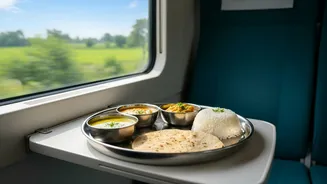
The System Behind Your Meal
When you buy food on a train, you're interacting with a system managed primarily by the Indian Railway Catering and Tourism Corporation (IRCTC). They are responsible for most catering services, either through their own pantry cars or by licensing private
vendors. These services are distinct from the e-Catering platforms, which allow you to order from approved restaurants at upcoming stations. A key first step for any cautious traveller is to distinguish between these official channels and the unauthorised hawkers who often board trains illegally. While enforcement against such vendors is ongoing, being able to identify a legitimate provider is your best initial defence against poor quality and unhygienic food. All vendors operating under Indian Railways, whether in pantry cars or at stations, are required to comply with standards set by the Food Safety and Standards Authority of India (FSSAI).
Spotting an Official Vendor
Authorised vendors are required to carry specific identification. In a move to eliminate unauthorised selling, Indian Railways has made QR code-enabled ID cards mandatory for all onboard catering staff. A quick scan of this card should reveal the vendor's name, Aadhaar details, medical fitness, and police verification. This digital verification is your most reliable tool to confirm you are dealing with legitimate staff. Beyond the ID, official staff are usually in uniform and must present a rate card if asked. Crucially, they are equipped with Point of Sale (POS) machines for billing. Insisting on a bill is not just about price; it's a confirmation of legitimacy. The Railways has a standing policy: "no bill, the food is free," designed to empower passengers and curb overcharging.
Digital Tools for the Savvy Traveller
Technology has significantly empowered passengers. The 'Food on Track' app and the IRCTC eCatering website are the safest ways to order, connecting you directly with verified, FSSAI-licensed restaurants along your route. You simply enter your PNR number to see a list of available food partners at upcoming stations. This system bypasses the ambiguity of pantry cars and platform vendors entirely. Additionally, recent initiatives have introduced QR codes on the meal packets themselves. Scanning this code provides details about the base kitchen where the food was prepared and the date of packing, adding another layer of transparency and accountability. These digital tools shift the power into the passenger's hands, allowing for pre-planned, verified, and safer food choices.
Enforcement and Your Role In It
Indian Railways has been actively strengthening its enforcement mechanisms. In the last three years, penalties amounting to ₹5.13 crore were imposed on catering licensees, with six contracts terminated for violations. Regular and surprise inspections are conducted to check for hygiene, compliance, and food safety standards. Measures include installing CCTV cameras in base kitchens for real-time monitoring and deploying Food Safety Supervisors. However, the system relies heavily on passenger participation. Every complaint filed provides valuable data that helps authorities target problem areas. Though food-related complaints are a tiny fraction of the 58 crore meals served annually, each report contributes to holding vendors accountable.
How to Effectively File a Complaint
If you encounter issues with food quality, overcharging, or vendor behaviour, there are clear channels for grievance redressal. The most effective tool is the 'Rail Madad' integrated platform, accessible via the app, website, or by dialling the helpline number 139. To file a complaint, you'll need your PNR number, a description of the issue, and if possible, photographic evidence. You can raise concerns about everything from hygiene to staff conduct. Complaints can also be logged via social media by tagging official handles like @RailMinIndia and @IRCTCofficial. Promptly filing a complaint not only seeks a resolution for your issue but also alerts the Railways to systemic problems, which can lead to inspections, fines, and the debarment of repeat offenders.