





The Universe’s Raw Materials
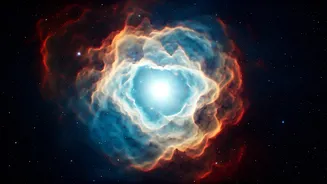
The term “cosmic fog” poetically describes the vast clouds of gas and dust that drift between stars. Scientifically known as nebulae or molecular clouds, these are not just empty space; they are the fundamental building blocks of the cosmos. Within these swirling,
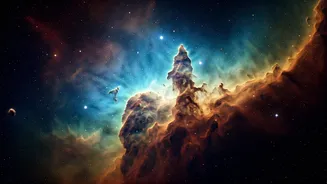
ethereal structures, new stars and planetary systems are born. Some of the most iconic images in astronomy, like the Pillars of Creation in the Eagle Nebula, are snapshots of this dynamic process. First captured by the Hubble Space Telescope in 1995 and revisited by the James Webb Space Telescope (JWST), the Pillars of Creation are towering columns of interstellar gas and dust being sculpted by the intense radiation from young, hot stars nearby. These regions are vast—the largest pillar is about four light-years high—and they represent a celestial nursery where the next generation of stars is forming.
Seeing the Invisible
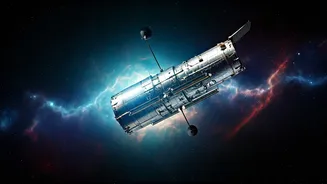
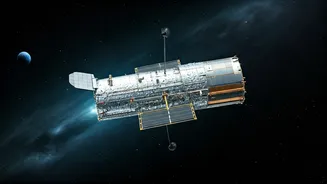
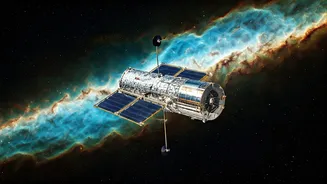
If you were to look at these nebulae through a standard telescope, you wouldn't see the vibrant, colorful spectacle we've come to expect. Our eyes are limited to a narrow band of visible light. Modern space telescopes like Hubble and JWST are designed to see far beyond that, into the infrared and ultraviolet parts of the spectrum. This is crucial because many cosmic events are hidden from our view. JWST, for instance, specializes in infrared light. This allows it to peer through the dense dust clouds that would otherwise obscure the view, revealing the newborn stars nestled deep inside. The data these telescopes send back to Earth doesn't start as a beautiful color photo. It arrives as a series of black-and-white images, each taken through a specific filter that isolates a particular wavelength of light.
The Art of Celestial Color
Turning that raw data into a cinematic masterpiece is a process that is both a science and an art. Image processors—specialists who are part scientist, part artist—take these individual black-and-white frames and assign colors to them. This is often called “representative color” or “false color” imaging, but that doesn’t mean the images are fake. Instead, colors are assigned to different wavelengths of light, many of which are invisible to the human eye, to make the scientific information visible and understandable. Conventionally, the longest wavelengths are assigned to redder colors and the shortest to bluer ones, mimicking how our eyes perceive the visible spectrum. For the famous Pillars of Creation image, astronomers assigned blue to light emitted by oxygen, green to hydrogen, and red to sulfur. This choice wasn’t arbitrary; it was made to highlight the different chemical elements and physical processes occurring within the nebula, turning complex data into a visually compelling story.
Cosmic Storytelling
The result is more than just a pretty picture. Each image is a narrative, a moment of cosmic history captured and translated for us. The billowing clouds, glowing star-forming regions, and shadowy dust lanes tell epic stories of creation and destruction. The intense detail resolved by telescopes like JWST adds to the cinematic feel, revealing textures and structures with breathtaking clarity. These images can inspire a profound emotional response. Studies have shown that viewing images of deep space can evoke feelings of awe, vastness, and a sense of connection to the universe. This experience is similar to the “overview effect” reported by astronauts who see Earth from space—a cognitive shift that brings a greater appreciation for our planet and humanity's place in the cosmos. It makes us feel both small in the face of such scale and connected to something immense.