




Meet the SHAPE Payload
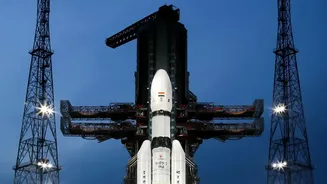
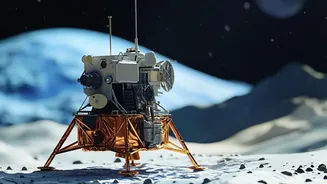
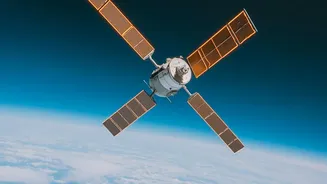
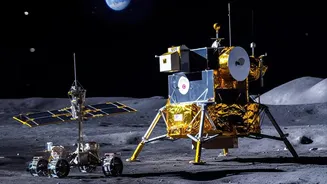
Aboard the Chandrayaan-3's Propulsion Module, which carried the Vikram lander and Pragyan rover to the Moon, was a unique scientific instrument called SHAPE. SHAPE stands for Spectro-polarimetry of Habitable Planet Earth. Unlike the other payloads designed
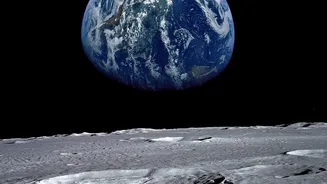
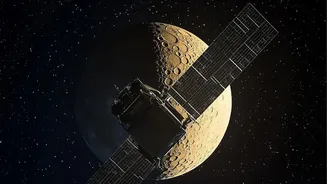
to study the Moon, SHAPE's primary mission was to stare at our own planet from a distance. After successfully deploying the lander, the Propulsion Module remained in lunar orbit, giving SHAPE a perfect vantage point to observe Earth as a single, distant point of light, much like how we see planets in other solar systems.
A Cosmic Dress Rehearsal
The fundamental question SHAPE was designed to answer is: what does a life-bearing planet look like from very far away? Earth is, so far, the only example we have of a habitable world teeming with life. To find other, similar planets—often called exoplanets—we first need to know what to look for. By turning its sensors on Earth, ISRO scientists are using our home planet as a benchmark. The experiment is essentially a dress rehearsal for future missions. It is capturing the unique 'signature' of a habitable world so that when powerful new telescopes are pointed at distant exoplanets, we will have a reference to compare them against. If a faraway planet has a similar signature to Earth's, it would become a prime candidate in the search for extraterrestrial life.
The Science of Light and Life
SHAPE studies Earth by using a technique called spectro-polarimetry. It analyses the light reflected from our planet, breaking it down into its constituent colours (a spectrum) and measuring the orientation of the light waves (polarisation). This reflected light carries a wealth of information. The spectrum can reveal the chemical composition of the atmosphere, such as the presence of water vapour, which is crucial for life. Polarisation, on the other hand, tells scientists about clouds—their presence, thickness, and particle properties. Clouds play a massive role in a planet's climate and can be a key indicator of a complex atmosphere. By combining these two measurements, SHAPE builds a detailed profile of Earth's light.
Creating Earth's Habitable Signature
From its orbital position, SHAPE observes the 'disk-integrated' light of Earth—meaning it sees the planet as a single pixel, blending the light from oceans, continents, clouds, and atmosphere. This mimics how we would view an exoplanet that is light-years away. Over time, as Earth rotates and the viewing angle changes, this signature varies. For instance, the light signature changes depending on whether the instrument is looking at the reflective blue of the Pacific Ocean or the dense greenery of a continent. By capturing these variations over time, ISRO is creating a comprehensive library of what a living, breathing planet looks like from a distance. This data will be invaluable for interpreting the faint light we receive from Earth-sized exoplanets in the future.
A Bonus Mission for a Future Quest
Initially planned to operate for about three months, the Chandrayaan-3 Propulsion Module had so much fuel left after its perfect journey that ISRO performed another unique experiment. In late 2023, it moved the module from lunar orbit back into a high Earth orbit. This extended SHAPE's mission, allowing it to continue observing our planet and gather even more data. This forward-thinking maneuver not only maximizes the scientific return from the Chandrayaan-3 mission but also provides crucial operational insights for future missions, such as those that might one day return samples from another world. It turns a part of the historic lunar mission into a foundational step in humanity's next great exploration: the search for another Earth.