



A Second Chance for a Powerful Eye
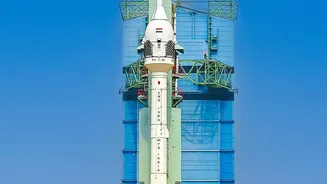
The upcoming GISAT-1A mission is, in many ways, a story of redemption. Its predecessor, GISAT-1 (also known as EOS-03), was lost in August 2021 when the GSLV rocket carrying it suffered a technical anomaly in its cryogenic upper stage. The failure was a significant
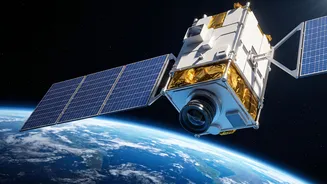
setback, but ISRO has since incorporated design changes to improve the rocket's robustness. Now, GISAT-1A is poised to fulfil the original mission's promise: to place a state-of-the-art geo-imaging satellite into a geostationary orbit approximately 36,000 kilometres above the Earth. Unlike satellites in lower orbits that pass over a location periodically, a geostationary satellite remains fixed over one spot, allowing for continuous, real-time observation of the Indian subcontinent.
Unprecedented Real-Time Monitoring
The core strength of GISAT-1A lies in its high temporal resolution. It is designed to image a selected area of interest every five minutes and the entire Indian landmass every 30 minutes, with a spatial resolution of about 42 meters. This 'persistent eye' in the sky is a monumental leap. Equipped with multi-spectral and hyper-spectral imaging instruments, the satellite can see in various bands of light, including visible, near-infrared, and short-wave infrared. This allows it to gather a rich variety of data day and night, under cloud-free conditions. This capability to provide rapid, repeated imagery of large areas is what separates GISAT-1A from other earth-observation satellites and makes it a uniquely powerful tool for a country of India's size and complexity.
A Game-Changer for National Security
In an era of complex geopolitical dynamics, the strategic importance of GISAT-1A cannot be overstated. A persistent eye over the region will significantly bolster India's surveillance capabilities along its borders. The ability to monitor troop movements, infrastructural developments, and other activities in near real-time provides a crucial intelligence advantage. Furthermore, it will enhance maritime domain awareness across the vast Indian Ocean, a critical artery for global trade and a key area of strategic interest. While lower-orbit satellites provide high-resolution snapshots, GISAT's constant watch offers a different, more strategic layer of security, making it a vital asset for the nation's defence and intelligence establishment.
A Lifeline During Natural Disasters
Beyond its strategic applications, GISAT-1A is set to become an invaluable tool for disaster management. India is highly vulnerable to natural calamities like cyclones, floods, landslides, and forest fires. The satellite's ability to provide near real-time imagery can transform how authorities respond to these events. Emergency response teams can get a clear, continuous picture of an unfolding disaster, helping them to map affected areas, identify safe evacuation routes, and allocate resources more effectively. From tracking the path of a cyclone as it approaches the coast to monitoring the spread of a forest fire, GISAT-1A will enable quicker, more informed decisions that can save lives and minimise damage.
Fueling India’s Broader Space Ambitions
A successful GISAT-1A launch will do more than just place a satellite in orbit; it will reaffirm the reliability of the GSLV Mk-II rocket, particularly its indigenous cryogenic engine. This is crucial for ISRO’s future missions, including the Gaganyaan human spaceflight program and the deployment of next-generation NavIC navigation satellites. The mission is a critical component of India's broader push to build a comprehensive space infrastructure that serves both civilian and strategic needs. It complements the country's existing constellation of remote sensing satellites and is a step toward a future where India leverages a hybrid network of satellites in different orbits to secure its interests on the ground and in space.