



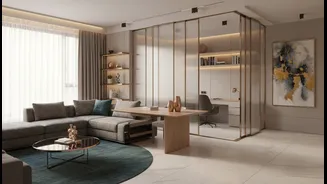

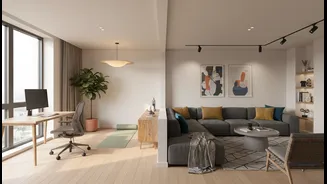


The New Corner Office Reality
For many Gen Z and Millennial professionals, the concept of a dedicated home office is a luxury. Their careers often began during or after the massive shift to remote and hybrid work, making the compact, multi-purpose workspace a default reality. This
has driven a trend that is less about elaborate furniture and more about creating an environment that supports focus, well-being, and a clean aesthetic. Because they are accustomed to working in various settings, from coffee shops to their living rooms, younger workers value flexible and adaptable spaces. When your desk is also your dining table, creating psychological boundaries is crucial, and strategic lighting has become a primary tool for achieving this separation and enhancing productivity.
Light as a Productivity Tool
Good lighting does more than just prevent eye strain; it directly influences mood, focus, and energy levels. Our bodies have a natural circadian rhythm, an internal clock regulated by light. Bright, cool-toned light signals the brain to be alert and suppresses melatonin, the sleep hormone, which is ideal for focus-intensive tasks. Conversely, warm, dim light helps the body wind down. Studies have shown that poor lighting can lead to headaches and fatigue, while a well-lit environment can boost concentration and reduce errors. For remote workers spending long hours in one spot, using light to manage their body's natural energy cycles is a powerful productivity hack.
The Art of Layering Light
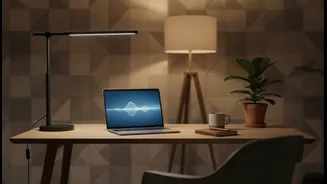
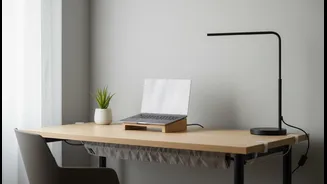
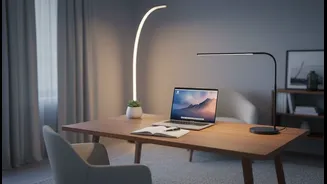
Instead of relying on a single, harsh overhead fixture, the minimalist approach involves layering different types of light. This technique combines three key elements: ambient, task, and accent lighting. Ambient light is the general, foundational illumination for the whole room, often from a ceiling light or floor lamp. Task lighting provides focused brightness for specific activities, like an adjustable desk lamp for reading documents or a monitor light bar to illuminate your keyboard without creating screen glare. Accent lighting adds visual interest and warmth, such as using a small lamp to highlight a plant or a piece of art. This layered approach creates depth, reduces eye strain, and allows workers to adapt the space for different needs throughout the day.
Finding the Right Colour Temperature
Not all light is created equal. The colour temperature, measured in Kelvin (K), determines whether light appears warm (yellowish) or cool (bluish-white). Cool white light, typically between 4000K and 6500K, mimics natural daylight and is proven to increase alertness and focus, making it perfect for work hours. Research shows it can improve performance on analytical tasks. As the workday ends, switching to warm light (around 2700K to 3000K) helps signal to the brain that it's time to relax and unwind. Many young workers use smart bulbs that can change colour temperature automatically, shifting from cool blue tones in the morning to warmer yellow tones in the evening, which can help prevent the post-lunch energy dip and support a healthier sleep cycle.
Minimalist Fixtures, Maximum Impact
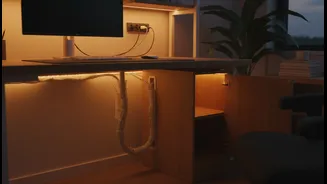
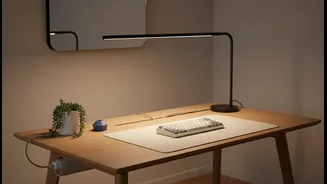
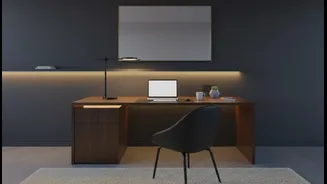
In a compact office, every item must justify its footprint. This is why minimalist fixtures are so popular. Wall-mounted sconces and task lights free up precious desk space. Sleek LED light strips can be discreetly placed under shelves or behind monitors to provide a soft, ambient glow without adding clutter. Slender floor lamps can tuck into a corner, providing both ambient and task light depending on their design. The focus is on functionality and form, choosing pieces that are effective but don't overwhelm the small space. A single, well-chosen adjustable desk lamp or a minimalist pendant light can provide excellent illumination while also serving as a simple, stylish design element.