


What Is Artisan-Focused Slow Travel?
Forget rushing between monuments. This approach to travel is about unpacking your bags and your curiosity in one place. It involves staying with or near artisan families, learning the basics of their craft, and understanding the rhythm of their daily
lives. It’s an exchange, not just a transaction. You offer your time and genuine interest, and in return, you gain a skill, a story, and a deep, authentic connection to a place and its people. This isn't about becoming a master craftsperson in a week; it's about appreciating the heritage, skill, and patience that go into creating a piece of art by hand. It transforms you from a mere spectator into a respectful participant in a centuries-old cultural legacy.
Kutch, Gujarat: A Tapestry of Textiles
The arid landscape of Kutch is home to a vibrant ecosystem of textile arts. Communities here are masters of crafts like Bandhani (tie-dye), Ajrakh (block-printing), and intricate mirror-work embroidery. A slow travel journey here could mean staying in a traditional Bhunga (mud hut) in a village like Hodka or Bhujodi. Your days might be spent sitting with women as they meticulously tie tiny knots for a Bandhani saree, or learning from a master printer how he layers natural dyes to create the complex patterns of Ajrakh. You’ll share meals, listen to stories passed down through generations, and see how these crafts are not just a livelihood but the very fabric of their cultural identity. Several responsible tourism organisations and local NGOs facilitate these homestays, ensuring your visit is ethical and directly benefits the community.
Raghurajpur, Odisha: The Painted Village
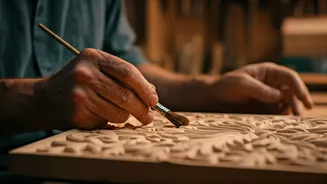
Imagine a village where every home is an art gallery and every resident is an artist. Welcome to Raghurajpur, a heritage crafts village dedicated to Pattachitra, the art of painting on dried palm leaves or tussar silk. Staying here allows you to witness the entire creative process. You'll learn how canvases are prepared with cloth and tamarind paste, how brushes are made from mouse hair, and how colours are derived from minerals and plants. Under the guidance of a Chitrakaar, you might try your hand at painting the fine, intricate lines depicting mythological tales and folklore. The experience is an immersion into a world where art and spirituality are inseparable, offering a profound appreciation for the discipline and devotion behind each masterpiece.
Molela, Rajasthan: Clay and Devotion
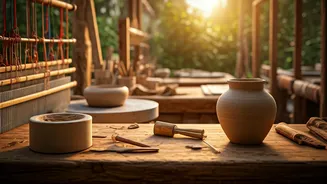
Nestled near the historic Kumbhalgarh Fort, the village of Molela is renowned for its unique terracotta craft. For generations, potters here have been creating votive plaques of deities, particularly of the folk god Devnarayan. An immersive stay allows you to get your hands dirty—literally. You’ll learn from the Kumhar community how they source and prepare the local clay, shape the plaques by hand, and fire them in traditional kilns. It’s a rustic, grounding experience that connects you to the earth and the deep-rooted faith that inspires this art form. Beyond the pottery wheel, you’ll experience the simple, hardy life of rural Rajasthan, a stark and beautiful contrast to the state’s bustling tourist cities.
Channapatna, Karnataka: The Town of Toys
Known as ‘Gombegala Ooru’ (Toy Town), Channapatna is famous for its bright, lacquered wooden toys. This craft, supported by Tipu Sultan in the 18th century, uses soft ivory wood and non-toxic vegetable dyes, making the toys safe and eco-friendly. A visit here offers a fascinating look into a small-scale industry that’s both traditional and innovative. You can spend time in a workshop, watching artisans skillfully operate a lathe to shape the wood, and then learn the mesmerising process of applying coloured lacquer with a dried palm leaf. It’s a chance to understand the economics of a craft, the challenges it faces from mass-produced plastic toys, and the pride of the community in preserving its unique heritage.