







The LEO Gold Rush
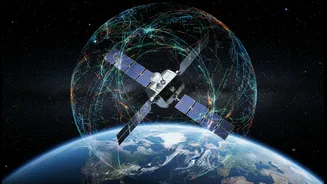
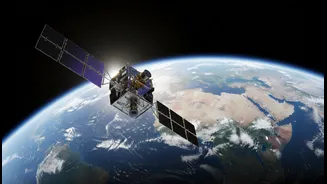
Low Earth Orbit (LEO), the region of space up to 2,000 kilometres above our planet, has become the hottest real estate in the cosmos. Its proximity to Earth allows for lower latency and higher-speed data transmission, making it ideal for everything from
satellite internet to real-time Earth imaging. This has triggered a modern-day gold rush, with companies launching thousands of satellites to form vast constellations. Giants like SpaceX's Starlink and Amazon's Project Kuiper are deploying mega-constellations to provide global broadband. This surge in satellite deployment, fueled by cheaper launch costs thanks to reusable rockets, has created a booming supply side of the space economy. The market for LEO satellite services is projected to grow significantly, from around USD 15-17 billion in 2026 to over USD 74 billion by 2035.
The Demand Conundrum
While the supply of satellites is exploding, a critical question hangs over the industry: is there enough demand to support them all? The excitement around building and launching can obscure the less glamorous, but far more crucial, work of securing paying customers. Some analysts warn of a potential bubble, where the number of satellites grows much faster than the actual market for their services. While demand for satellite internet in underserved areas is a strong driver, it's not the only one. The long-term viability of the commercial space sector depends on diversifying revenue streams beyond just connectivity. Startups cannot simply assume that if they build a satellite, customers will automatically appear. They face the immense challenge of proving a clear and sustainable business case in a capital-intensive industry. Many promising ventures in previous space booms have failed not due to technology, but because the market they targeted was overestimated or failed to materialize.
Beyond Broadband
The conversation around LEO is often dominated by broadband internet, but the real opportunities for many startups lie in more specialized, high-value niches. Earth Observation (EO) is a rapidly growing segment, with surging demand for high-resolution satellite imagery and data from sectors like agriculture, urban planning, climate monitoring, and financial services. Another key area is the Internet of Things (IoT), where satellite constellations can provide connectivity for devices in remote locations, from shipping containers to environmental sensors. There are also significant opportunities in government and military contracts, which seek resilient and secure communication and surveillance capabilities. For startups, success often means not competing with SpaceX head-on, but identifying a specific problem that only their unique satellite data or service can solve, and then finding the customers willing to pay a premium for that solution.
The Indian Startup Approach
India's burgeoning space-tech ecosystem is a prime example of this strategic focus. Since the sector was opened to private companies in 2020, nearly 400 startups have registered with IN-SPACe, the national authorization centre. Many are wisely avoiding the mega-constellation race and instead targeting niche applications. For example, Bengaluru-based Pixxel is developing a constellation of hyperspectral imaging satellites that can see things traditional satellites can't, providing valuable data for agriculture and climate science. GalaxEye is combining optical cameras with radar sensors for all-weather imaging. Meanwhile, companies like Skyroot Aerospace and Agnikul Cosmos are focusing on building smaller, more flexible launch vehicles to provide 'cab services' to orbit for these specialized satellites. This approach, supported by ISRO's expertise and facilities, allows Indian startups to carve out a distinct and valuable position in the global space economy.