


The Ultimate Logistical Nightmare
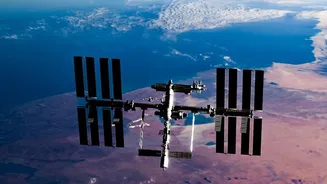
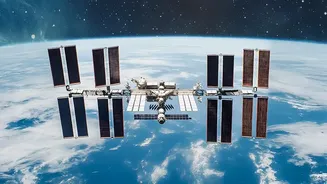
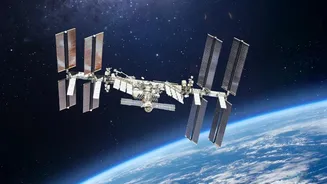
Sending anything to the International Space Station (ISS) is an incredibly expensive endeavour. Every kilogram of cargo has a hefty price tag, with estimates for launching a single half-litre bottle of water ranging from thousands to tens of thousands of dollars.
Given that an astronaut needs water for drinking, food rehydration, and hygiene, launching all required water from Earth is simply not sustainable. Before NASA implemented its advanced water recycling system, water constituted nearly half of the cargo payload on resupply missions. This immense cost and logistical challenge created a powerful incentive to develop a system where resources could be endlessly reused, creating a semi-self-sufficient habitat in the sky.
Yesterday's Sweat, Tomorrow's Coffee
The heart of the ISS's self-sufficiency is the Environmental Control and Life Support System (ECLSS). A key part of this is the Water Recovery System, a marvel of engineering that reclaims wastewater from every possible source. This includes moisture from the crew's breath and sweat, which is captured by advanced dehumidifiers, as well as water from hygiene activities. Most famously, it includes a Urine Processor Assembly that uses vacuum distillation to separate water from urine. This recovered water is then sent to a processor where it is filtered and purified, resulting in water that is often cleaner than what most people drink on Earth. Recent upgrades have pushed the total water recovery rate to an astonishing 98%, meaning nearly every drop is reused.
Manufacturing Breathable Air
Just as critical as water is a constant supply of breathable air. The ECLSS tackles this with its Oxygen Generation System. This system uses a process called electrolysis to split recycled water molecules into hydrogen and oxygen. The oxygen is released into the cabin for the crew to breathe, while the hydrogen is put to further use. Meanwhile, the Air Revitalization System constantly scrubs the cabin air, removing the carbon dioxide (CO2) exhaled by the astronauts. Some of this CO2 is vented, but much of it is sent to a Sabatier reactor. Here, it is combined with the hydrogen from the electrolysis process to create more water, which can then be used to generate more oxygen, closing the loop even further.
The Testbed for Deep Space
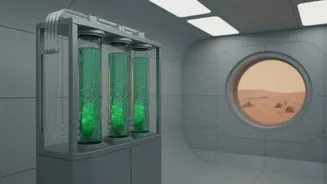
These recycling systems are not just about keeping the ISS running efficiently; they are a crucial testbed for the future of human space exploration. A multi-year mission to Mars, for example, is too far and too long for regular resupply missions. The survival of the crew will depend entirely on a near-perfectly 'closed-loop' system where nearly 100% of all water and air can be recycled. NASA has estimated that achieving a 98% water recovery rate was a necessary milestone to make a Mars mission feasible. By operating and maintaining these complex systems in the real-world environment of the ISS, astronauts and engineers on the ground are gathering vital data on their reliability, maintenance needs, and long-term performance, paving the way for humanity's next giant leap.