








From Field to Kitchen: A Tale of Two Processes
The fundamental difference between jaggery (gur) and white sugar lies in their journey from sugarcane to your pantry. Jaggery is produced through a beautifully simple, traditional method: sugarcane juice is extracted, boiled in large open pans to evaporate
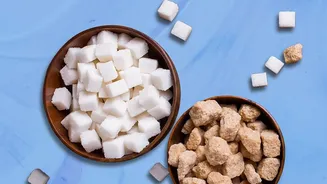
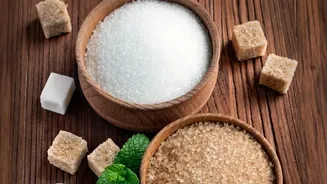
water, and then solidified into blocks. This minimal processing means it retains the natural molasses, which gives jaggery its characteristic golden-to-dark-brown colour and complex, caramel-like flavour. In contrast, white sugar undergoes an intensive industrial refining process. After the juice is extracted, it goes through multiple stages of clarification, filtration, crystallisation, and bleaching, often with chemicals like sulphur dioxide. This strips away the molasses, minerals, and all other compounds, leaving behind pure, white sucrose crystals with a neutral taste. So, while both originate from the same plant, one is a whole food concentrate and the other is a highly purified extract.
The Nutritional Divide: More Than Just Sweetness
Because it retains molasses, jaggery contains a profile of micronutrients that white sugar lacks entirely. It is a source of minerals like iron, potassium, magnesium, and calcium, as well as trace amounts of zinc and phosphorus. Some of its iron content also comes from being prepared in traditional iron vessels. White sugar, on the other hand, provides what are often called 'empty calories' — it offers energy in the form of sucrose but is devoid of any vitamins or minerals. However, it's crucial to maintain perspective. While jaggery is nutritionally superior, you would need to consume a large quantity to meet a significant portion of your daily mineral needs, at which point the high sugar intake would outweigh the benefits. In terms of calories, the two are nearly identical, with 100 grams of jaggery containing around 383 calories and the same amount of sugar having about 387 calories.
Jaggery’s Winter Wellness Connection
Jaggery has a celebrated place in Indian winter traditions for good reason. Ayurvedic practices classify it as an 'ushna' or warming food, believed to help the body generate heat during colder months. This is why it's a star ingredient in seasonal preparations like 'til-gur ladoos', 'chikki', and 'gajak'. Traditionally, a small piece of jaggery is eaten after a meal to aid digestion by stimulating digestive enzymes. Its mineral and antioxidant content is also thought to help boost immunity and provide relief from common winter ailments like coughs and colds by clearing the respiratory tract. While these benefits are rooted in centuries of use, they are best understood as gentle, supportive properties rather than potent medicinal cures.
The Glycemic Index Surprise
A common belief is that jaggery is safer for blood sugar control than white sugar. However, scientific data tells a different story. The Glycemic Index (GI), which measures how quickly a food raises blood sugar levels, is actually higher for sugarcane jaggery (around 84) than for white sugar (around 65). This means jaggery can cause a faster and sharper spike in blood sugar, a critical fact for individuals with diabetes or insulin resistance. The reason is that jaggery contains free glucose and fructose alongside sucrose, which are absorbed rapidly. Therefore, the idea that jaggery is a 'diabetic-friendly' sweetener is a dangerous myth. For blood sugar management, both sweeteners must be consumed with caution and in strict moderation.
Making an Informed Choice
So, which one should you choose? The answer isn't a simple swap but a mindful decision. If your goal is to select a less processed, more natural sweetener that offers a richer flavour and a small dose of minerals, jaggery is the clear winner. Its deep, earthy taste enhances traditional Indian sweets, 'gur wali chai', and winter dishes in a way that neutral white sugar cannot. However, if your primary concern is managing calorie intake or blood sugar levels, replacing sugar with jaggery will not make a significant difference. Both are concentrated sources of sugar and energy. Overconsumption of either can contribute to weight gain, digestive issues, and other health problems. The healthier approach is not to substitute one for the other in large amounts, but to reduce your overall intake of all added sweeteners.