







The Daily Delay Cascade
Air travel operates on a fragile, interconnected schedule. A single storm in Mumbai, a mechanical issue in Delhi, or air traffic congestion over Bengaluru can have a ripple effect across the country. This is often called the 'knock-on' or 'cascading'
effect. Delays that start in the morning rarely disappear; instead, they accumulate. An aircraft that arrives 30 minutes late for its first flight of the day will likely carry that delay, or a larger one, to its next destination. By the evening, these small, compounding delays mean that afternoon and evening flights are statistically more likely to be significantly delayed or cancelled. Booking a late-day connection puts you at the mercy of every single disruption that happened on the network hours before you even arrived at the airport.
No More Planes, No More Crews
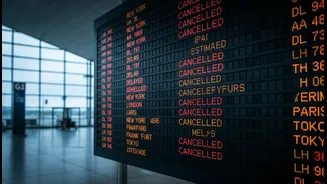
When a mid-day flight gets cancelled, airlines have a handful of options. They can try to rebook passengers on later flights that same day. But when the last flight of the day is cancelled, those options vanish. There are no more planes scheduled to fly that route until the next morning. Furthermore, airline crews have strict, legally mandated limits on their duty hours. A crew that has been dealing with rolling delays all day may 'time out', meaning they are legally unable to fly again until they've had a required rest period. Finding a fresh, standby crew late at night is often impossible. This combination means that if your final connecting flight is grounded, you are almost certainly grounded with it until the next day.
The Unplanned Overnight Stay
Facing a cancellation on the day's last flight means an unexpected overnight stay. This is where passenger rights, specifically those outlined by India's Directorate General of Civil Aviation (DGCA), become crucial. If the cancellation is within the airline's control (e.g., maintenance, crew issues), they are generally responsible for providing accommodation. For significant delays on flights scheduled between 8 p.m. and 3 a.m., airlines are required to provide free hotel accommodation for delays over six hours. However, if the cause is an 'extraordinary circumstance' like severe weather, the airline is exempt from paying cash compensation, though they must still provide a choice between a full refund or an alternate flight and assist with meals and, if necessary, a hotel stay. Navigating this can be stressful, with long queues and a scramble for limited hotel rooms.
Smarter Booking Strategies
The best way to manage this risk is to avoid it during booking. First, always opt for nonstop flights whenever your budget and schedule allow; it eliminates the connection risk entirely. If a connection is unavoidable, book the earliest one possible. An early connecting flight gives you a buffer; if it's cancelled, there are still other flights later in the day the airline can rebook you on. Look for layovers that are at least 90 minutes to two hours long, giving you a cushion for minor delays on your incoming flight. Finally, consider booking all legs of your journey with a single airline or on one ticket. If you miss a connection on a single booking, the airline is obligated to rebook you. If you book separate tickets with different carriers, the second airline has no obligation if you miss their flight due to a delay on the first.
Your Day-of-Travel Playbook
Even with perfect planning, disruptions happen. On your travel day, be proactive. Use flight tracking apps to monitor not just your flight, but the status of the inbound aircraft that will operate your flight. If you see trouble brewing, speak to an airline agent immediately—don't wait for a formal cancellation announcement. The queue will be shorter, and options will be more plentiful. Have the airline's customer service number saved in your phone and be ready to use their online chat or social media channels, which can sometimes be faster than waiting in line. Know your rights under DGCA rules, but also remember that a polite and patient approach with ground staff often yields the best results. They are dealing with a stressful situation too, and your cooperation can make finding a solution easier.