







The Culprits: Why Your Wallet Feels Lighter
The primary reason for this mid-year pressure is a steady rise in inflation. In June 2026, India's retail inflation rate climbed to 4.38%, crossing the Reserve Bank of India's 4% target for the first time in 17 months. This increase isn't abstract; it's
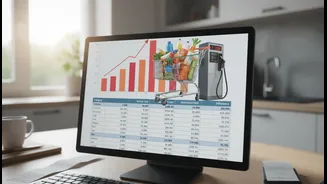
felt directly at the checkout counter and the fuel pump. Food inflation, a major component of household spending, accelerated to 5.32% in June. This has been driven by several factors, including geopolitical tensions affecting commodity prices and an uneven monsoon impacting crop yields. At the same time, transport costs have also jumped, with state-owned retailers hiking fuel prices. These two categories—food and fuel—create a ripple effect, making everything from daily commutes to the cost of goods on store shelves more expensive.
Beyond Kirana and Petrol: Other Hidden Pressures
While food and fuel are the most visible drivers, other costs are also creeping up, putting a strain on urban and middle-class families in particular. Expenses for rent, children's education, and loan EMIs are significant fixed costs that leave little room for flexibility. Recent analysis shows that households are increasingly borrowing to cover consumption gaps, leading to a decline in overall savings buffers. This makes families more vulnerable to sudden price shocks. Furthermore, the cost of personal care items and even precious metals like gold and silver has seen sharp increases, influenced by global market trends and import duties. This combination of rising essential and discretionary spending is what makes the current squeeze feel particularly tight.
What is a Mid-Year Budget Reset?
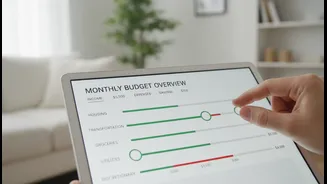
Confronted with these rising costs, the idea of a 'budget reset' can sound intimidating, but it doesn't mean starting from scratch or enforcing a painfully restrictive lifestyle. Think of it as a financial health check-up. It’s a proactive step to understand your new financial reality, realign your spending with your priorities, and regain a sense of control. The goal isn't to track every single rupee but to make conscious decisions about where your money can work best for you. It’s about shifting from a passive spender to an active manager of your own household finances.
Step 1: Get a Clear Picture of Your Cash Flow
The first step in any reset is understanding where your money is actually going. You can’t fix a leak you can’t find. Spend a week or two tracking your expenses. Use a notebook, a simple spreadsheet, or a budgeting app. Group your spending into broad categories like 'Fixed Essentials' (rent, EMIs, insurance), 'Variable Essentials' (groceries, utilities, transport), and 'Discretionary' (dining out, entertainment, shopping). Be honest and don't judge the numbers. The goal is simply to gather data. This will give you a clear, factual basis for the changes you'll make next.
Step 2: Prioritise Needs, Wants, and Savings
With your spending laid out, it’s time to apply a framework. A popular and effective method is the 50/30/20 rule. Allocate roughly 50% of your take-home income to 'Needs' (the essentials you just listed), 30% to 'Wants' (discretionary spending), and 20% to 'Savings and Debt Repayment'. In the current high-cost environment, you may find your 'Needs' category is creeping above 50%. The reset is your opportunity to look at the 'Wants' category and identify areas to trim. This could mean reducing the frequency of food delivery, consolidating subscriptions, or finding lower-cost entertainment options.
Step 3: Make Small, Sustainable Changes
A successful budget reset is built on small, manageable adjustments, not drastic deprivation. Look for easy wins. Can you plan meals for the week to reduce grocery waste and impulse buys? Are there brand switches you can make on household goods that offer similar quality for a lower price? Review your phone and internet plans to see if you're overpaying for data you don't use. Even small savings add up. Saving ₹2,000 a month might not seem like much, but over a year it's ₹24,000—enough to cover an unexpected expense without going into debt.