


1. The Neck and Shoulder Release
Sitting and staring at a screen often causes us to crane our heads forward, leading to significant strain in the neck and upper back. This simple stretch helps release that built-up tension. While sitting tall, gently lower your left ear toward your left shoulder,
holding for 15 to 30 seconds. You should feel a gentle pull along the right side of your neck. Repeat on the other side. Follow this by slowly shrugging your shoulders up toward your ears, holding for a few seconds, and then releasing them down. This combination targets the trapezius muscles, which are notorious for holding work-related stress.
2. The Seated Torso Twist
Our spines aren't designed to stay in one static position for hours. A gentle twist can help maintain mobility and relieve lower back stiffness. Sit at the front of your chair with your feet flat on the floor. While keeping your hips facing forward, gently twist your upper body to the right, using your left hand on your right knee for a light pull and your right hand on the back or arm of the chair for support. Hold the stretch while taking a deep breath, and try to look over your right shoulder. Hold for 15-20 seconds before returning to the center and repeating on the left side. This movement helps to lubricate the spine and counteract the slouch that can easily develop during a long workday.
3. The Chest Opener
Hunching over a keyboard encourages a rounded-shoulder posture, which tightens the chest muscles and weakens the upper back. A chest opener does the exact opposite, encouraging better posture. You can do this by sitting tall at the edge of your seat and clasping your hands behind your back. Slowly straighten your arms and roll your shoulders back, squeezing your shoulder blades together. You should feel a broad stretch across your chest. For a deeper stretch, gently lift your clasped hands upwards. This not only feels great but actively fights the 'tech neck' posture so many desk workers develop.
4. The Wrist and Forearm Stretch
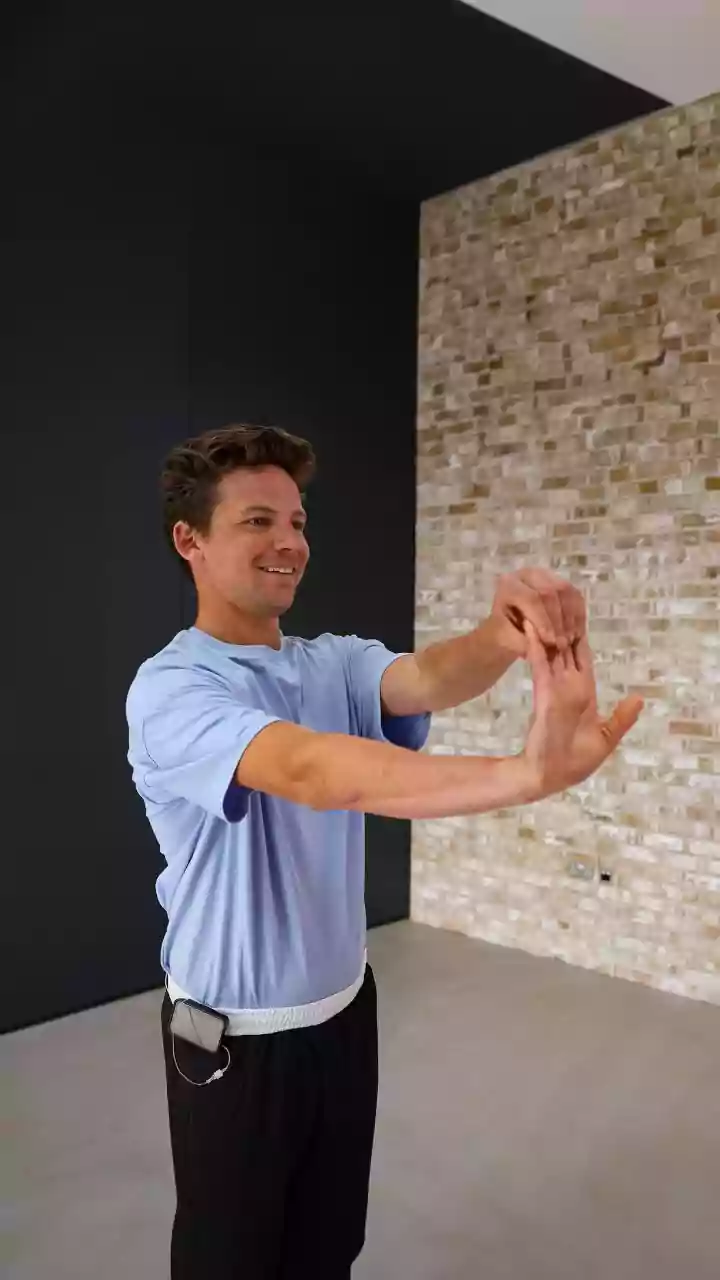
Constant typing and mouse use can lead to repetitive strain in the wrists and forearms. Taking a moment to stretch them can prevent pain and conditions like carpal tunnel syndrome. Extend your right arm in front of you with your palm facing up. With your left hand, gently bend your right fingers down toward the floor until you feel a stretch in your forearm. Hold for 15-30 seconds. Then, reverse the stretch by extending your arm with your palm facing down and gently pulling your fingers toward your body. Repeat on both sides to keep your wrists and hands feeling loose and painfree.
5. The Seated Figure‑Four Stretch
Prolonged sitting is particularly hard on the hips and glutes, causing them to become tight, which can contribute to lower back pain. The figure‑four stretch is an excellent way to target these muscles right from your chair. While seated, cross your right ankle over your left knee, creating a '4' shape with your legs. Keeping your back straight, gently lean forward from your hips until you feel a stretch in your right glute and outer hip. It's important not to slouch; lead with your chest to deepen the stretch effectively. Hold for 20‑30 seconds, then switch legs. This helps improve hip mobility and can relieve sciatic nerve irritation.