
An Eight-Year Cosmic Journey
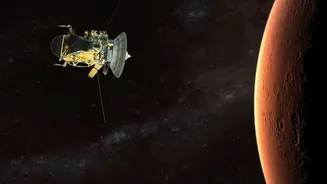
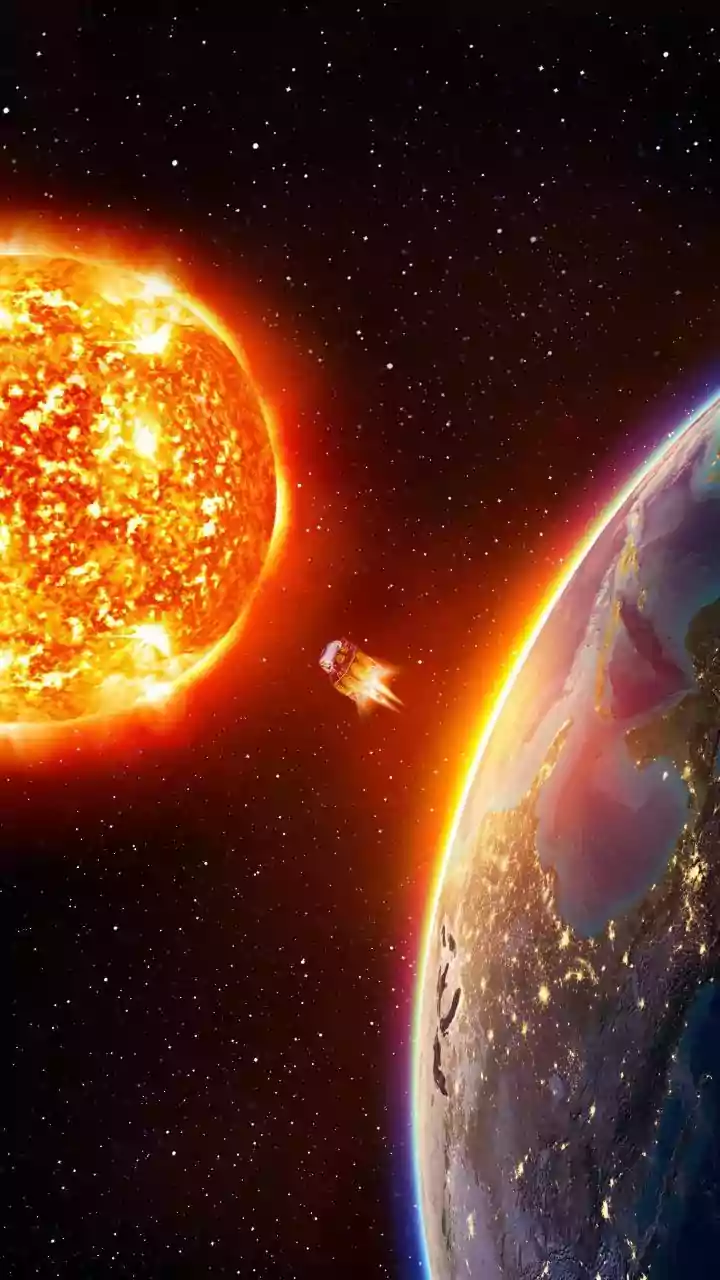
Launched in October 2018, the BepiColombo mission has been on one of the most complex trajectories ever designed. Getting to Mercury is notoriously difficult; the Sun's immense gravity constantly accelerates any approaching spacecraft. Instead of a direct
flight, BepiColombo had to execute a series of nine planetary flybys—one of Earth, two of Venus, and six of Mercury itself—to use the planets' gravity to slow down and adjust its course. This long cruise phase was necessary to shed enough velocity to be captured by Mercury's gravity rather than overshooting it or falling into the Sun. The original arrival was planned for late 2025, but a power issue with the craft's electric thrusters led to a revised schedule, pushing the arrival to November 2026.
Step One: Jettison the Travel Pod
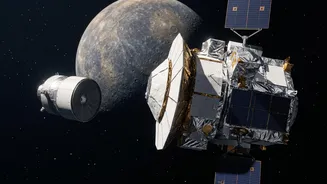
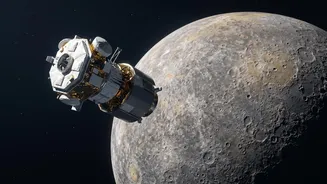
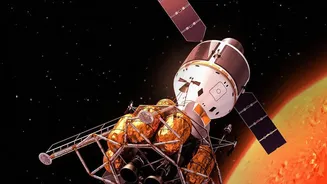
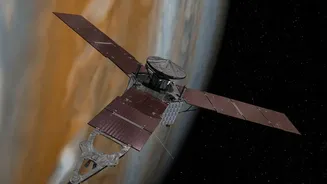
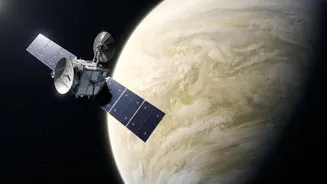
The first major event in the arrival sequence has already happened. On September 3, 2026, the mission team successfully commanded the spacecraft to jettison its Mercury Transfer Module (MTM). This module was the workhorse for the long journey, providing power and propulsion through its large solar arrays and advanced solar-electric ion thrusters. With its job of getting the science orbiters to Mercury complete, the MTM was released, leaving the two science orbiters—still stacked together—to continue the final leg of the journey on their own. ESA mission control confirmed the successful separation after receiving signals from deep space antennas, marking the official start of the arrival phase.
Step Two: The Final Approach and Capture
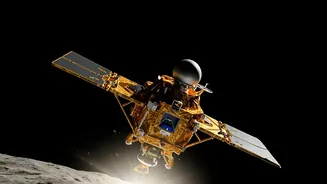
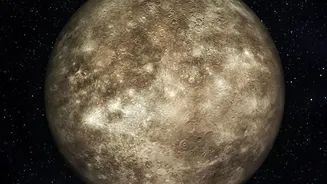
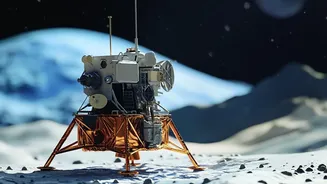
Now free of the transfer module, the conjoined spacecraft—consisting of Europe's Mercury Planetary Orbiter (MPO) and Japan's Mercury Magnetospheric Orbiter (Mio)—will spend several weeks navigating towards the planet. This culminates in the most critical manoeuvre: orbital insertion. On November 21, 2026, the spacecraft will perform a small engine burn to allow itself to be 'weakly captured' by Mercury's gravity, settling into a large, elliptical polar orbit. This is not a simple, single burn but the start of a sequence of 16 manoeuvres that will gradually lower and refine the orbit over the following months.
Step Three: The Two Orbiters Go Their Separate Ways
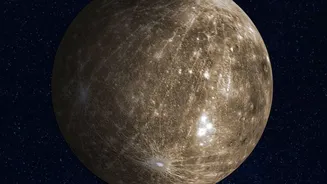
Once safely captured in a preliminary orbit, the two science spacecraft will finally part ways. Around December 9-10, 2026, JAXA's Mio orbiter will separate from ESA's MPO. Mio will then move into its own highly elliptical orbit, designed to study Mercury's magnetic field and magnetosphere—the region of space dominated by the planet's magnetic influence. The MPO will remain in charge of the stack until Mio is deployed. Following this, on December 16, the MPO will jettison the sunshield that protected Mio during the long cruise. It will then continue to adjust its own trajectory, eventually settling into a much lower, circular orbit by March 2027 to map the planet's surface and composition in unprecedented detail.