


The Gentle Art of Steaming
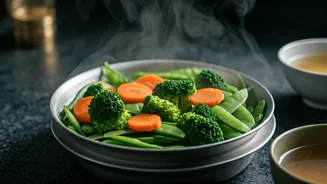
In the grand theatre of Indian cooking, with its fiery tandoors and bubbling kadhais, steaming is the quiet, unassuming hero. It’s a cooking method that relies on gentleness and patience, using the pervasive heat of water vapour to cook food without aggressive,
direct contact. The result is food that is light, moist, and retains much of its original flavour and nutritional value. This technique is the common thread that connects three of India's most beloved snacks, each hailing from a different corner of the subcontinent, yet all delivering a similar sense of profound, uncomplicated comfort.
The Fluffy Pride of the South: Idli
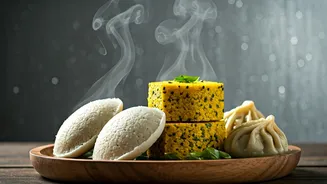
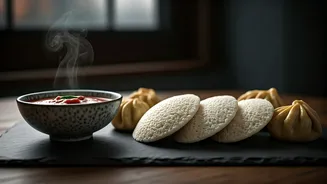
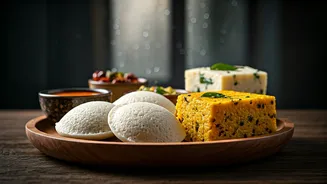
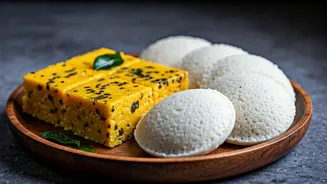
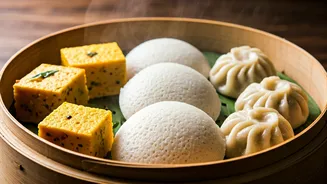
Think of a quintessential South Indian breakfast, and the image of pristine white, cloud-like idlis immediately comes to mind. Made from a fermented batter of rice and urad dal, the idli is a masterclass in texture. It's spongy, soft, and incredibly light on the stomach. The magic lies in the fermentation, which not only gives the idli its characteristic mild sourness but also makes it easily digestible. Its comfort factor is twofold. First, it’s a canvas. A perfect, porous vehicle for soaking up fragrant sambar or being dipped into a spicy chutney. Second, it’s the food of routine and care—a breakfast staple prepared in millions of homes, a reliable offering in canteens, and the first solid food for many babies. It represents a warm, dependable start to the day.
The Spongy Wonder of the West: Dhokla
Travel west to Gujarat, and you’ll find comfort in a vibrant yellow, spongy cake: the dhokla. Typically made from a fermented batter of gram flour (besan) or rice, dhokla is a marvel of sweet, savoury, and tangy flavours all in one bite. After being steamed to airy perfection, it’s topped with a sizzling tempering (tadka) of mustard seeds, curry leaves, and green chillies, then often garnished with fresh coriander and grated coconut. Unlike the idli, the dhokla is a flavour explosion on its own. It’s the perfect anytime snack—light enough for breakfast, satisfying for a 4 PM hunger pang, and elegant enough to serve to guests. Its comfort is in its airiness; it feels indulgent without being heavy, a guilt-free pleasure that instantly lifts the spirits.
The Himalayan Hug in a Dumpling: Momo
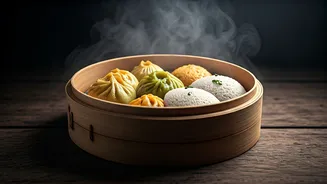
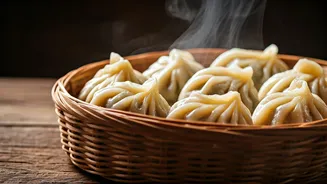
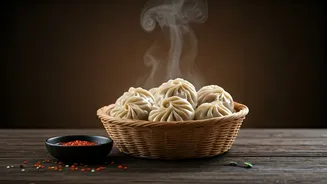
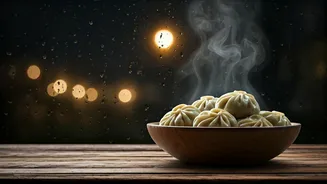
While its origins lie in Tibet and the Himalayan region, the momo has been wholeheartedly adopted by the rest of India, becoming a reigning king of street food. These delicate, pleated dumplings, filled with everything from minced vegetables to chicken or paneer, are little parcels of joy. Steamed until the outer wrapper is translucent and the filling is juicy and flavourful, momos are a communal experience. They are food to be shared with friends, huddled around a street-side stall, dipping each one into a fiery red chilli-garlic chutney. The comfort of a momo is in its warmth and simplicity. The act of biting into a soft, hot dumpling unleashes a burst of savoury goodness, a small, perfect moment of satisfaction. It’s a hug in food form, a taste of the mountains that has found a home in the heart of every Indian city.