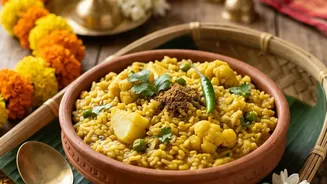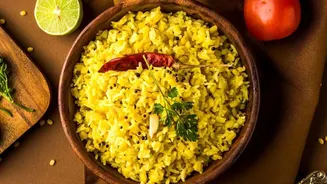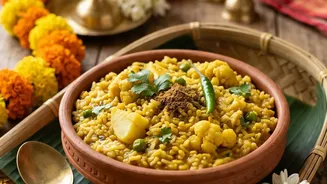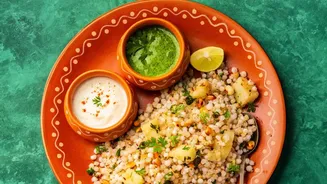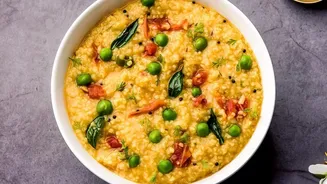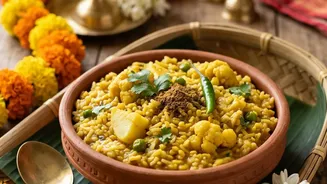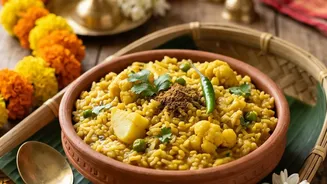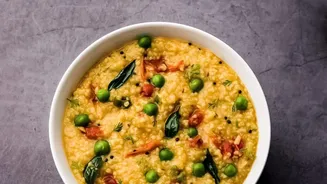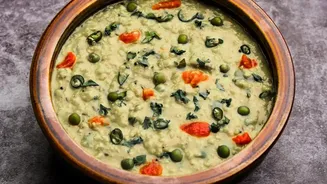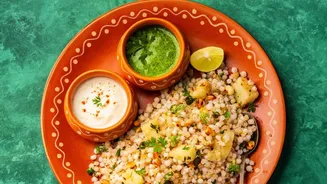

In the world of comforting and healthy Indian meals, dalia and khichdi are undisputed champions. But when it comes to making a healthier choice, which one wins? The answer is more complex than you think and has everything to do with what's in your bowl—and
its size.
Understanding Dalia: The Wholesome Grain
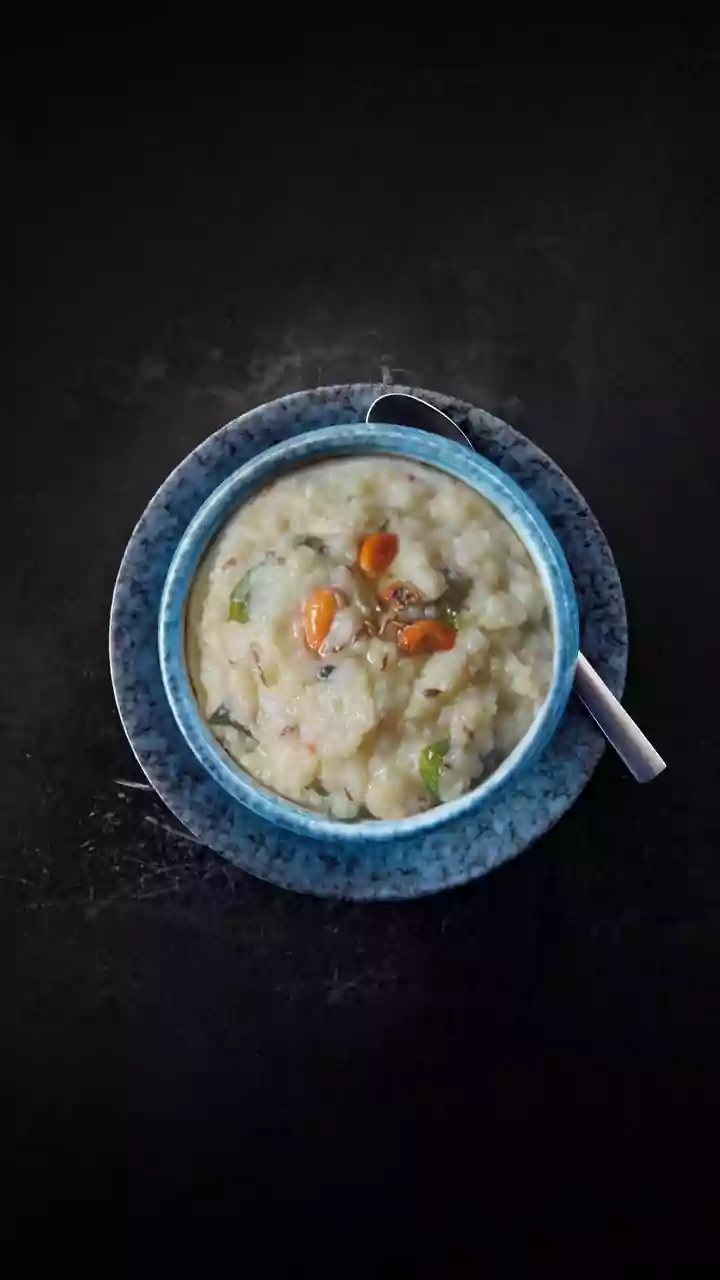
Dalia, also known as cracked or broken wheat, is a minimally processed whole grain made by crushing whole raw wheat kernels. This process ensures that it retains the nutrient-rich bran and germ, making it a fantastic source of complex carbohydrates and, most notably, dietary fibre. A 100-gram serving of uncooked dalia contains a substantial amount of fibre (around 10-12 grams) and protein (about 12 grams). Its composition of complex carbs leads to a gradual release of energy, which helps in regulating blood sugar levels. This is reflected in its low glycemic index (GI) of around 41, which means it prevents the sharp blood sugar spikes associated with more refined grains. This high fibre content also promotes a feeling of fullness, or satiety, which can help prevent overeating and support weight management goals.
Khichdi’s Comforting Power
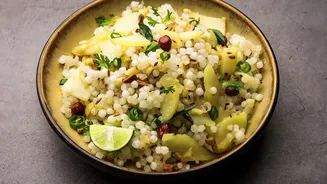
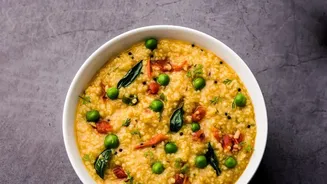
Khichdi is a timeless one-pot meal, praised for its simplicity and digestibility. The standard preparation involves cooking rice and lentils (most commonly moong dal) together. This combination is nutritionally strategic: pairing a cereal (rice) with a pulse (dal) creates a 'complete protein', providing all the essential amino acids the body requires for functions like muscle repair. While often seen as food for when one is unwell, its balanced nature makes it a deeply nourishing meal for any time. A simple moong dal khichdi is gentle on the stomach while delivering sustained energy. A 100-gram serving of basic cooked moong dal khichdi contains around 120-130 calories and about 4-5 grams of protein. Its nutritional profile can be significantly enhanced by adding vegetables for more fibre and vitamins or by swapping white rice for brown rice or millets to lower its glycemic index.
A Head-to-Head Nutritional Showdown
When placed side-by-side, the two meals offer distinct advantages. Dalia generally leads in the fibre department, which is a major benefit for digestive health and feeling full for longer. Its low GI makes it a superior choice for blood sugar management. Khichdi, on the other hand, shines with its complete protein profile, which is crucial for vegetarians and for muscle maintenance and repair. Calorie counts for both can vary widely based on how they are prepared. The amount of ghee or oil used, and the addition of vegetables or other ingredients, can significantly alter the final nutritional values. For example, a basic vegetable dalia can have more calories than a simple moong dal khichdi, but the opposite can also be true depending on the recipe. This is where the discussion moves beyond the food itself and towards the eater's choices.
Why Portion Size Is the Real Winner
The central claim of the headline holds true: portion size is the ultimate factor in this comparison. Arguing whether dalia is 'better' than khichdi becomes meaningless without considering the amount consumed. A large, generous bowl of 'healthy' dalia can easily contain more calories than a small, controlled katori of khichdi. Research consistently shows that people tend to eat more when served larger portions, which can override any marginal benefits of one food over another. For weight management, creating a calorie deficit is fundamental, and portion control is one of the most effective tools to achieve this. So, while dalia may be higher in fibre, eating too much of it will still contribute to excess calorie intake. Conversely, a small, mindful portion of khichdi can fit perfectly into a healthy diet. The distinction between a 'serving size' (a measured amount) and a 'portion size' (what you actually eat) is critical.
Making the Right Choice for You
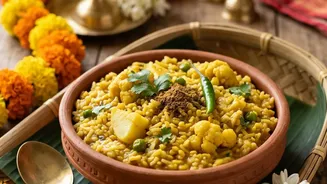
Ultimately, the 'better' choice depends entirely on your personal health goals. For sustained energy, weight management, and blood sugar control, dalia's high-fibre and low-GI profile makes it an excellent option. For post-workout recovery or for those needing an easily digestible yet complete protein source, khichdi is an ideal meal. If you have a sensitive stomach, the gentle nature of khichdi is often recommended. Rather than labelling one as 'good' and the other as 'bad', it is more productive to understand their unique strengths. You can even combine their benefits by making a dalia khichdi, which uses broken wheat instead of rice, offering high fibre and a complete protein. The key is to be mindful of what you add to the pot and how much you put on your plate.