
From Catwalk to Canvas
The traditional fashion show was designed with one primary goal: to present clothing. The focus was on the silhouette, the fabric, the way a garment moved on the body. The backdrop was often just that—a background, neutral and unobtrusive. Now, however,
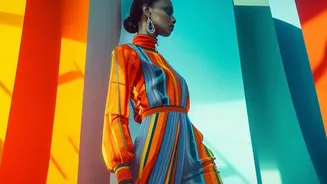
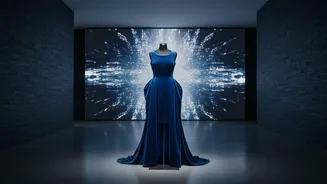
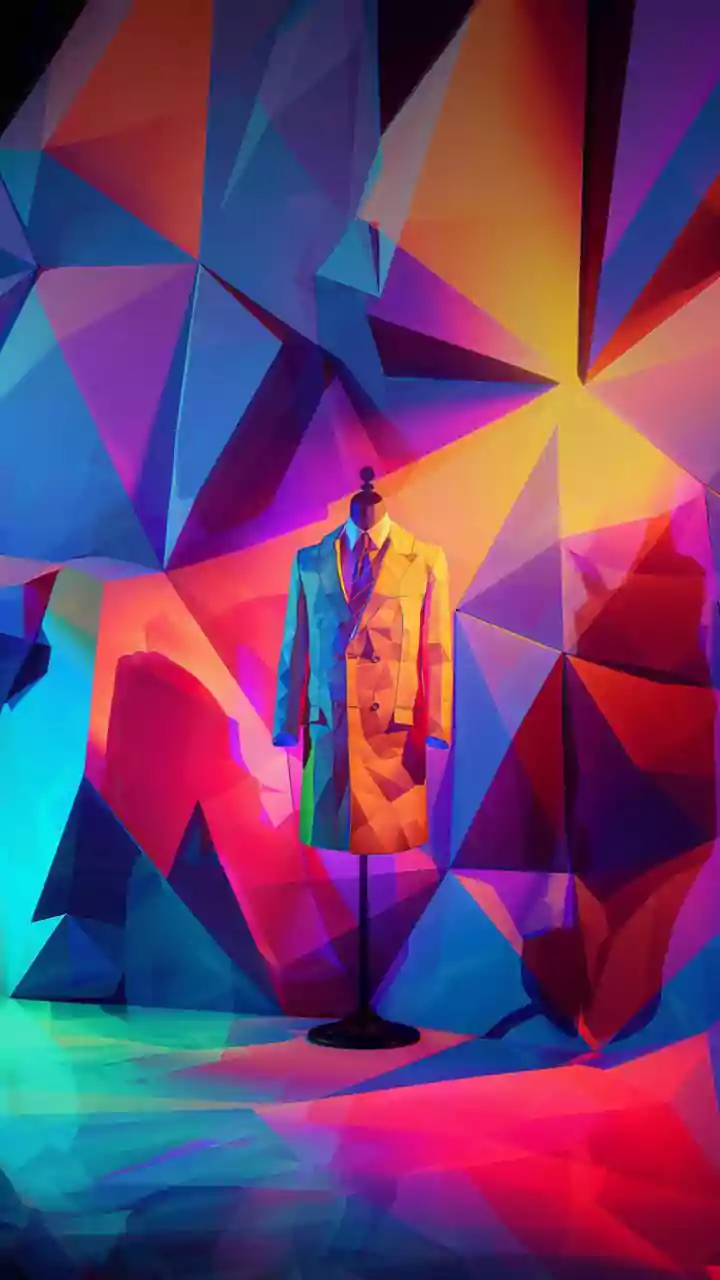
leading designers are treating the show space itself as a critical component of their artistic vision. They are using advanced technology, from massive LED screens to sophisticated projection mapping and large-scale art installations, to create all-encompassing environments. These are not just decorative elements; they are narrative engines, designed to envelop the audience in a specific mood, theme, or story. The goal is no longer just to show clothes, but to situate them within a fully realized world.
Art and Artistry on Display
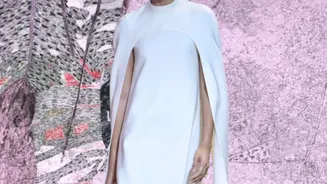
Recent couture seasons offer stunning examples of this trend. For its Spring-Summer 2025 haute couture show, Dior commissioned Indian artist Rithika Merchant to create nine monumental paintings, which were then transformed into enormous textile panels that formed an immersive visual landscape inside the Rodin Museum garden. This wasn't merely a backdrop, but an integral part of the collection's story about femininity, imagination, and transformation. Similarly, Dutch designer Iris van Herpen, known for her fusion of technology and craftsmanship, has consistently pushed the boundaries of presentation. Her recent exhibitions and shows, such as 'Sculpting the Senses' at the Brooklyn Museum, integrate immersive video works, soundscapes, and even scientific specimens to create a multi-sensory experience where the clothing is part of a larger ecosystem of ideas. For her Fall 2024 couture show, she presented her garments alongside her first aerial sculptures, blurring the line between fashion and art.
The Narrative is the New Luxury
Why this shift towards spectacle and story? In an increasingly crowded and fast-paced media landscape, creating a memorable 'moment' is more valuable than ever. Immersive shows offer a way for luxury brands to cut through the noise, generating powerful, shareable imagery that resonates long after the final model has left the runway. But it goes deeper than marketing. These elaborate presentations allow designers to communicate complex ideas and emotions that fabric and thread alone cannot. A show can become a performance piece, as seen with Viktor & Rolf's Fall/Winter 2026 collection, which used a surreal bedroom setting and mirrored model movements to explore themes of decadence and restraint. By controlling the entire sensory environment, from the visuals to the sound, designers can guide the audience's interpretation and forge a stronger emotional connection to their work.
Fashion as World-Building
Ultimately, this trend signals a fundamental evolution in what a fashion show can be. It's a move away from a simple presentation of goods and towards a form of world-building. These immersive experiences are no longer just for the exclusive few attending in person. Through high-quality live streams, social media, and virtual reality explorations, brands are inviting a global audience to step inside their worlds. This digital life extends the narrative, allowing people to explore the collection and its thematic universe in greater detail. As technology and artistry become ever more intertwined, the fashion show is solidifying its status as a vital cultural art form, one where the story being told is just as important as the silhouette of the dress.