






A Celestial Meeting in the Night Sky
October is a fantastic month for stargazing, and one of its highlights is a close approach, or conjunction, of the Moon and Saturn. This event sees the two celestial bodies appear near each other in our night sky, offering a beautiful sight and a great
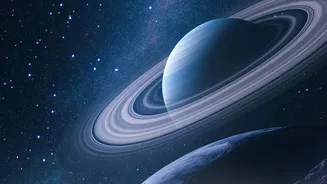
opportunity for observation and photography. Saturn has been a prominent feature for skywatchers all month, having reached its opposition on October 4. Opposition is when Earth passes directly between the Sun and an outer planet, making that planet appear at its biggest and brightest for the year. This means Saturn is currently shining brilliantly, making its rendezvous with the Moon even more special.
When and Where to Look From India
Mark your calendars for the nights of October 24 and 25. This is when the Moon will make its closest approach to Saturn. The best time to watch is just after dusk, as twilight fades into night. You will see the duo in the southern sky. On these nights, Saturn will appear as a steady, bright, yellowish point of light very close to the glowing Moon, which will be in its waxing gibbous phase, heading towards a full Hunter's Moon on October 26. The bright Moon may make the sky less dark, but Saturn is bright enough to be easily visible alongside it.
Naked-Eye and Binocular Viewing
You don't need any special equipment to enjoy this cosmic pairing. The event is easily visible to the naked eye. Simply find a location with a clear view of the southern horizon, away from the worst of city light pollution. Give your eyes a few minutes to adjust to the darkness, and you will spot Saturn as the bright 'star' that doesn't twinkle, right next to the Moon. Even a basic pair of binoculars will enhance the view significantly. While you won't see Saturn’s rings in detail, binoculars can make the planet appear as a distinct, slightly oval disc rather than just a point of light. You might even be able to spot its largest moon, Titan, as a tiny pinprick of light nearby.
Through a Telescope: A View of the Rings
If you have access to a telescope, this is a perfect opportunity to witness Saturn's legendary rings. Even a small beginner's telescope with about 50mm to 70mm aperture at 25x to 50x magnification is enough to clearly distinguish the rings from the planet itself, creating a truly memorable 'wow' moment. With a larger telescope (100mm or more) and steady atmospheric conditions, you can begin to see more intricate details. Look for the Cassini Division, a prominent dark gap that separates the main outer 'A' ring from the brighter, inner 'B' ring. Because of Saturn's orbital cycle, its rings are currently tilted at a relatively narrow angle towards us, making them appear thinner than in other years, but still spectacular. For the best view, allow your telescope to cool down to the outside temperature for about 30 minutes before you start observing.
Making the Most of Your Stargazing Night
While the Moon and Saturn are the main attractions on October 24-25, don't forget to look around at the other wonders the October sky has to offer. The Orionid meteor shower, created from the debris of Halley's Comet, peaks around October 21-22, though the bright moonlight will interfere with viewing the fainter meteors. A few days after its meeting with Saturn, on October 27-28, the Moon will pass by the beautiful Pleiades star cluster, also known as the Seven Sisters. This is another fantastic sight for both the naked eye and binoculars. To make your viewing session comfortable, find a dark spot, dress in warm layers, and give yourself plenty of time to simply look up and enjoy the cosmic display.








