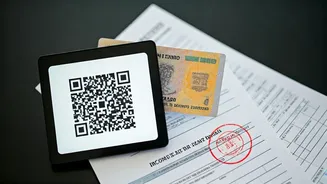









UPI: Enhanced Security for Safer Transactions
The Unified Payments Interface (UPI) has become an integral part of daily transactions for millions in India. This June, the focus is squarely on enhancing user security and transparency. As of June 1, 2026, new rules mandated by the National Payments Corporation
of India (NPCI) are in effect to curb fraud. [17, 9] The most significant change is the mandatory display of the recipient's verified, bank-registered name before you confirm a payment. [17, 24] This replaces potentially misleading contact names or nicknames, providing an extra layer of verification and reducing the risk of sending money to the wrong person. [17] For high-value transactions, you may now encounter additional authentication steps, such as biometric verification (fingerprint or Face ID), to add another layer of security. [9, 24] Furthermore, cardless cash withdrawals using UPI at ATMs will now be counted towards your monthly free withdrawal limit, with fees applicable beyond that threshold. [9] These updates aim to make the UPI ecosystem more robust and trustworthy as transaction volumes continue to grow. [17]
PAN: The Unmissable Aadhaar Linking Mandate
The deadline for linking your Permanent Account Number (PAN) with Aadhaar has been a long-running compliance requirement, and its importance cannot be overstated. For most individuals, the final deadlines have already passed, and any unlinked PAN is now considered 'inoperative'. [4] Operating with an inoperative PAN has severe consequences: you cannot file your income tax return, you will not receive any pending tax refunds, and Tax Deducted at Source (TDS) will be applied at a much higher rate, often 20%. [10, 15] Banks may also restrict you from opening new accounts (except basic savings accounts) or conducting other significant financial transactions. [4] If you still haven't linked your PAN and Aadhaar, you can do so by paying a penalty of ₹1,000 on the income tax e-filing portal. [15, 19] The PAN typically becomes operative again within 30 days of paying the fee and completing the linkage process. [4, 15] A special extension until December 31, 2025, has been granted to individuals who had originally obtained their PAN using an Aadhaar enrolment ID, but for the vast majority, immediate action with a penalty is the only way forward. [5, 19]
Tax: Advance Tax and Scrutiny Deadlines
June is a critical month in the income tax calendar. The first major deadline was June 15, the due date for the first instalment of advance tax for the financial year 2026-27. [3, 6] Any taxpayer—including salaried individuals, freelancers, and businesses—whose total tax liability for the year is estimated to be ₹10,000 or more must pay advance tax. [3] Taxpayers were required to pay at least 15% of their total estimated tax liability by this date. [3] If you missed this deadline, it is crucial to pay it as soon as possible to minimise the interest penalty, which is levied at 1% per month for the shortfall. [3] You can easily pay advance tax online through the income tax department's e-Pay Tax portal using net banking, debit/credit cards, or UPI. [16, 18] Additionally, many taxpayers may have noticed an increase in scrutiny notices under Section 143(2) this month. This is because June 30, 2026, is the statutory deadline for the Income Tax Department to issue such notices for returns filed for the Assessment Year 2025-26. [21] Receiving a notice doesn't automatically mean there is an error, but it does require a timely and proper response. [21]