




The Two-Part Process
On paper, the process for selecting the UN chief is a two-step affair. According to Article 97 of the UN Charter, the Security Council first recommends a single candidate, and then the 193-member General Assembly formally appoints them. In practice, the General Assembly has
never rejected the Council's choice. This means the real contest happens within the much smaller, more powerful Security Council, where any of the 15 members can influence the outcome, but only five have the ultimate say. This has led to criticism that while the process has become more transparent in recent years with public dialogues for candidates, the final decision still happens behind closed doors.
The Power of the P5
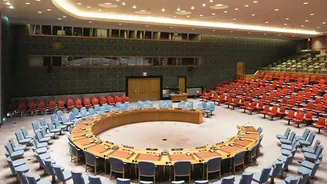
The Security Council is composed of ten non-permanent members elected for two-year terms and five permanent members, often called the P5: China, France, Russia, the United Kingdom, and the United States. These five countries hold the power of veto, a privilege established in the UN's founding after World War II to ensure major powers remained invested in the organisation. On any 'substantive' decision—which includes recommending a Secretary-General—a negative vote from any P5 member automatically kills the resolution, even if all other 14 members vote in favour. This gives each permanent member an absolute say, allowing them to block any candidate they deem unfriendly to their national interests.
Decoding the Straw Polls
To avoid public and diplomatically awkward vetoes, the Security Council uses an informal method called 'straw polls'. In these secret ballots, members vote to either 'encourage' or 'discourage' a candidate, or express 'no opinion'. The crucial stage comes when the ballots are colour-coded: red for the five permanent members and white for the ten elected members. A 'discourage' vote on a red ballot is effectively a veto threat, signalling to a candidate that they will not pass a formal vote. This behind-the-scenes filtering process allows the P5 to weed out candidates without ever casting a formal, public veto, until a consensus candidate emerges who has no 'discourage' votes from any permanent member.
How Vetoes Shaped History
The veto, or the threat of it, has been a defining feature of nearly every Secretary-General selection. In 1981, China cast 16 vetoes to block Kurt Waldheim of Austria from securing a third term, while the United States vetoed Tanzania's Salim Ahmed Salim, leading to a deadlock that was only broken by the emergence of a compromise candidate, Javier Pérez de Cuéllar of Peru. More famously, in 1996, the United States used its formal veto to block a second term for Boutros Boutros-Ghali of Egypt, which ultimately led to the selection of Kofi Annan of Ghana. These instances demonstrate that a candidate's viability depends less on broad support and more on not being opposed by any of the P5.
A System of Compromise
Critics argue that this system produces not necessarily the best leader, but the 'least objectionable' one—a candidate who is acceptable to all five permanent members and is therefore unlikely to challenge their interests. The process can lead to prolonged deadlocks, as seen in the ongoing selection for the term starting in 2027, where multiple rounds of straw polls have failed to produce a consensus candidate. This has sparked concerns about a potential leadership vacuum and has amplified calls for reform of the Security Council. Supporters, however, maintain that the veto ensures the major powers remain engaged with the UN, preventing the organisation from becoming paralysed by taking action that a major power would staunchly oppose. The result is a leader who must constantly perform a delicate balancing act, serving the world while navigating the powerful interests of the countries that put them there.