



Why Stripes, Why Now?
For too long, stripes have been relegated to the realm of formal shirts and nautical themes. In the rich, layered world of Indian interiors—often dominated by intricate florals, paisleys, and ikats—the humble stripe can feel overlooked. But this is precisely
why it’s the perfect time for its revival. Stripes aren't a fleeting trend; they are a fundamental design tool. They offer structure, rhythm, and a clean, graphic edge that can either calm a visually busy space or inject life into a plain one. In a modern Indian home that seeks to balance heritage with contemporary minimalism, stripes are the perfect bridge. They are both disciplined and playful, capable of creating an illusion of space and adding a sophisticated, graphic punch without erasing the home’s inherent warmth.
Start Small: The Accent Strategy
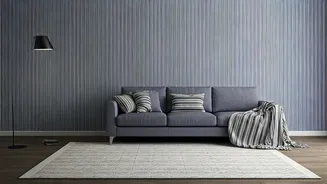
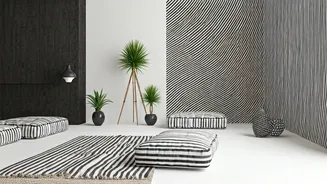
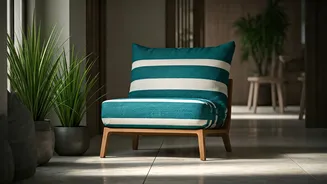
Not ready to commit to a full-blown stripe invasion? The beauty of this pattern is its scalability. Begin with small, low-risk accents. A pair of striped cushions on a solid-coloured sofa can instantly add a touch of chic. A soft, striped throw blanket draped over an armchair offers a cosy yet structured look. Consider a set of striped table runners or placemats for your centre table. The key is to use them as a punctuation mark in your existing decor. A classic black-and-white or navy-and-white stripe is a foolproof starting point, but don't be afraid of colour. A vibrant multi-coloured stripe in a dhurrie-style weave can bring in a playful, artisanal feel that connects beautifully with other Indian textiles.
Go Bolder: The Statement Piece
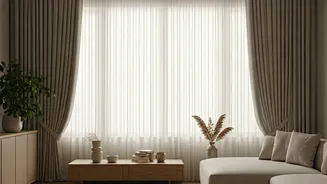
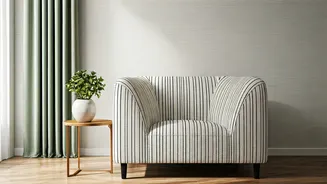
Once you’ve seen how well stripes play with others, you might be ready for a more significant commitment. This is where a single, statement piece can anchor a room. Imagine a classic wingback chair upholstered in a bold, wide stripe—it immediately becomes the room's focal point. A large, striped area rug or dhurrie is another fantastic option. It defines the living area and can solve a multitude of design sins, making a small room feel wider (with horizontal stripes) or longer (with vertical ones). Striped curtains are another powerful tool; floor-to-ceiling vertical stripes can create a dramatic illusion of height, making your living room feel grander and more spacious. When choosing a large piece, ensure its colour palette connects with at least two other elements in the room to create a cohesive feel.
The Ultimate Commitment: Walls and Floors
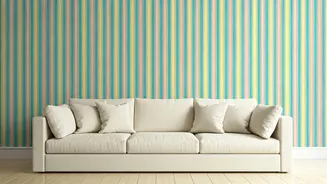
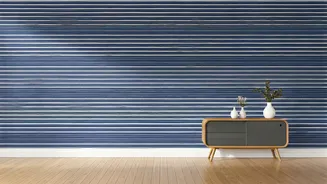
For the truly adventurous, taking stripes to the walls or floors is the ultimate design statement. A single feature wall painted with bold, vertical stripes behind a sofa or TV unit can create a stunning backdrop. For a more subtle effect, consider tone-on-tone stripes (using two shades of the same colour, one in a matte finish and the other in a gloss). Striped wallpaper offers even more possibilities, from delicate pinstripes to broad, hand-painted-effect bands. This approach works best in rooms with simple furniture, allowing the walls to be the hero. While less common in India, striped flooring—whether through clever tiling or painted wood—can also lend a bespoke, high-design feel to a space, channelling the timeless elegance of heritage bungalows and European manors.
Mixing Stripes with Indian Motifs
The biggest hesitation for many is: how do stripes work with the patterns we already love? The answer is: beautifully. The trick to mixing patterns like a pro is to vary their scale. If you have a large, intricate floral or paisley on your sofa, pair it with a thin, simple pinstripe on a cushion. If your primary pattern is a small, geometric ikat, you can afford to go with a bolder, wider stripe on a rug. Another rule is to maintain a consistent colour story. As long as your patterns share one or two common colours, they will feel connected rather than chaotic. The clean, geometric nature of a stripe provides a perfect visual break from the organic curves of traditional Indian patterns, creating a dynamic and sophisticated interior.