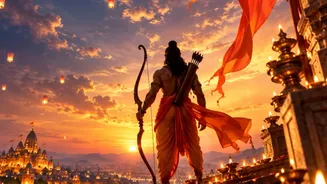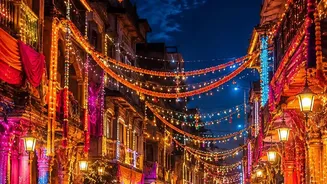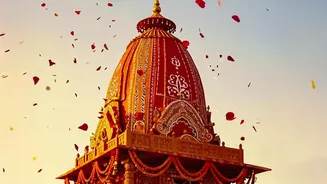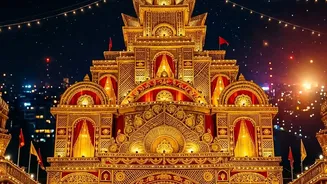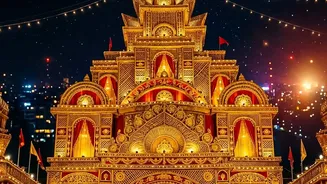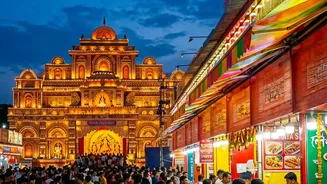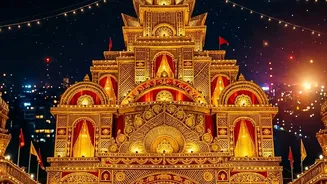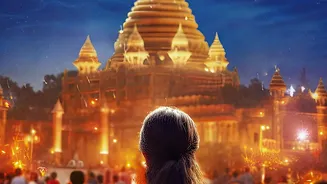




Every year, the ancient city of Ayodhya transforms into a sea of light for Deepotsav, celebrating Lord Ram's return. For any visitor, understanding how each event shapes the experience is key to truly embracing this divine spectacle.
Understanding the Spectacle
Deepotsav commemorates
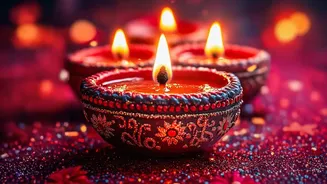
the joyous return of Lord Ram, Mata Sita, and Lakshman to Ayodhya after fourteen years of exile. According to the Ramayana, the citizens of their kingdom welcomed them by lighting rows of earthen lamps, or diyas. Today's Deepotsav, organised by the Uttar Pradesh government, brings this tradition to life on a monumental scale, blending ancient rituals with modern technology to create an immersive experience. It has grown into one of the world's largest lamp-lighting festivals, attracting visitors globally to witness millions of diyas illuminating the ghats of the sacred Saryu River.
Core Events and Schedule
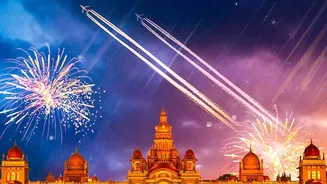
The main celebration for Deepotsav 2026 takes place on Saturday, November 7, the day before Diwali. The day begins with a grand 'Shobha Yatra', a cultural procession with vibrant tableaus depicting scenes from the Ramayana that moves through the city. In the afternoon, a symbolic re-enactment of Lord Ram's return and coronation ('Rajyabhishek') is held at Ram Katha Park. As dusk falls, the main events unfold at Ram Ki Paidi, beginning with a grand Saryu Maha Aarti featuring over a thousand priests. This is followed by the breathtaking mass lighting of diyas, with a target of over 30 lakh lamps for 2026. The night sky is then brought to life with drone shows, laser projections, and fireworks that narrate stories from the epic.
The Diya Lighting at Ram Ki Paidi
The heart of the visitor experience is the mass diya lighting at Ram Ki Paidi, a series of ghats on the Saryu. Seeing millions of flames flicker in unison, their light reflecting on the water, is a profoundly moving sight. This effort, which has previously set Guinness World Records, is made possible by thousands of student volunteers who meticulously arrange and light the lamps. For the best view, visitors are advised to find a spot near Ram Ki Paidi or Naya Ghat by 3 or 4 PM, as access becomes heavily restricted closer to sunset. While these main ghats are crowded, other nearby ghats offer a more intimate, though less panoramic, viewing experience.
Beyond the Lights: Cultural Immersion
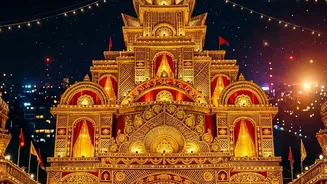
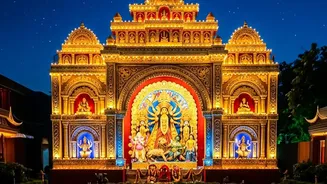
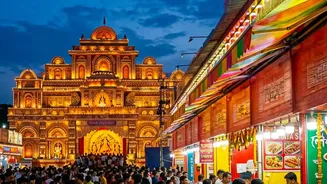
The Deepotsav experience extends beyond the riverfront. Multiple stages are set up across Ayodhya, hosting around 2,500 artists. Visitors can enjoy cultural performances from across India and even international Ramlila troupes from countries like Sri Lanka and Thailand. The city itself becomes an open-air gallery with thematic gateways, selfie points, and installations depicting episodes from the Ramayana. This multi-layered approach ensures that the festive spirit is felt in every corner of the city, offering a rich cultural tapestry that complements the spiritual core of the event.
Practical Tips for Visitors
Navigating Ayodhya during Deepotsav requires planning. Accommodation is often fully booked months in advance, so booking early is crucial. On the main day, vehicle access to the core festival zone is heavily restricted, making walking the primary mode of transport. It is advisable to wear comfortable shoes, carry a power bank as mobile networks can be congested, and have some cash on hand. To visit key temples like the Ram Janmabhoomi Mandir and Hanuman Garhi, it's best to go in the early morning to avoid the peak festival rush later in the day. For those with elderly family members or young children, visiting on the days just before or after the main event can provide a more comfortable experience of the festive decorations without the extreme crowds.