



The Throwaway Rocket Problem
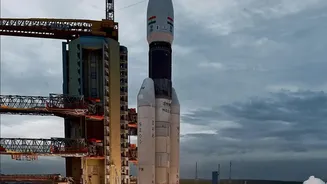
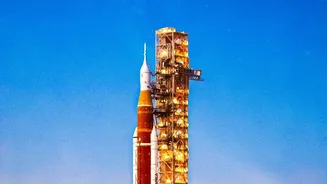
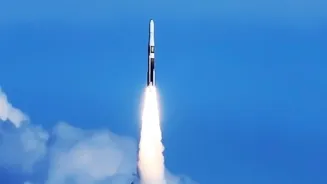
For decades, the business of launching satellites has operated on an expensive, single-use model. A launch vehicle, a marvel of engineering that can cost hundreds of crores, is built for one mission: to deliver its payload to orbit. Once its job is done,
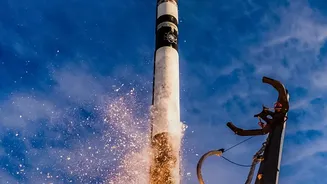
the most valuable parts of the rocket are discarded, burning up in the atmosphere or falling into the ocean. Over 90% of a typical rocket's mass is just the fuel and the structure needed to carry that fuel. This makes the actual satellite a tiny fraction of what lifts off from the launchpad. It's like buying a brand new aircraft for a single flight and then throwing it away. This fundamental inefficiency is the primary reason why accessing space has remained prohibitively expensive for so long.
Enter 'Pushpak': ISRO's Reusable Solution
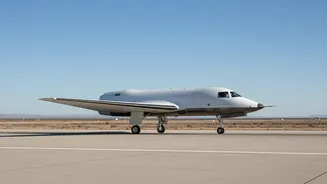
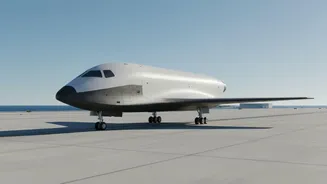
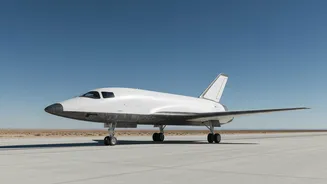
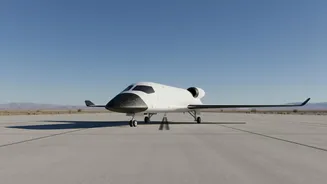
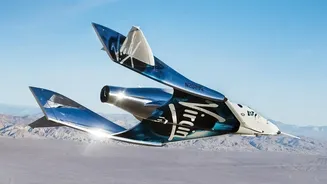
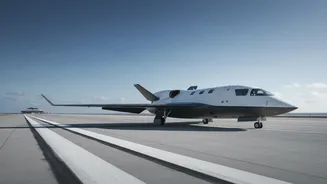
The Indian Space Research Organisation (ISRO) is tackling this problem head-on with its Reusable Launch Vehicle-Technology Demonstrator (RLV-TD), nicknamed 'Pushpak'. The vision is a two-stage-to-orbit vehicle where the first stage, a winged craft, returns to Earth and lands on a runway like an airplane, ready to be refurbished for another mission. This reusability is the key to drastically cutting costs. Instead of building a new launch vehicle from scratch every time, ISRO can reuse the most expensive components, primarily the booster stage with its complex engines. The agency aims to eventually reduce the cost of launching a payload by a factor of ten, a move that would revolutionise India's position in the global space economy.
Mastering the Autonomous Landing
The most critical part of this entire concept is getting the vehicle back to Earth safely and precisely. This is where the recent series of Landing Experiments (LEX) comes in. In these tests, conducted at the Aeronautical Test Range in Karnataka, the Pushpak vehicle was lifted to an altitude of 4.5 km by an Indian Air Force Chinook helicopter and then released. From there, the winged vehicle had to autonomously navigate its way to a runway and perform a perfect, high-speed horizontal landing. The final test in the series, conducted in June 2024, was the most challenging, successfully landing even under difficult wind conditions and from a more complex release point. These tests successfully simulated the high-speed landing conditions a vehicle would face when returning from space, proving ISRO has mastered the crucial autonomous guidance and control systems needed.
The Economics of Reusability
So, how exactly does this save money? The main booster stage of a rocket can account for up to 80% of its total cost. By recovering and reusing this hardware, the manufacturing cost is spread across multiple missions instead of just one. The savings come from avoiding the repeated expense of building new engines, structures, and avionics systems. The recent LEX-03 mission even demonstrated this principle by reusing the winged body and flight systems from the previous LEX-02 test without modification, proving the hardware's robustness. While fuel and refurbishment have costs, they are minor compared to manufacturing an entire new rocket. This dramatic cost reduction will make India an extremely competitive player in the commercial satellite launch market, which is projected to become a trillion-dollar industry.
The Road Ahead for India
The successful completion of the LEX test series is a massive milestone, but the journey to a fully operational reusable launch vehicle is a long one. Having perfected the autonomous landing, ISRO will now move towards the next phase: an orbital re-entry vehicle (ORV) experiment. This will involve launching the vehicle into orbit and having it return through the atmosphere, surviving extreme heat and pressure before making its landing. It’s a significant engineering challenge, but one that ISRO is tackling with its trademark methodical approach. This step-by-step validation of technology ensures that when the final vehicle is ready, it will be reliable and effective, positioning India as a leader in affordable and sustainable access to space.