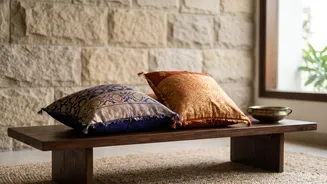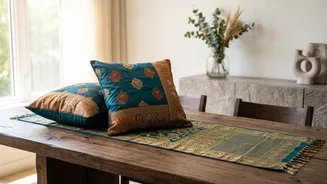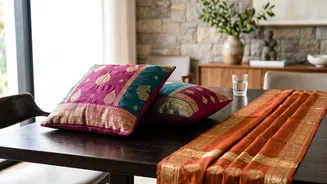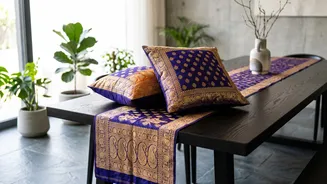


From Wardrobe to Wow: Choosing Your Fabric
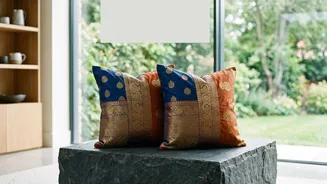
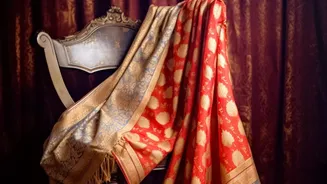
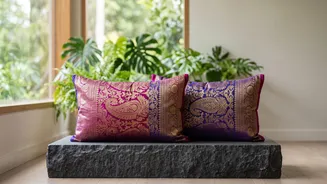
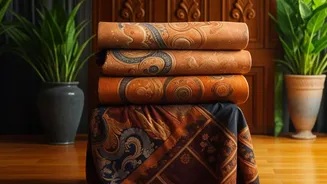
The first step is selecting the right material. Old sarees, with their rich colours and intricate details, are perfect for this project. Silk and cotton sarees work wonderfully, offering both vibrancy and durability. Look for sections with beautiful borders
(pallus), embroidery, or unique prints. These decorative elements can become the centrepiece of your cushion cover. For a more robust feel, consider using old fabric drapes. Their heavier weight makes for sturdy covers, and you can often get multiple matching cushions from a single curtain panel. Before you begin, wash and dry the fabric thoroughly to ensure it is clean and to check for any weak or torn sections that should be avoided.
Gather Your Creative Toolkit
You don’t need a professional setup to create beautiful cushion covers. Most of the necessary tools are likely already in your home. You will need a measuring tape, sharp fabric scissors, thread that matches or complements your fabric, and a sewing needle. If you have a sewing machine, it will certainly speed up the process, but hand-stitching can produce equally beautiful results. You will also need cushion inserts or stuffing; you can even use the filling from old pillows to make this a truly upcycled project. For those interested in no-sew methods, have fabric glue or iron-on adhesive tape ready.
Measure Twice, Cut Once
Accurate measurements are key to a well-fitted cover. Start by measuring the dimensions of your cushion insert. For a snug fit, you will want to cut your fabric to the exact size of the pillow form. For example, for a 20x20 inch cushion, you would cut two 20x20 inch squares of fabric. This ensures the final cushion looks full and luxurious. Lay your fabric flat and mark your cutting lines with chalk or a fabric pencil. When using a saree, plan your cuts to make the most of the decorative pallu or border. You can use this section for the front of the cushion and a plainer part of the saree or a different sturdy fabric for the back.
The Sewing Step-by-Step
The simplest method for a DIY cushion cover is the envelope style, which avoids the complexity of zippers. For this, you will need one front piece cut to your cushion’s dimensions and two overlapping back pieces. Place the front fabric piece with its right side facing up. Then, place the two back pieces on top with their right sides facing down, ensuring they overlap in the middle. Pin all four sides together and sew a straight stitch around the entire perimeter. Once sewn, trim any excess fabric from the corners, turn the cover right-side out, and stuff your cushion insert inside through the envelope opening. If you are comfortable with zippers, you can sew one into one of the seams for a more secure closure.
No-Sew? No Problem!
If sewing isn't for you, there are simple no-sew alternatives. One popular method uses iron-on hem tape. Cut your two fabric squares, place them together with the right sides facing inward, and insert the hem tape between the edges on three sides. Press with a hot iron to bond the fabric together. After it cools, turn the cover right-side out, insert the pillow, and then use the same hem tape to seal the final side. Another quick method involves strategically wrapping the fabric around the cushion, much like wrapping a gift, and securing the back with decorative knots or safety pins. This is a great temporary solution, especially for delicate dupattas or fabrics you don’t want to cut.
Add That Festive Sparkle
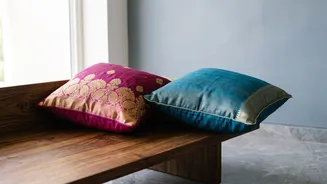
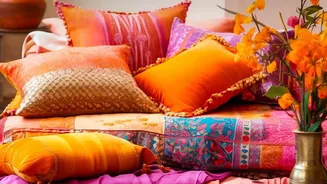
To elevate your cushion covers from everyday to festive, it's all about the embellishments. Saree borders with zari or mirror work already provide a lot of glamour. You can enhance this by adding tassels, pom-poms, or decorative trim to the corners or edges. Small beads or sequins can be hand-stitched onto the fabric to catch the light. You can also use parts of different sarees to create a colourful patchwork design. If you have a plain fabric cushion, consider using a striking piece of a saree border as an appliqué by stitching it onto the front for a pop of colour and texture.