





Layering: Your First Line of Defence
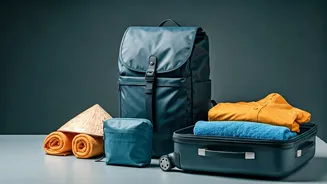
The key to comfort during a rainy trek is smart layering, and the golden rule is to avoid cotton. Cotton absorbs moisture and takes a long time to dry, which can leave you feeling cold and increase the risk of hypothermia. [2] Instead, opt for a moisture-wicking
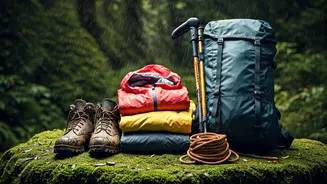
base layer made of synthetic materials like polyester or natural fibres like merino wool. [8] These fabrics pull sweat away from your skin. [6] Over this, add a fleece or a soft-shell jacket for insulation; synthetic insulation is preferable to down, as it retains warmth even when damp. [2] The final, most crucial layer is your outerwear.
Outerwear: The Waterproof Shell
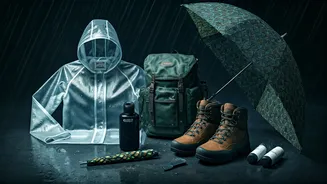
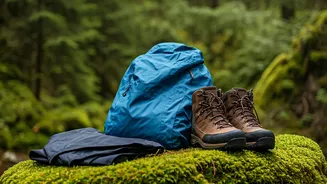
A high-quality waterproof and breathable rain jacket is non-negotiable. Look for jackets with taped or sealed seams, which prevent water from seeping through the stitching. [6] A good hood with a brim is essential for keeping rain off your face, and a rain cap worn underneath can offer extra protection for your eyes and glasses. [2, 7] Similarly, waterproof trekking pants are crucial for preventing chafing and keeping your lower body dry. [8] For lighter drizzles, quick-dry pants might suffice, but for heavy downpours, a proper waterproof pair is a wise investment. [7]
Footwear: Grip and Dry Feet
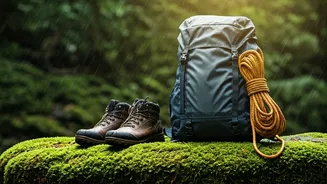
Your choice of footwear can make or break your trek. Waterproof trekking shoes with deep lugs and excellent grip are vital for navigating slippery, muddy trails. [3, 11] Ensure you break in your shoes before the trek to avoid painful blisters. [18] While waterproof shoes keep water out, they can also trap sweat in hot, humid conditions. [6] An alternative for milder weather is mesh footwear that drains quickly, paired with waterproof socks. [6] Gaiters are also a fantastic addition; these coverings shield the top of your boots and lower legs from water, mud, and leeches. [2, 20]
Backpack & Gear: Keep Everything Dry
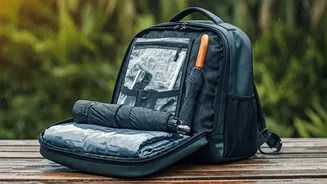
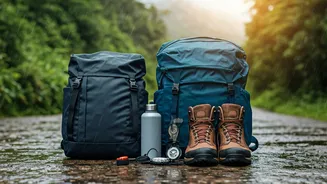
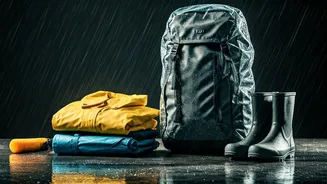
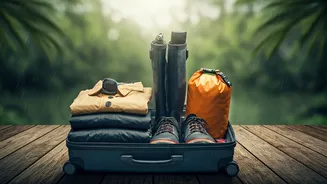
Even a water-resistant backpack needs extra protection. The most effective strategy is a two-layer approach. Use a waterproof pack liner or a large, sturdy plastic bag on the inside to protect all your contents. [13] On the outside, use a snug-fitting backpack rain cover. [3] For ultimate protection of sensitive items, use smaller dry bags or Ziploc bags for your electronics, documents, and extra clothes. [2, 5] This compartmentalisation not only keeps things dry but also helps you stay organised. [18] Don't forget to carry a separate bag for wet clothes. [14]
Navigation & Safety Essentials
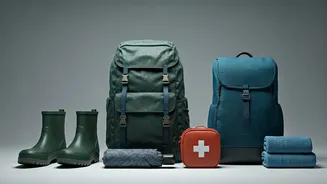
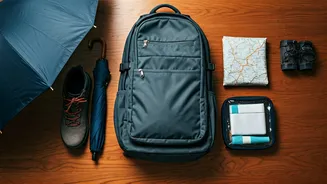
Monsoon weather can change rapidly, reducing visibility with fog and clouds. [3] Never rely solely on a mobile phone for navigation. Carry a physical map and a compass, or a dedicated GPS device stored in a waterproof case. [8] A headlamp or torch is crucial, as trails can get dark early. [5, 14] Trekking poles are highly recommended; they provide extra stability on slippery descents and help you gauge the depth of mud or water. [4, 5, 12] Your first-aid kit should be well-stocked with essentials like antiseptic, bandages, blister tape, and any personal medications. Also include insect repellent for leeches and mosquitoes, and an oral rehydration salt solution. [4, 12, 20]
Final Pre-Trek Checks
Before you leave, always check the weather forecast from a reliable source like the Indian Meteorological Department (IMD). [11] Inform someone of your detailed itinerary and expected return time. Research your trail to ensure it's safe and open during the monsoon, avoiding areas prone to landslides. [4, 12] If you're using gear from last season, test its waterproofing. You can easily renew the Durable Water Repellent (DWR) coating on your jacket and pants with a wash-in or spray-on product to ensure water beads off effectively. [2, 19] A little preparation goes a long way in turning a challenging trek into an unforgettable adventure.