




The Quest for Guilt-Free Indulgence
The primary driver behind the air fryer's rise in India is a collective shift towards healthier eating. With growing awareness around lifestyle-related health issues, many are seeking ways to reduce oil consumption without giving up their favourite foods.
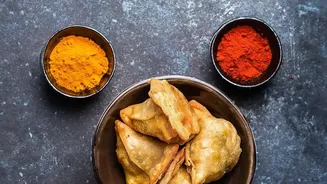
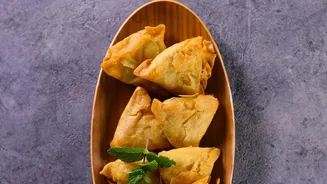
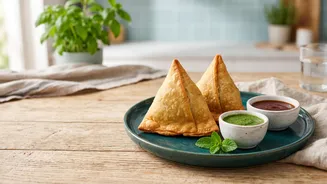
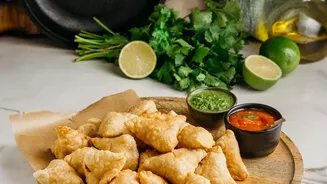
The air fryer offers a compelling solution, using hot-air circulation to achieve a crispy texture with up to 80% less fat than traditional deep-frying. For snacks like samosas, this can mean a calorie reduction of over 40%, transforming a heavy indulgence into a lighter treat. This allows families to enjoy classics like pakoras and tikkis more frequently, satisfying cravings in a way that aligns with modern wellness goals.
Convenience for the Modern Household
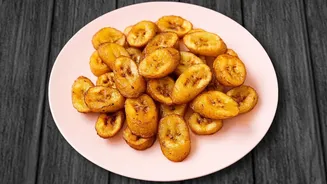
Beyond health, the air fryer's appeal lies in its sheer convenience. In busy households where time is a precious resource, the traditional process of deep-frying—heating a large quantity of oil, constant monitoring, and messy cleanup—is a significant deterrent. Air fryers simplify this with a 'set-it-and-forget-it' approach. There is no need to stand over a hot stove, and cleanup is often as simple as washing a non-stick basket. This ease of use makes it possible to whip up a quick batch of banana chips or reheat leftovers to crispy perfection, something a microwave often fails to do.
Preserving Tradition with a Modern Twist
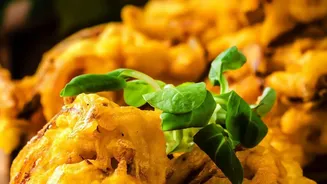
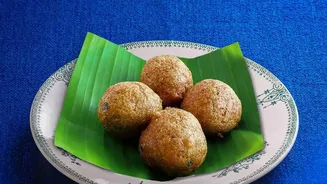
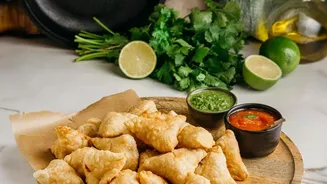
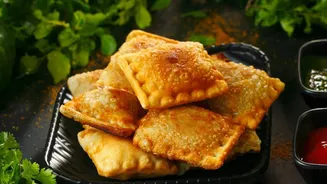
The air fryer isn't about replacing traditional cuisine; it's about reinterpreting it for a new era. Samosas and banana chips are not just snacks; they are woven into the fabric of Indian culture, associated with monsoons, evening chai, and family gatherings. Instead of forgoing these foods, the air fryer allows people to preserve these culinary traditions in a healthier format. Manufacturers have recognized this, adapting marketing and recipes to show how the appliance can handle a wide range of Indian dishes, moving beyond its initial perception as a gadget for Western foods. It represents a clever compromise between heritage and health, ensuring that cherished flavours continue to have a place in the modern Indian kitchen.
The Market Boom
What was once a niche appliance in affluent homes has now gone mainstream. India's air fryer market was valued at an estimated ₹600-700 crore in 2025 and continues to expand rapidly, with some reports showing annual growth rates of 14-16%. In 2025 alone, around 2.3 million units were sold in the country. This growth is fuelled by falling prices, the expansion of e-commerce into smaller cities, and a competitive landscape of both local and global brands. Major online retailers have reported sales surging over 100% year-on-year, making it one of the fastest-growing kitchen appliance categories.
Does It Really Taste the Same?
The critical question for any food lover is about taste and texture. Can an air-fried samosa truly compare to its deep-fried counterpart? While the results aren't identical, they are remarkably close. An air fryer excels at creating a dry, crispy exterior. For banana chips, this method produces consistently crunchy results with minimal oil. With samosas, the pastry becomes crisp and flaky, though it may lack the specific richness that comes from being submerged in oil. For many, this slight difference is a worthwhile trade-off for a snack that is significantly lower in fat and calories, and which can be enjoyed far more often. It’s a healthier, convenient, and satisfying alternative that captures the essence of the original.