




Mumbai's Lifeline Under Pressure
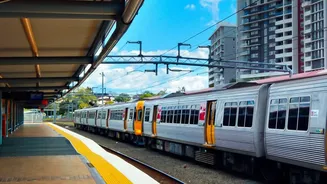
The Mumbai suburban railway is more than just a transport network; it's the city's lifeline, carrying millions of passengers daily. For decades, this critical system has operated under immense strain. The same tracks are forced to share traffic between
local trains, long-distance passenger services, and slow-moving goods trains. This mixed traffic is a primary cause of congestion, leading to delays, reduced frequency of services, and a system stretched to its breaking point, with capacity utilization on key routes far exceeding 100%. Every time a freight train lumbers across the network, it eats up valuable time and space that could be used for another passenger service, a reality every Mumbai commuter has felt during their daily travel.
Enter the Western Dedicated Freight Corridor
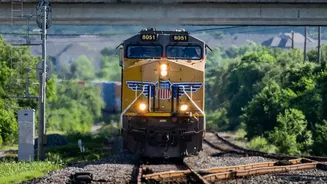
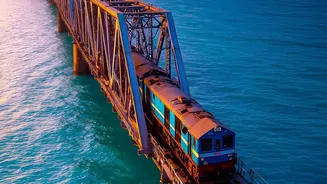
The solution has arrived in the form of the Western Dedicated Freight Corridor (WDFC), a 1,506-km-long, high-capacity railway line built exclusively for goods trains. Stretching from Dadri in Uttar Pradesh to Jawaharlal Nehru Port (JNPT) in Navi Mumbai, the WDFC is an engineering marvel designed to move cargo faster and more efficiently. By creating a separate, parallel network for freight, the project’s main goal is to shift all goods traffic off the existing passenger lines. The entire corridor became fully operational in September 2026, marking a pivotal moment for India's logistics and, crucially, for its passenger rail networks.
Freeing Up Tracks, Unleashing Capacity
The direct consequence of shifting freight trains onto the WDFC is the creation of unprecedented new capacity on Mumbai's existing rail lines. Tracks that were previously clogged with a mix of slow and fast trains will now be exclusively available for passenger services. This decongestion is the critical enabler for almost all of Mumbai's rail expansion plans. It allows Indian Railways to run more local train services, improve punctuality, and introduce faster trains without being bottlenecked by freight movement. The aailways has long wanted to increase the frequency of suburban services, but was limited by the physical space on the tracks—a constraint the WDFC has now effectively removed.
Powering the Next Wave of Upgrades
This newfound capacity is the bedrock for the next phase of the Mumbai Urban Transport Project (MUTP), a multi-billion rupee initiative to overhaul the suburban network. With freed-up tracks, the railway authorities can execute long-pending plans like adding more 15-car local services, expanding platforms, and, most notably, introducing a new fleet of modern, air-conditioned local trains. The Railway Board has already placed orders for 238 AC rakes, with the first expected in 2027 and the full fleet by 2030, a move that is only practical with the track capacity to run them. Furthermore, the decongestion will help in separating suburban traffic from long-distance mail and express trains, leading to better operational efficiency for both. Railway Minister Ashwini Vaishnaw has stated the goal is to increase daily services from 3,200 to around 3,500 by 2030, a target made achievable by the WDFC.