



Saturn Takes Centre Stage
October is undoubtedly Saturn’s month. The ringed planet reaches opposition on October 4, 2026, an event where Earth passes directly between Saturn and the Sun. This alignment makes it the best time of the year to view the planet, as it will be at its
closest and brightest, visible for nearly the entire night. For observers in India, Saturn will rise in the eastern sky around sunset (approximately 6:11 PM), reach its highest point around midnight, and set in the west near sunrise. You won't need a telescope to spot it; Saturn will appear as a bright, steady, yellowish point of light. However, even a small telescope will reveal its famous rings, a truly unforgettable sight. The planet’s rings will appear unusually bright around opposition due to a phenomenon called the Seeliger effect, which reduces the shadows cast by the icy ring particles.
Jupiter's Pre-Dawn Splendour
While Saturn dominates the evening, Jupiter rules the early morning. The gas giant will be a brilliant beacon in the pre-dawn eastern sky throughout October. Look for it a few hours before sunrise, when it will outshine every star in the sky. A special event occurs on the morning of October 6, when a beautiful waning crescent moon will appear very close to Jupiter, creating a stunning visual pairing. For observers in some parts of the world, the Moon will actually pass in front of Jupiter in an event called an occultation. While the full occultation may not be perfectly visible from all of India, the close approach of the Moon and the brightest planet in the sky is still a must-see spectacle for early risers. Even a pair of binoculars might reveal Jupiter's four largest moons, the Galilean moons, appearing as tiny dots of light flanking the planet.
Catch a Falling Star: The Orionids
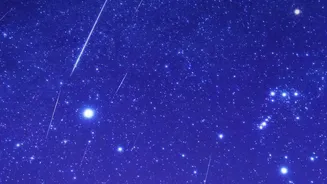
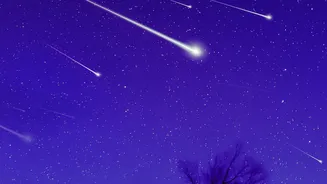
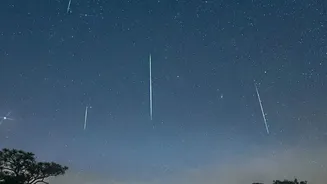
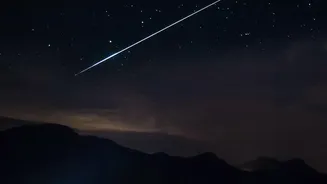
October also brings one of the year’s most reliable meteor showers: the Orionids. Active from early October to early November, this shower is expected to peak on the night of October 21-22. The Orionids are cosmic debris left behind by the famous Halley's Comet. As Earth passes through this trail of dust, the particles burn up in our atmosphere, creating streaks of light across the sky. Under ideal dark-sky conditions, you could see up to 20 meteors per hour. The meteors will appear to radiate from the constellation Orion the Hunter, which will be high in the eastern sky after midnight. This year, a bright moon will be present during the peak, but it sets around 3 a.m., leaving a window of dark skies until dawn for the best viewing opportunities.
Your Guide to a Perfect Stargazing Night
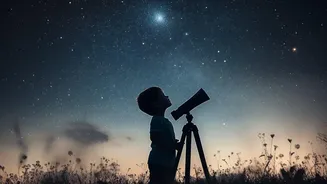
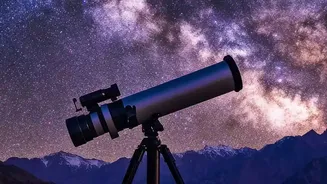
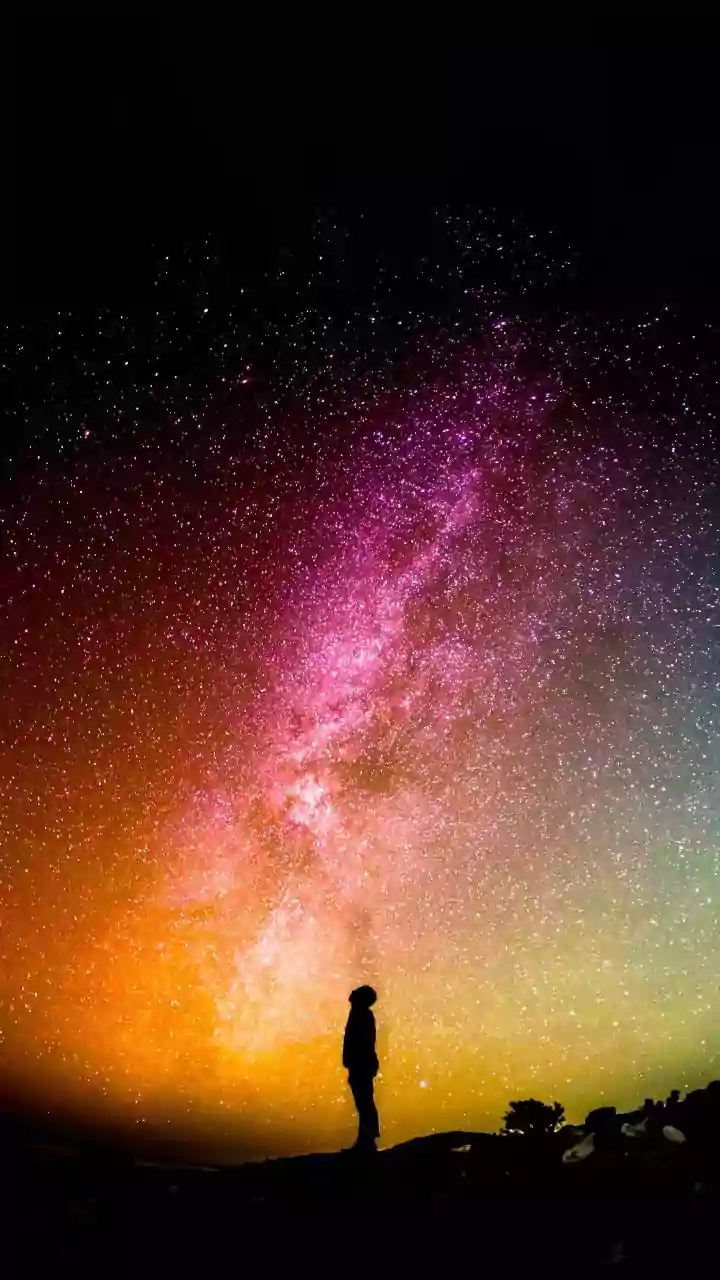
To make the most of these celestial events, a little preparation goes a long way. First, escape the city lights. Light pollution washes out all but the brightest objects, so find a location with a clear, dark sky. Places like Hanle in Ladakh (India's first Dark Sky Reserve), Spiti Valley, or the Rann of Kutch are world-class, but any rural area away from major towns will offer a dramatically better view. Second, give your eyes time to adapt. It takes about 20-30 minutes for your eyes to become fully sensitive to the dark, so avoid looking at your phone's bright screen. If you need light, use a red-light torch, which doesn't spoil your night vision. Finally, get comfortable. A reclining chair or a blanket on the ground will save you from neck strain. While planets are visible to the naked eye, a pair of binoculars will enhance the view of star clusters and Saturn's shape, and a telescope will bring the planets to life.