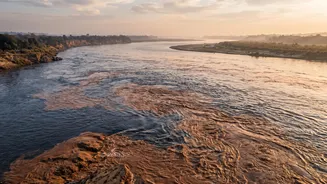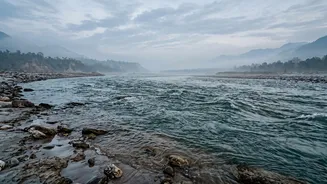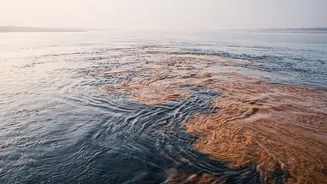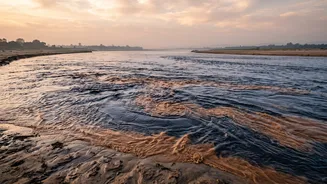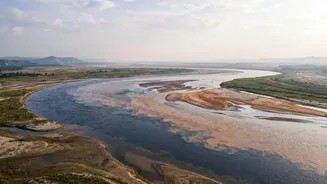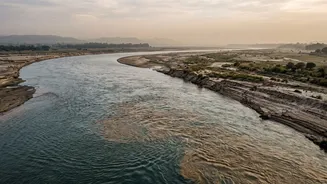




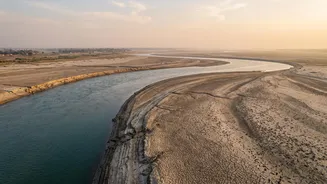

A landmark 30-year treaty on sharing the waters of the Ganges River, a lifeline for millions, is set to expire on December 12, 2026. For downstream Bangladesh, this deadline brings a wave of uncertainty over its access to critical water resources.
The 1996 Treaty: A Diplomatic Milestone
Signed
in December 1996, the Ganges Water-Sharing Treaty was a significant achievement in South Asian water diplomacy. It was designed to resolve a decades-long dispute that began after India commissioned the Farakka Barrage in 1975. Located just 20 kilometres upstream from the border, the barrage diverts water into India's Hooghly River to maintain navigability at Kolkata Port. The treaty established a formula for sharing water at Farakka during the critical dry season, which runs from January 1 to May 31, with allocations determined by 10-day water flow periods.
Why the Ganges is Critical for Bangladesh
As the lower riparian country, Bangladesh is heavily dependent on the Ganges, which it calls the Padma. The river system supports the livelihoods of tens of millions of people through agriculture, fisheries, and navigation. A sufficient flow of freshwater is also vital for public health and for pushing back saltwater intrusion in the coastal south, which threatens both farmland and the delicate ecosystem of the Sundarbans mangrove forest. Since the Farakka Barrage began operating, Bangladesh has reported numerous adverse effects, including reduced agricultural output, devastated fisheries, and diminished freshwater supplies.
Sticking Points in the Negotiations
As the 2026 deadline looms, Bangladesh is pushing for a new or revised agreement rather than a simple renewal. A key demand from Dhaka is the inclusion of a 'guarantee clause', similar to a previous 1977 arrangement, to ensure a minimum flow during the leanest periods. Bangladesh has also argued that any new deal must consider the impacts of climate change and look at managing the entire river basin, not just the flows at Farakka. From India's side, rising domestic water demands and political considerations, particularly from West Bengal, complicate the negotiations. Adding to the complexity, the treaty's renewal is seen as requiring a high-level political meeting between the prime ministers of both nations, which has not yet been scheduled.
A Cloud of Diplomatic Uncertainty
Formal talks for the treaty's renewal have yet to officially commence, creating anxiety in Dhaka. While both nations have a structured mechanism for dialogue—the Joint Rivers Commission (JRC)—its last ministerial-level meeting was in 2022 after a 12nd gap. Recent statements from India's Ministry of External Affairs have reiterated a commitment to a positive relationship and pointed to the JRC as the forum for discussions, but have offered no concrete updates on the renewal process. This diplomatic standstill occurs alongside other unresolved water issues, such as the stalled agreement on the Teesta River, which has been pending since 2011.
What Happens Without a Deal?
Without a treaty, there would be no legally binding framework to govern water sharing during the dry season. This could force Bangladesh to rely on unilateral decisions made by India, the upper riparian country. Past periods without a treaty have seen severe consequences for Bangladesh, with some of its rivers nearly drying up. The lack of an agreement could deepen water shortages, further damaging agriculture and fisheries, and potentially sparking social and political instability. It would also represent a significant blow to the otherwise robust and friendly relations between the two neighbouring countries, which share 54 transboundary rivers.