


In science, not finding something can be just as important as finding it. A recent study looking for a theoretical type of black hole came up empty, but the real story is why this 'non-discovery' is making waves in the world of astrophysics.
What Was the Study Looking For?
Scientists
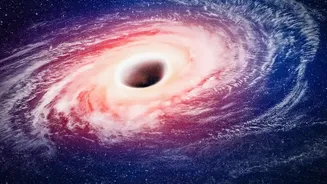
are on the hunt for one of the universe's biggest mysteries: dark matter. It's an invisible substance that makes up about 85% of all matter, but we don't know what it is. One long-standing theory is that dark matter could be made of 'primordial black holes'. Unlike the black holes that form from collapsing stars, primordial black holes, or PBHs, are thought to have formed from dense pockets of energy in the first moments after the Big Bang. They could be incredibly tiny—as small as an asteroid—or astonishingly large. A recent study used a powerful technique called gravitational lensing, which looks for how massive objects bend the light from distant galaxies, to search for a specific type: 'stupendously large black holes', or SLABs. The idea was to see if these behemoths could be the main component of dark matter.
Finding a 'Nothing' and What It Means
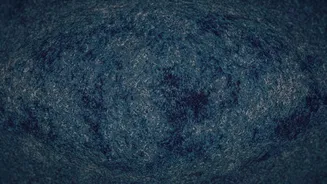
The study, which analyzed the faint afterglow of the Big Bang known as the Cosmic Microwave Background, found no evidence for these stupendously large black holes. If they were a significant part of dark matter, they would have left a specific 'grainy' signature on this ancient light, which the researchers did not see. This led them to conclude that SLABs do not make up a major fraction of dark matter. However, this is where the headline's nuance comes in. The study did not—and could not—prove that these black holes don't exist at all. It only constrained their possible abundance. Science often works by elimination; by ruling out one possibility, scientists can focus their efforts on more promising avenues.
Why Are Scientists Still Interested?
The search for primordial black holes is far from over because they remain one of the few dark matter candidates that don't require inventing new particles or new physics. They are born from the standard model of cosmology. While the 'stupendously large' variety may be off the table as a primary dark matter source, other mass ranges are still very much in play. In fact, some researchers believe that smaller, asteroid-mass primordial black holes could still account for all of the universe's dark matter. Detecting these would require different methods, such as looking for the very faint gravitational wave signals produced when they collide, a task for observatories like LIGO.
The Bigger Picture: A Universe of Possibilities
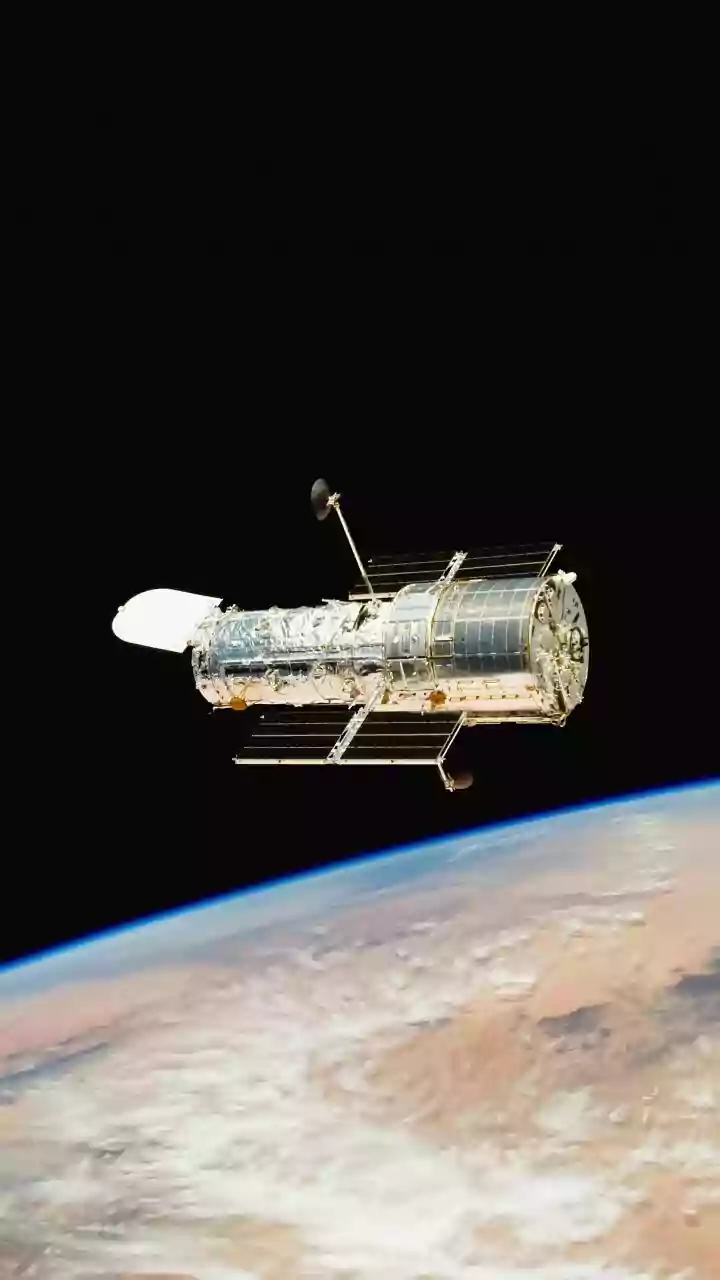
This line of research highlights a fascinating aspect of modern astrophysics. On one hand, astronomers using the James Webb Space Telescope are finding 'impossible' supermassive black holes in the early universe that grew too big, too fast. This has led to theories that they must have started from large 'seeds', which could be a form of primordial black hole. On the other hand, theorists are exploring even more exotic ideas, such as black holes that formed with five-dimensional properties or even the potential for black holes to split in two under extreme conditions. Each new study, whether it finds something or not, helps to either support or prune these theoretical branches. Even a 'null result' which rules something out is a vital piece of the puzzle. It tells us where not to look, guiding future research toward more fruitful territory.