







The Problem: An Overwhelmed System
Every year, India's cities brace for the monsoon. While the rains are a lifeline, they also expose the vulnerabilities of urban infrastructure. Traditional drainage systems, many of which are decades old, are frequently overwhelmed. They were designed
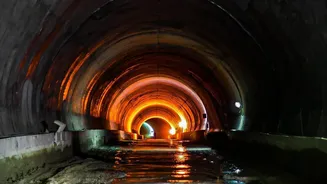
for a different era, with less concretisation and more natural ground to absorb water. Today, with rapid urbanisation, rampant concretisation, and drains often choked with silt and solid waste, these systems cannot cope with the intense rainfall events that are becoming more common due to climate change. The result is widespread waterlogging that paralyses transport, damages property, disrupts businesses, and poses significant public health risks from waterborne diseases. The response is almost always reactive: municipal teams are dispatched to clear blockages and operate pumps only after the flooding has already begun.
The Smart Solution: A Network with a Brain
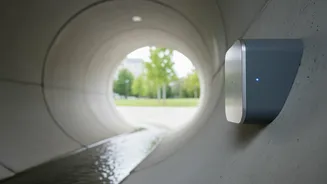
Enter the concept of a smart drainage system. Instead of being a passive series of pipes and channels, a smart system is an active, intelligent network. It uses the Internet of Things (IoT) to create a city-wide nervous system for water management. At its core, the system involves deploying a network of rugged, waterproof sensors at critical points within the drainage network. These sensors are the system's eyes and ears, collecting a constant stream of information. This fundamentally shifts flood management from a reactive, manual effort to a proactive, data-driven strategy.
The Power of Real-Time Data
The key to this entire operation is real-time data. The IoT sensors continuously monitor several crucial parameters. Water level sensors detect how high the water is in a particular drain or manhole, alerting authorities to rising levels long before they spill onto the streets. Flow rate sensors measure how quickly water is moving, which can indicate if water is flowing smoothly or backing up. There are even sensors that can detect the chemical composition of the water to identify illegal effluent discharge or sewage leaks. This data is transmitted wirelessly to a central control centre, where it is displayed on a dashboard, often integrated with GIS maps of the city.
From Data to Decisive Action
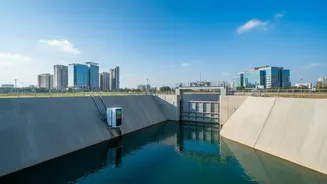
Collecting data is only half the battle; the real magic is in how it's used. With a live feed of the city's drainage health, municipal authorities can move from crisis management to predictive action. Artificial intelligence (AI) and machine learning models can analyse the incoming data streams along with weather forecasts to predict which areas are at the highest risk of flooding in the coming hours. This allows for early warnings to be sent to residents in vulnerable areas. More directly, the system can trigger automated responses. For instance, if sensors detect a major blockage, maintenance crews can be dispatched to the exact location before it causes an overflow. In more advanced systems, the data can automatically control infrastructure like sluice gates and pumps to divert water flow away from overburdened channels and towards those with spare capacity, optimising the entire network's efficiency.
Pilots and Potential in India
This technology is not just theoretical; it is being tested and implemented in India. Pilot projects are underway in several cities. Bengaluru has experimented with IoT sensors to monitor blockages in real-time in low-lying areas. A detailed project report for Kolkata and Howrah proposed a smart system to reduce waterlogging duration by up to 80% by managing tidal backflow from the Hooghly River. Cities like Mumbai, Chennai, and Hyderabad are also exploring real-time flood information systems. However, widespread adoption faces hurdles, including the high initial cost of installation, the need for reliable communication networks, integrating new tech with old infrastructure, and cybersecurity concerns.