




Why Sitting Stiffens Your Joints
Our bodies are designed for movement. When you sit for extended periods, several negative changes occur. Your hip flexor muscles, which connect your legs to your spine, remain in a shortened position, causing them to tighten. This can pull on your lower
back and contribute to pain. Meanwhile, sitting increases pressure on the discs in your spine by as much as 90% compared to standing, which can lead to stiffness and fatigue. Prolonged inactivity also reduces the circulation of synovial fluid, the natural lubricant in our joints. Without regular movement to keep this fluid flowing, joints can feel stiff and achy, especially when you first stand up. Over time, this cycle of muscle imbalance, joint compression, and reduced lubrication can lead to chronic pain and limited mobility.
The 'Movement Snacking' Principle
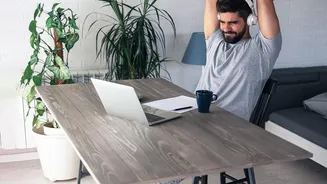
The key to combating a sedentary workday isn't necessarily a long, intense workout. Instead, research shows that frequency is more important than duration. Experts recommend breaking up sitting time with short, regular bursts of activity, a concept sometimes called 'movement snacking'. Aim to stand, stretch, or walk for a few minutes every 30 to 60 minutes. One study from Columbia University found that walking for just five minutes every half hour was enough to significantly lower blood pressure and blood sugar. These short breaks help restore blood flow, decompress the spine, and keep your joints lubricated. Setting a simple timer on your phone or computer can be a powerful reminder to get up and move before stiffness sets in.
Simple, Desk-Friendly Mobility Drills
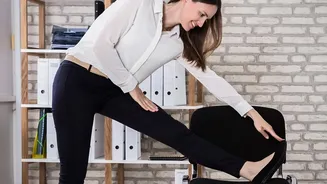
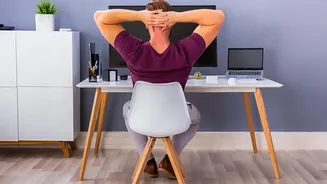
You don't need a gym to improve your joint mobility. These discreet exercises can be done right at your desk to target the areas most affected by sitting: Seated Spinal Twists: Sit tall and gently rotate your upper body from side to side, using your chair's armrest for a light stretch. This helps mobilize the thoracic spine, which often stiffens from hunching. Hip Marches: While seated, lift one knee towards your chest, hold for a moment, and then lower it. Alternate legs to activate your hip flexors and core. Shoulder Blade Squeezes: Sit or stand tall and pull your shoulder blades together and down, as if trying to hold a pencil between them. This counteracts slouching and opens the chest. Ankle Circles: Extend one leg and rotate your foot in circles, first clockwise and then counterclockwise. This simple movement improves circulation in your lower legs.
Building Movement into Your Workday
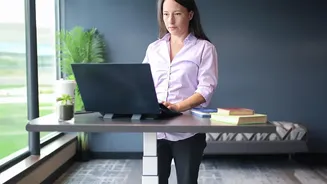
Beyond specific exercises, changing your habits can introduce more movement naturally. Instead of emailing or messaging a colleague, walk over to their desk. When you take a phone call, stand up and pace around your office. Make a habit of taking the stairs instead of the elevator whenever possible. Another effective strategy is to use a smaller water bottle, which will force you to get up more frequently for refills, providing a natural, recurring reason to walk. You can also try 'habit stacking' by linking a mobility drill to an existing routine, such as doing a few standing hip flexor stretches every time you get back to your desk from the kitchen. The goal is to make movement an automatic part of your day, not another task on your to_do list.