





Four Years of Revolutionary Science
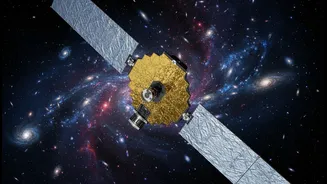
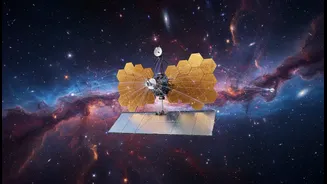
Since its first images were unveiled in July 2022, the James Webb Space Telescope (JWST) has fundamentally altered our understanding of the cosmos. In just four years, it has peered into the atmospheres of distant exoplanets, revealed the intricate structures
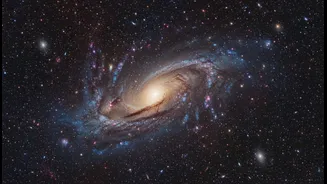
of star-forming nebulae, and discovered galaxies that grew far larger and faster in the early universe than models predicted. Its fourth anniversary image of Centaurus A, a galaxy shaped by a cosmic collision, continues this trend. Webb's infrared instruments cut through cosmic dust that blinded older telescopes like Hubble, resolving individual stars and structures near the galaxy's supermassive black hole. These better-than-anticipated results have provided a firehose of data, helping scientists probe everything from how galaxies evolve to how planets form.
A Triumph Born From Trouble
The breathtaking success of JWST makes it easy to forget its difficult birth. The project was famously behind schedule and wildly over budget, ballooning from an initial estimate of a few billion dollars to a final cost of around $10 billion. Its development was fraught with technical challenges and management crises that, at times, threatened the mission's very existence. The Government Accountability Office noted that these cost overruns had cascading effects, delaying other NASA projects. These painful experiences, however, provided a masterclass in managing mega-projects. NASA documented these lessons, analyzing everything from technical drivers to risk assessment and the importance of early testing to inform future missions.
The Next Great Observatories
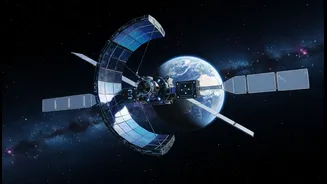
Even as Webb reshapes astronomy, NASA is planning its successors. The next flagship to launch will be the Nancy Grace Roman Space Telescope, slated for late 2026. Roman is a wide-eyed surveyor; where Webb does deep dives on specific targets, Roman will scan huge patches of the sky, capturing images 100 times larger than Hubble's. It is expected to discover around 100,000 new exoplanets. But the true successor to Webb's ambition is the Habitable Worlds Observatory (HWO), a mission planned for the 2040s with the express purpose of finding signs of life on at least 25 Earth-like planets. With an estimated cost of $11 billion and unprecedented technological demands, HWO makes Webb's challenges look like a warm-up.
Applying Webb's Hard-Won Lessons
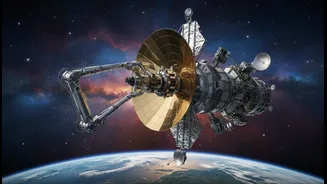
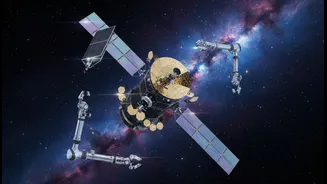
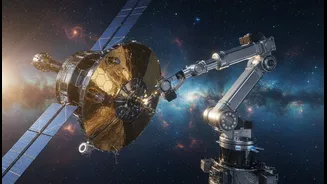
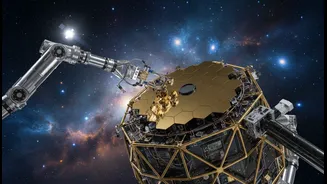
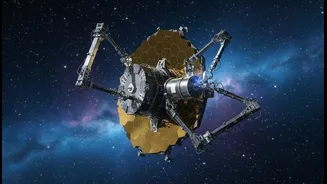
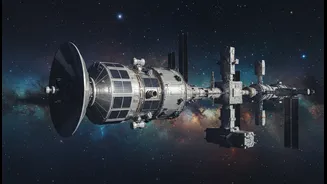
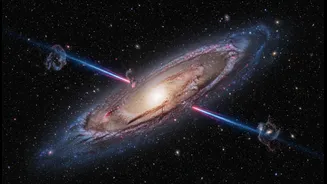
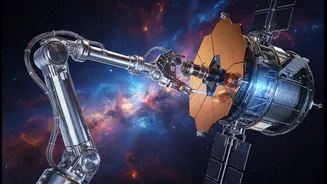
This is precisely why the lessons from Webb's development are so critical right now. For HWO, NASA is adopting a new strategy: developing the necessary technology well in advance before starting full-scale construction to avoid the on-the-fly problem-solving that plagued Webb. A key lesson is the need for modularity and serviceability. Unlike Webb, which is a single, fixed observatory, HWO is being designed from the ground up to be serviced and upgraded by robotic spacecraft at its distant orbit 1.5 million kilometers from Earth. This means new instruments can be installed decades from now, extending the telescope's life and allowing it to adapt to new scientific questions and technologies—a direct response to the rigid, all-or-nothing design of JWST.
Planning for an Ambitious Future
The Habitable Worlds Observatory will require stability 100 times greater than any previous spacecraft to block a star's light and see a tiny, dim planet. Achieving this requires mature technology, realistic budgets, and robust risk management—all areas where Webb's development offered stark warnings. By mandating a serviceable architecture and investing heavily in technology maturation before bending any metal, NASA is trying to prevent HWO from repeating Webb's costly delays. The careful planning happening now, informed by the struggles of the past, is the only way to make the next generation of discovery possible.