




A Tale of Two Trees
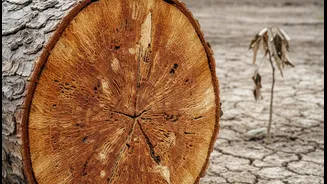
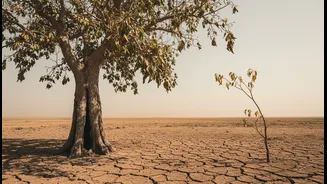
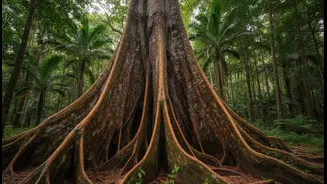
For a long time, a common assumption in ecology was that the tallest trees in a forest are the most vulnerable to drought. It seems logical: the higher water has to travel, the harder the tree has to work, and the greater the risk when water is scarce.
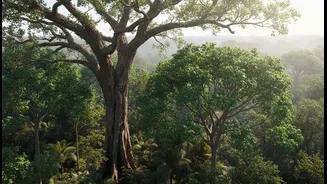
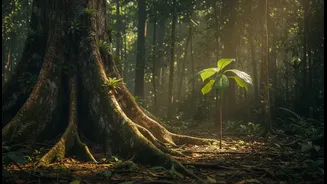
However, recent groundbreaking studies are turning this idea on its head. Research from the rainforests of Borneo shows that the world's tallest tropical trees are no more susceptible to water transport failure during dry spells than their shorter neighbors. This has surprised scientists and suggests these giants have evolved sophisticated ways to cope with the immense physical challenge of their height. Conversely, other studies indicate that under certain drought conditions, it's the large, canopy-dominant trees with high sun exposure that suffer the most, while smaller, shaded trees are more protected. This complex picture reveals there isn't one simple rule; a tree's size, species, and immediate environment all play a crucial role in how it survives a drought.
The Secrets of Plant Plumbing
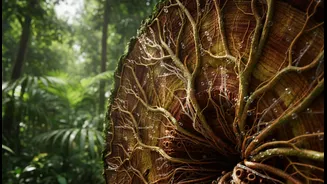
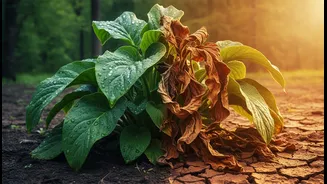
To understand these different strategies, we need to look at what scientists call a tree's 'plant plumbing' or hydraulic system. Think of it as the tree's internal network of pipes, primarily the xylem tissue, which transports water from the roots up to the leaves. During a drought, as the soil dries, the tree has to suck harder to pull up water. This creates negative pressure, or tension, in the xylem. If this tension becomes too great, it can cause air bubbles (embolisms) to form, blocking the flow of water much like a blockage in a pipe. This 'hydraulic failure' can be fatal. Different trees have different hydraulic traits. Some have wider vessels for moving lots of water quickly, while others have narrower, safer pipes. Recent findings show that giant trees in Borneo adapt as they grow, developing wider water-carrying vessels near their base to reduce resistance against gravity.
Different Strategies for Survival
The latest research indicates that tall and small trees may employ entirely different playbooks to handle water stress. The tallest tropical trees, as found in a major study in Borneo, have evolved anatomical and functional adaptations to compensate for their height. Their internal plumbing is so efficient that height does not become a disadvantage during drought, challenging existing climate models that predicted these giants would be the first to die. Some tropical trees also have a secret weapon: a layer of living cells around their xylem that can store and redistribute water, helping to mediate pressure and prevent failure. In contrast, some smaller understory trees might adopt a riskier strategy, while others are simply more sheltered from the intense sun and wind that exacerbate drought conditions for canopy trees. This diversity in how trees manage water is known as hydraulic diversity, and it's a critical factor in a forest's overall health.
Redefining Forest Resilience
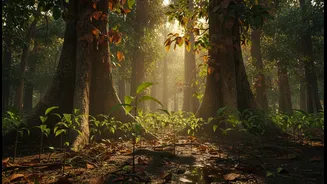
Understanding these varied responses is crucial for predicting how forests will cope with climate change. A forest isn't a uniform green carpet; it's a complex community. If a drought disproportionately affects tall trees, the entire forest structure could change. Since the tallest 1% of trees can store over half of a forest's above-ground carbon, their loss would have massive consequences for carbon emissions. However, if tall trees are more resilient than we thought, our models for climate change's impact may need significant re-evaluation. The key takeaway is that diversity is strength. A forest with a wide range of hydraulic strategies among its trees—some conservative, some risk-taking—is better equipped to handle the shock of a drought. This hydraulic diversity acts as a form of biological insurance for the entire ecosystem.
Why This Matters for India's Forests
These global findings have direct and urgent relevance for India, home to vital tropical forests like those in the Western Ghats, the Northeast, and the Andaman Islands. These regions are already experiencing shifts in monsoon patterns and more frequent extreme weather events. The discovery that different trees have vastly different vulnerabilities and survival toolkits provides a new lens for conservation and forestry in India. Forest managers can no longer treat all trees as equal. The 'everyday decisions' might involve prioritizing the protection of areas with high hydraulic diversity or selecting specific, drought-resistant native species for reforestation projects. This science offers a more nuanced toolbox for building resilience, helping to ensure that India's precious forest ecosystems can better withstand the pressures of a changing climate and continue to provide essential resources for generations to come.